
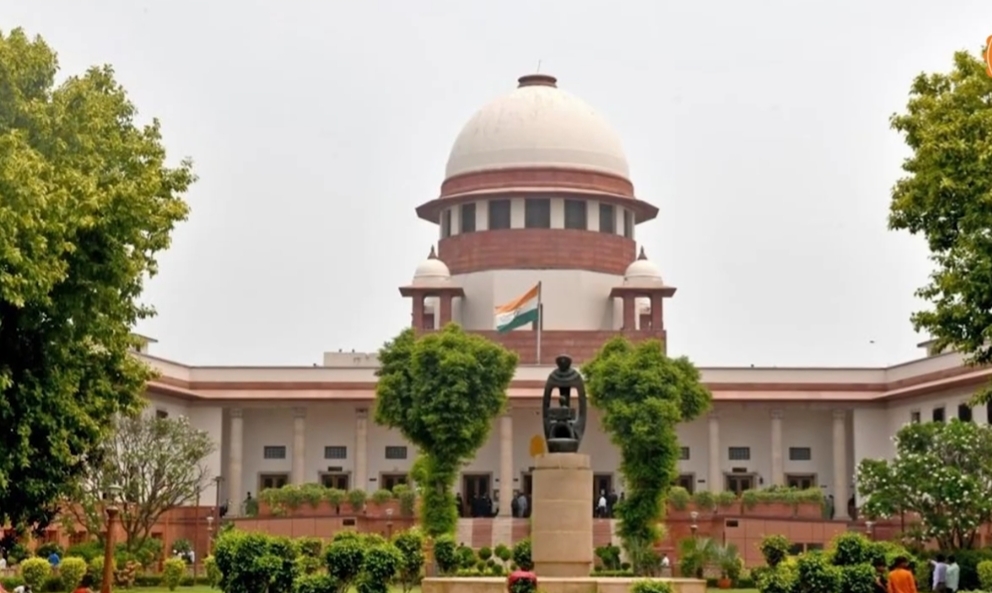
New Delhi, 6 May 2026: The Supreme Court on Tuesday observed that the practice of excluding Parsi Zoroastrian women from their community upon entering interfaith marriages appears to be discriminatory, particularly when such consequences are not applied to men.
The observation came during the hearing before a nine-judge Constitution Bench headed by Chief Justice Surya Kant, examining broader questions on the scope of religious freedom under Articles 25 and denominational right under Article 26 of the Constitution in the ongoing Sabarimala reference.
Besides Chief Justice Surya Kant, the other judges on the Constitution Bench include Justice B.V. Nagarathna, Justice M.M. Sundresh, Justice Ahsanuddin Amanullah, Justice Aravind Kumar, Justice Augustine George Masih, Justice Prasanna B. Varale, Justice R. Mahadevan and Justice Joymalya Bagchi.
Senior advocate Darius Khambata, appearing for a Parsi woman who married outside the faith and faced exclusion, argued that such treatment violates her fundamental right to practise religion. He emphasised that marriage does not amount to abandonment of faith and that a believer cannot be denied religious identity solely on that ground.
Questioning whether marriage could be used as a basis of classification, Justice Nagarathna observed that the under Article 25 (1), the right to conscience is a right by birth and it cannot be erased by marriage outside the community and such a condition is discriminatory against the woman.
Justice B.V. Nagarathna observed that the right of conscience under Article 25 is intrinsic and cannot be taken away by marriage. She indicated that making marriage the basis for exclusion in the case of women alone would amount to discrimination. The Court also noted that children of Parsi fathers continue to retain religious identity, reinforcing the position that such identity flows by birth and cannot be taken away in case of woman opting for marriage outside the Parsi community.
Terming it a man-made prescription that operates only against the woman, senior advocate Khambata said that though I continue to be a devotee and a believer, but I face exclusion just for marrying outside the community.
Khambata further submitted that the rights of religious denominations under Article 26 cannot override the individual’s right to freedom of religion under Article 25. He urged that both provisions must be read together, with Article 26 deriving its scope from Article 25 rather than standing at variance to it. The Bench appeared to agree with this, observing that denominational rights cannot rise above individual freedoms guaranteed under the Constitution.
The hearing also saw the Court questioning the role of public interest litigation in religious matters. The Bench questioned the basis on which the 2006 PIL filed by the Indian Young Lawyers Association in the Sabarimala matter was entertained, particularly when it originated from a media report. It expressed concern over whether such petitions, filed by persons not directly affected, should be used to challenge long-standing religious beliefs and practices.
Justice Nagarathna underscored that matters of faith are deeply personal and suggested that a true devotee would ordinarily adhere to established religious practices. The Bench also raised broader concerns about courts entertaining PILs based on newspaper reports, noting the potential for misuse.
The nine-judge Bench is examining a range of issues arising from the Sabarimala Reference including the extent of judicial review in matters of faith, the interplay between Articles 25 and 26, and the maintainability of PILs in religious disputes.
Khambata will continue his submissions on Wednesday.
Picture credit social media

Pramod kumar is a Senior Journalist, Covering Supreem Court of India