

For decades, the discourse surrounding the Indian Muslim community has been trapped between two reductive extremes: the hollow promise of the “vote bank” and the corrosive myth of the “outsider.”
As we navigate 2026, the stakes have never been higher. To move forward, the community must address a dual challenge: the urgent need for an internal renaissance and the persistent external pressure of systemic marginalization that threatens the very core of Indian secularism.
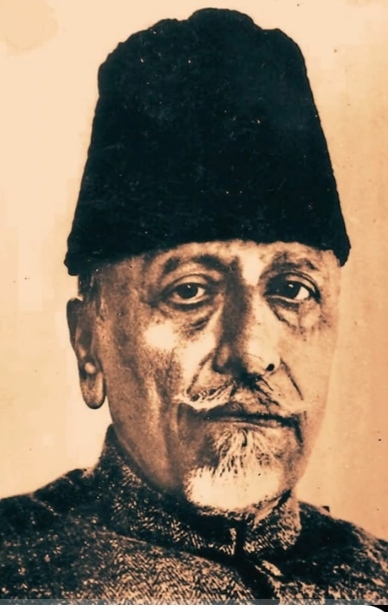
Since the era of Maulana Azad and Rafi Ahmed Kidwai, dynamic political leadership has remained conspicuous by its absence among Indian Muslims. While the community has produced brilliant scientists, historians, and artists, there has been a noticeable drought in transformative social reform.
The community cannot survive indefinitely on the laurels of its ancestors. The 2026 political landscape—marked by the fragmentation of traditional minority “vote banks” in recent state elections like West Bengal—demonstrates that the old reliance on symbolic patronage is failing. A new, enlightened leadership must emerge from within, focused on progress rather than reactive survival. This requires an honest introspection and a willingness to discard outdated mindsets. As Allama Iqbal famously exhorted, one must elevate their self (*Khudi*) to such heights that they become the masters of their own fate.
The most damaging stereotype today is the equation of Indian Muslims with a foreign “other.” This perception is a myth designed to alienate, yet in 2026, we see it increasingly codified through policy. The strengthening of anti-conversion laws in several states and the continued use of citizenship rhetoric serve to keep the community in a state of perpetual “probation.”
Integration is a two-way street. While Muslims must engage deeply with the socio-economic mainstream, the state must stop treating them as an exclusive entity. Secularism cannot thrive if a large section of the population is perpetually branded as an “outsider” while their constitutional rights—such as the ongoing legal battles for Dalit Muslim status—remain stalled by religious restrictions.
There is a biting irony in the narrative that blames the Muslim community for being a “roadblock” to secularism. One must look at the ground reality of the 2026 Indian public square:
*Dietary and Social Policing:*
Do minority groups mobilize mobs to enforce dietary choices, or are they the victims of a “moral policing” that has now expanded into the digital and rural heartlands?
*Institutional Capture:* Do Muslims command the levers of the judiciary, the bureaucracy, or the commanding heights of Indian business? In reality, the community remains vastly underrepresented in the seats of power.
*The Symbolism of the State:* From the performance of religious rituals at government inductions to the ubiquitous presence of majoritarian symbols in public offices, the “neutrality” of the state is under siege.
When we see the hollowing out of constitutional values, it becomes clear that the threat to secularism does not stem from those who are marginalized. Rather, it comes from a brand of politics that seeks to dominate every corner of public life—from police stations to parks—while projecting its own insecurities onto a minority.
The redemption of the Indian Muslim community lies in its ability to reclaim its agency. This requires a two-pronged strategy: internal reform led by a fresh intellectual vanguard, and a collective demand for a secularism that is substantive, not just symbolic.
For India to truly progress, it must move past the “Sanghi” stereotypes and the “vote bank” traps. The goal should be an India where a citizen’s faith is incidental to their status in the eyes of the law, and where every community has the leadership it deserves to contribute to the national whole. Only then can we bridge the gap between the India that was promised at Independence and the reality of 2026.
Picture credit social media

~Hasnain Naqvi is a former member of the history faculty at St. Xavier’s College, Mumbai….
The opinions expressed here are solely those of the author.

