
You may, or may not, call it a World War. But the world is indeed engulfed by several conflicts that refuse to end, each causing misery to innocent civilians, each causing destruction of nature-blessed resources that cannot be renewed.
Technology has ensured that war-mongers can do this without crossing borders and losing men in uniform on the ground, but destroy each other with greater accuracy.
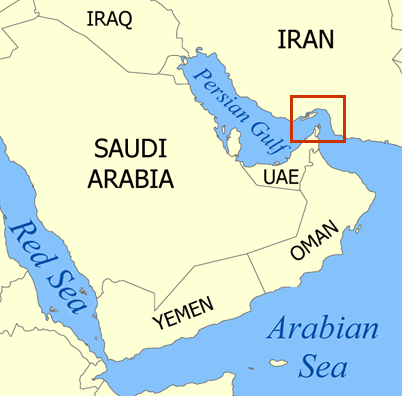
The one in Ukraine has returned with a bang after what seemed a pause. Now into its fifth year, out-timing World War One, it is born of the same mistake — of misreading the opponent’s capabilities. Others are concentrated in West Asia or the Middle East, where the closure of the Hormuz Strait, again, chokes the supply of oil and gas to large parts of the globe.
All this is lamenting over the obvious in a world that is sought to be dominated by a “Global Tughlaq” bent on striking ‘deals’ – that much-abused term – for his country and himself. His almost round-the-clock barrage of words and actions, his boasting of self and insulting allies, changing them at will, use of explicit words about anyone he disagrees with at that moment, even his loose-tongued passes and flirtations, have tired everyone. But not him. If only the ‘showman’ talked a little less.
They say there is “method in his madness”. Maybe so. But discerning it has sent his ‘friends’ – another term bandied as part of that ‘madness’, and foes into a tizzy.
Desperate to declare victory, Donald Trump chose his 80th birthday to announce the digital signing of the deal. If it is a victory at all, it is an eyewash. It caused momentary relief across the world, but lasted barely three days. He has so far failed to rein in the man who nudged him into attacking Iran. Together, Trump and Israel’s Benjamin Netanyahu pulverised Iran and eliminated much of its top leadership. But a nation attacked from outside, and anticipating the attack, has not merely survived – it has gained an upper hand.
Asked for “complete surrender”, Iran retains much of its missiles and drones, and, using access through Hormuz yet again as its “Trump card”, talks as an equal as the conflict enters its 114th day, and ‘technical talks” to push the pact further begin today in Switzerland.
Resolving Trump’s biggest diplomatic blunder – so far — his man J D Vance has the most formidable task to perform. While he talks to Iran, Trump will have to work on Israel, which cannot countenance a clergy-led Iran to stabilise and grow stronger and the Arab Sheikhs showing it the thumb on their nose.
Israel continues to devastate Lebanon and Gaza to rush with its plans for complete military dominance of the region. It has a record of defying America. But this time, the Iran factor makes it difficult.
Critics say this Iran war has strengthened Tehran, strained US ties, and left Israel weaker. Western military intelligence assessments are that Israel, like the US, is running short of weaponry to continue the war. But given their resources, it would be temporary.
The Gulf Arabs got caught in the war for hosting American military bases and were targeted as never before. According to The New York Times, Iran fired over 1,500 missiles and 4,700 drones against them. Yet, the US intelligence assessments in May estimated that Iran retains about 70 per cent of its missile stockpiles. Their low-technology, low-cost deployment has more than matched the expensive American armoury and shown Israel’s vulnerability.
Politics, economics, legality and even morality of these actions will be debated, without conclusion, till another round of war. Sadly, this is inherent in West Asia.
What can one say of the US? It is hubris, again, after Vietnam and so soon after Afghanistan. It has damaged its alliances with the oil-producing Gulf Arab monarchies, whose business model as islands of stability in the turbulence of West Asia will take years to repair.
For India, or anyone, any relief is still far off. It will take a long time to yield political results and, hopefully, economic ones. Even if they fall after the deal, the prices of oil, gas, and other necessities like fertilisers will not go down for families. Governments across the world have a ready excuse to keep them high to recoup losses incurred during the 100-plus-day war. National economies, assuming there will be no major war in the coming months, will take even longer to get off the ground.
One can only hope that the agreement signed in Switzerland survives the many vicissitudes. It is a war based on America and Israel’s misreading of the strength of their enemy in Tehran. That makes it harder for the United States to deter its enemies in future. Since an upper hand in the world order can be retained only with money and military power and by force, this could mark the beginning of the end of the American predominance that the world witnessed since World War 2.
It is premature to conclude which way the conflict will go and if it can lead to any grand bargain for any, repeat, any party. A total lack of trust makes it a distant pipe dream. As the world yearns for this round to end, it needs to prepare for the next, whenever that comes.

Mahendra Ved is a veteran Journalist and an Expert on international affairs.