

Why Muharram Still Speaks to Our Times
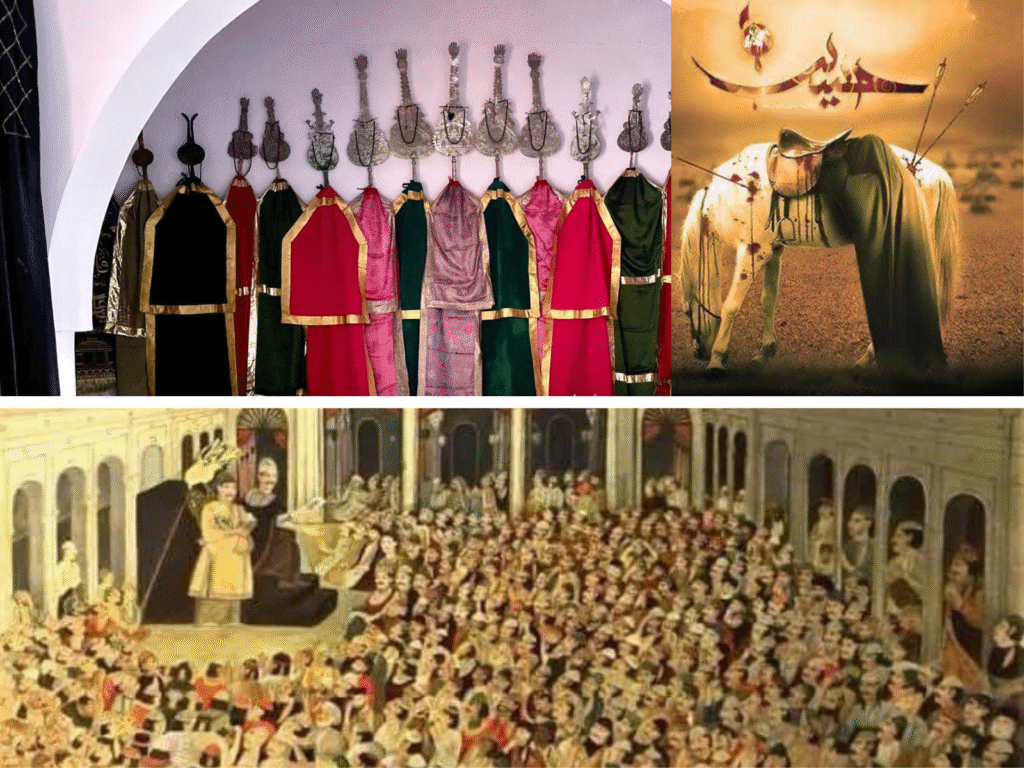
Every year, with the arrival of Muharram, millions around the world turn their hearts toward Karbala. They remember not merely a seventh-century tragedy but a moral uprising whose significance transcends time, geography and religion. The martyrdom of Imam Husain ibn Ali in 680 CE remains one of history’s most enduring symbols of resistance against oppression.
As the world witnesses the continuing devastation in Gaza, the destruction of southern Lebanon and the wider confrontation involving Iran, Israel and the United States, the memory of Karbala acquires renewed relevance. History does not repeat itself in identical form, yet the themes that emerged from Karbala—the refusal to submit to injustice, the defence of human dignity and the willingness to sacrifice everything for truth—continue to resonate in contemporary struggles.
Karbala was never merely about power. It was about principle. Gaza, too, has become more than a territorial conflict. It has evolved into a symbol of a people’s determination to survive despite overwhelming force.
Karbala: A Defeat That Became a Victory
Following the death of Muawiya I, his son Yazid demanded allegiance from Imam Husain. Husain refused, not because he sought power, but because he believed that legitimising tyranny would undermine the ethical foundations of Islam.
On the plains of Karbala, Husain and a small group of family members and companions faced an army many times their size. They were denied water, surrounded and ultimately massacred. Even Husain’s infant son was killed.
Militarily, Karbala was a defeat. Morally and historically, it was a triumph.
The Umayyad Empire eventually disappeared, but Karbala endured. Across centuries, Husain’s stand has inspired movements for justice and freedom. His message remains clear: a life lived in humiliation is not preferable to a death embraced with dignity.
Gaza and the Crisis of Human Conscience
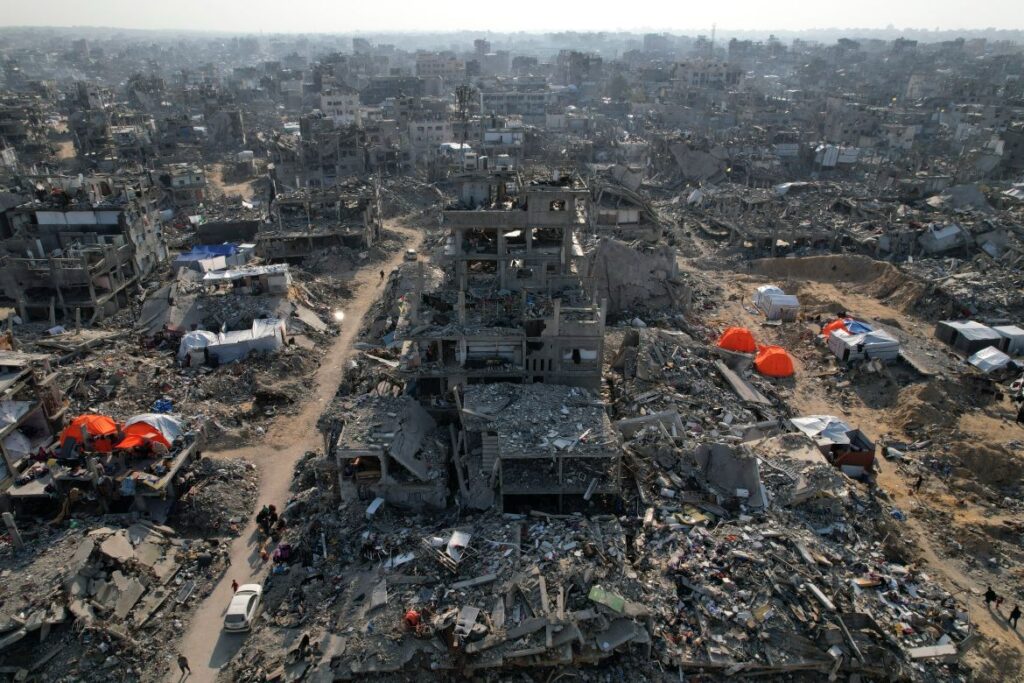
For many observers, Gaza has become the defining humanitarian tragedy of our time.
Since the war that followed the Hamas attacks of October 2023, the territory has experienced immense destruction. International organisations, humanitarian agencies and legal institutions have repeatedly warned of catastrophic civilian suffering, mass displacement, hunger and the collapse of essential services.
Beyond debates over legal terminology lies an undeniable reality: tens of thousands of civilians have suffered, entire neighbourhoods have been reduced to rubble and generations of Palestinians have endured profound trauma.
Yet, like the survivors of Karbala, many Palestinians have refused to abandon their homeland despite overwhelming pressure. Families return to shattered homes, communities rebuild schools and hospitals, and daily life continues amid devastation.
Their resistance is not only military or political; it is also cultural, social and psychological. The simple act of remaining on one’s land has become an act of defiance. In that sense, Gaza echoes one of Karbala’s most enduring lessons: oppression may conquer territory, but it cannot easily conquer conviction.
The Voice of Zainab and the Power of Witness
One of Karbala’s greatest lessons lies in the role played by Zainab bint Ali, the sister of Imam Husain.
After the massacre, she confronted rulers and exposed the crimes committed at Karbala. Through her courage and testimony, the story survived and became a timeless symbol of resistance.
Every struggle against oppression involves a battle over narrative. Today, journalists, aid workers, doctors, photographers and ordinary civilians perform a role reminiscent of Zainab’s. Through reports, images and eyewitness accounts, they document suffering and preserve memory.
In Gaza, images of destroyed neighbourhoods, grieving families and displaced civilians have travelled instantly across the world. The struggle is therefore not only over territory but also over truth, memory and historical accountability.
Southern Lebanon and the Cost of Resistance
The suffering has not been confined to Gaza alone. Southern Lebanon has also experienced widespread destruction during confrontations between Israel and Hezbollah. Entire communities have been displaced and civilian infrastructure severely damaged.
For many Lebanese, particularly within communities deeply influenced by the memory of Karbala, resistance is often viewed through the prism of Imam Husain’s sacrifice. Whether one agrees with the political strategies of resistance movements or not, there is little doubt that Karbala continues to shape the language and symbolism of opposition to occupation and aggression.
Throughout Lebanon, Ashura commemorations frequently connect the tragedy of Karbala with contemporary struggles for sovereignty and dignity.
Iran and the Politics of Defiance
The legacy of Karbala also occupies a central place in modern Iran’s political imagination.
Since the 1979 Islamic Revolution, Iranian leaders have often invoked Karbala when confronting foreign pressure and military threats. During the recent confrontation involving Israel, Iran and the United States, Tehran repeatedly portrayed its response as a defence of national sovereignty against external aggression.
Regardless of one’s political views regarding the Iranian government, it is evident that the symbolism of Karbala remains deeply embedded in Iranian public discourse. Official statements, public rallies and social media campaigns frequently drew parallels between contemporary resistance and Imam Husain’s refusal to submit before a more powerful adversary.
This demonstrates the continuing influence of Karbala as one of the most powerful moral and political narratives in the modern Middle East.
Why Tyranny Fears Memory
History offers a recurring lesson: empires possess armies, wealth and institutions, while the oppressed often possess little more than memory and conviction.
Yet memory frequently outlives power.
Those who ordered the death of Imam Husain believed that military victory would secure their authority. Instead, Karbala became an eternal indictment of tyranny.
The same principle remains relevant today. Governments may control borders, weapons and political institutions, but they cannot easily erase collective memory. Every destroyed home, every grieving parent and every innocent life lost becomes part of a larger historical narrative.
This is why struggles against oppression often continue long after battles have ended.
Muharram’s Universal Message
Muharram is not merely a season of mourning; it is a season of reflection.
Karbala teaches that justice is not measured solely by victory. It is measured by the willingness to stand for truth even when success appears impossible. For Muslims, Imam Husain occupies a unique spiritual and historical position, yet his message has inspired people far beyond the Muslim world. Leaders, activists and freedom movements across generations have drawn strength from his example.
The enduring relevance of Karbala lies in a simple but profound principle: there are moments when silence becomes complicity and resistance becomes a moral obligation.
As Muharram is commemorated amid the suffering of Gaza, the destruction of southern Lebanon and the tensions involving Iran, Israel and the United States, Karbala continues to illuminate a path of dignity, courage and steadfastness.
The swords of Karbala have long rusted away, and the empires that once appeared invincible have vanished. Yet the message of Imam Husain continues to echo across centuries and continents: that human dignity must never be surrendered, that truth cannot be extinguished by force and that the struggle against tyranny remains one of humanity’s greatest moral responsibilities.

~Hasnain Naqvi is a former member of the history faculty at St. Xavier’s College, Mumbai….
The opinions expressed here are solely those of the author.