

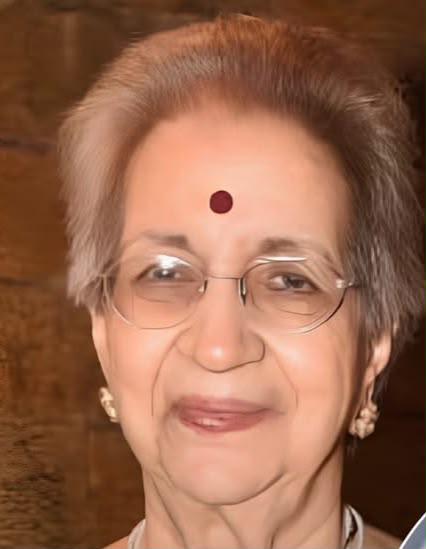
Vijaya Mehta, affectionately known as VijayaBai or simply Bai to countless admirers, passed away in Mumbai on 30 June 2026 at the age of 91. Her departure feels less like the end of a life than the gentle dimming of a beacon that had illuminated the paths of performers, audiences, and thinkers across decades. In an era when Indian theatre and cinema grappled with the tensions between tradition and modernity, Mehta emerged as a singular force—rooted in Marathi soil yet reaching toward universal truths. As actress, playwright, director, and mentor, she transformed the stage into a living dialogue between intellect and emotion, discipline and spontaneity, the intimately local and the profoundly human.
Roots in a Progressive World
Born Vijaya Jaywant on 4 November 1934 in Baroda (now Vadodara), Gujarat, Mehta grew up in a family steeped in progressive ideals. Her Theosophist household, influenced by the Varkari tradition and figures like Annie Besant, fostered a commitment to education, gender equality, and social reform. Widowed early, her mother raised the family with remarkable resilience, instilling values drawn from reformers such as Savitribai and Jyotirao Phule, as well as Mahatma Gandhi. Young Vijaya participated in the freedom struggle’s afterglow and even joined Jayaprakash Narayan’s movement as a teenager.
Family connections to cinema—Nalini Jaywant as an aunt, Nutan and Tanuja as cousins, and later Durga Khote as mother-in-law through her first marriage to Harin Khote—offered glimpses of the screen world. Yet Mehta gravitated toward theatre. She graduated from Mumbai University, studied under Ebrahim Alkazi in Delhi, and trained with Adi Marzban, honing a craft that would define modern Marathi experimental theatre. Her first marriage to Harin Khote ended tragically with his early death, leaving two sons; she later married Farrokh Mehta. Their daughter, Anahita Uberoi, followed in her artistic footsteps.
Founding *Rangayan*: A Revolution on Stage
In 1960, Mehta co-founded the Mumbai-based theatre group *Rangayan* alongside playwright Vijay Tendulkar, actors Arvind Deshpande, and Shriram Lagoo. This collective became the crucible of experimental Marathi theatre in the 1960s, challenging conventional forms and infusing the stage with intellectual rigour and social acuity. Under her direction, the group nurtured a generation of talent and produced landmark works that blended indigenous sensibilities with global influences.
Mehta directed over scores of productions, many of which remain benchmarks. Her staging of C.T. Khanolkar’s *Ek Shoonya Bajirao* is hailed as a landmark in contemporary Indian theatre for its innovative narrative and emotional depth. She introduced Bertolt Brecht to Marathi audiences through an adaptation of *The Caucasian Chalk Circle* titled *Ajab Nyay Vartulacha*, and brought Eugène Ionesco’s absurdism with Chairs. Collaborations with German director Fritz Bennewitz, including a traditional rendering of Bhasa’s *Mudrarakshasa* featuring German actors, underscored her commitment to cross-cultural dialogue.
Her approach was never dogmatic. Theatre, for Mehta, was a space for reflection, rebellion, tenderness, and wonder—a confluence where tradition met modernity without losing its earthy essence. She directed with an enquiring mind and compassionate heart, holding intellect and emotion in balance. Generations of artists, including Nana Patekar, Reema Lagoo, Neena Kulkarni, Vikram Gokhale, Suhas Joshi, Anupam Kher, and Anahita Uberoi, carried forward the quiet radiance she kindled through rigorous yet generous mentorship.
Crossing to Cinema: Parallel Visions
Mehta’s transition to cinema enriched parallel cinema without diluting her theatrical roots. She is remembered for her powerful performance as the hostess in Govind Nihalani’s *Party* (1984), which earned her the Best Actress award at the 1985 Asia Pacific Film Festival. Her acting in Shyam Benegal’s *Kalyug* (1981) further showcased her screen presence.
As a director, she helmed acclaimed films like *Rao Saheb* (1985–86), an adaptation that won her the National Film Award for Best Supporting Actress, and *Pestonjee* (1988), a nuanced exploration of Parsi life drawn from B.K. Karanjia’s writings. Other works included television adaptations such as *Smriti Chitre* and *Shakuntalam*. Her films, like her plays, adapted stage sensibilities to the screen, prioritizing character depth, social insight, and artistic integrity over commercial formulas.
Honours and Lasting Influence
Recognition followed her contributions. In 1975, she received the Sangeet Natak Akademi Award for Direction. The Padma Shri came in 1987 (noted variably around 1986–87). Later honours included the Pu La Deshpande Award (2008), Sangeet Natak Akademi Tagore Ratna (2012), Mahindra Excellence in Theatre Awards Lifetime Achievement (2018), and others like the Kalidas Samman and Zee Chitra Gaurav Lifetime Achievement.
Beyond awards, Mehta’s legacy lives in the artists she shaped and the audiences she moved. She wore scholarship lightly and greatness with grace, offering warmth in rigour and generosity in brilliance. In interviews and writings, she spoke of theatre as an act of living attentively and truthfully—demanding honesty, patience, and courage.
Curtain Call on a Radiant Era
With Vijaya Mehta’s passing, an era dims. The rehearsal halls feel emptier, the scripts momentarily still. Yet the worlds she created endure. The footlights may fade and applause recede, but the transformative power of her art—rooted, modern, intimate, expansive—continues to resonate. She taught that theatre, and by extension life, thrives at the intersection of discipline and freedom, intellect and heart.
Thank you, Bai, for the quiet radiance that lit generations. The stage is softer tonight, yet because you walked upon it, it shall never be wholly dark again. Her light, carried by those she inspired, promises that the transformative spirit of Indian theatre and cinema will burn brightly for years to come.

~Hasnain Naqvi is a former member of the history faculty at St. Xavier’s College, Mumbai….
The opinions expressed here are solely those of the author.

