
NEW DELHI: Few analogues in history have been organised on such a scale, size, and import as the mass funeral that Iran’s theocratic regime is preparing to hold for its former supreme leader, Ayatollah Ali Khamenei, who was killed in the US-Israeli strikes at the beginning of the war on February 28. Khamenei’s remains arrived in Tehran for the mega ceremonies planned in at least five cities across Iran and Iraq, starting Friday.
The Saturday funeral is expected to draw tens of millions of people, including a coterie of foreign dignitaries, government officials have said.
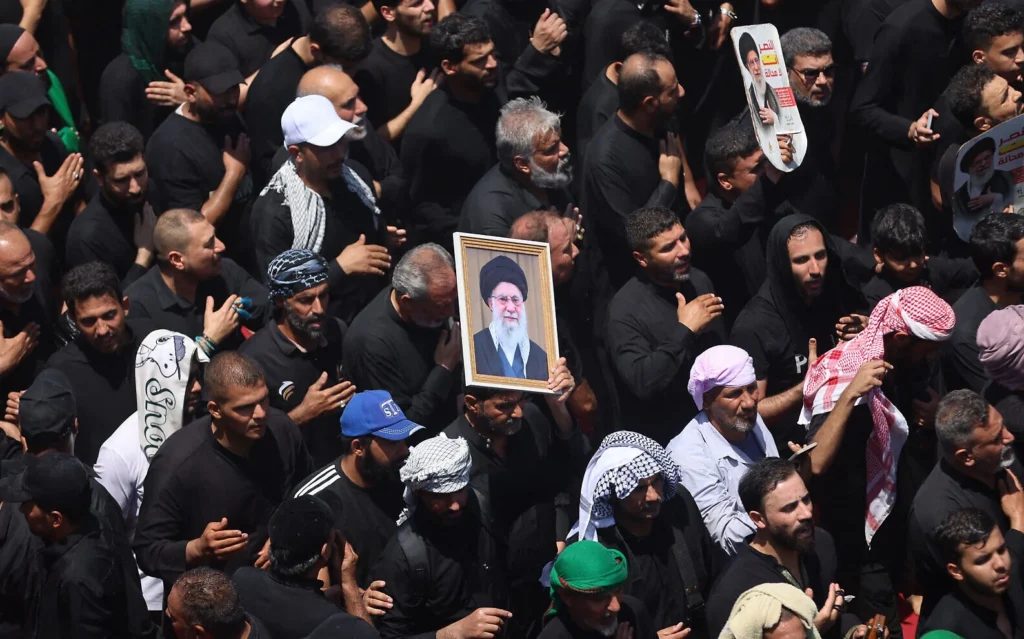
Photos in Iranian media and international agencies showed mourners carrying Khamenei’s coffin, emblazoned with Iran’s tricolour flag, into the Grand Mosalla, one of the Islamic republic’s most important ceremonial venues. Others showed crowds at a pre-funeral ceremony clad in black, as the coffin is set down against a backdrop of red flowers and white butterflies hanging in the air.
Preparations for Khamenei’s public funeral, initially delayed at the height of the war, are taking place in Tehran, with mass processions planned next week in Qom and Mashhad and ceremonies in Iraq. The ceremonies came as Iran and the United States observe a fragile ceasefire after signing a preliminary deal to halt the conflict.
There have been rumours that his body was temporarily buried, but Iranian officials have insisted the delay was due to severe, volatile conditions of the active war with the United States and Israel.
Pakistan, a key mediator in the US-Iran talks, said its Prime Minister Shehbaz Sharif would attend the ceremony. Bihar governor Syed Ata Hasnain and Minister of State for External Affairs Pabitra Margherita will represent India at the ceremony.
Khamenei, a spiritual figure for many Shias, was killed at the age of 86 in strikes on his compound in the centre of the Iranian capital. He will lie in state for three days at the colossal Grand Mosalla, which has been draped in banners featuring images and quotes of Khamenei. The bodies of his dead relatives will also be presented at the ceremony, making it the biggest state funeral in the country’s history.
Following the ceremonies in Tehran, Khamenei’s body will be taken to the Iraqi holy cities of Najaf and Karbala before his burial on July 9 at the shrine of Imam Reza in the northeastern Iranian city of Mashhad, his birthplace.
Khamenei’s death and the succession of his son Mojtaba as Iran’s third supreme leader, in a conflict with its greatest foes Israel and the United States, mark an epochal moment in the Islamic Republic’s 47-year history. Mojtaba, dangerously wounded in the strike that killed his father, has not been seen in any new image since the war began. It was reported that he will not attend the funeral of his father amid continued threats to his life.

We are a multimedia news network. Website : www.7xnews.com Based in New Delhi (India)
Youtube : umakantlakheraspeaks@gmail.com

