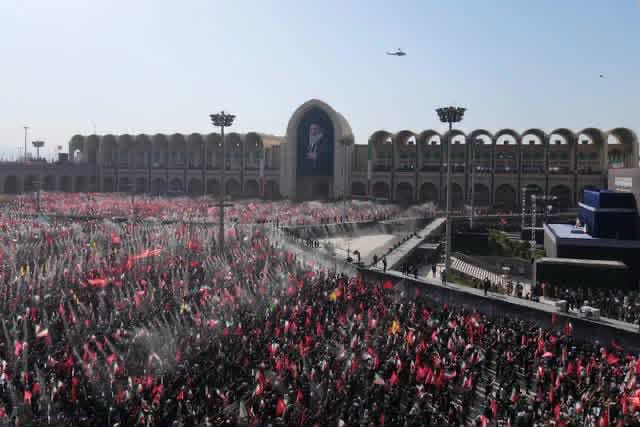
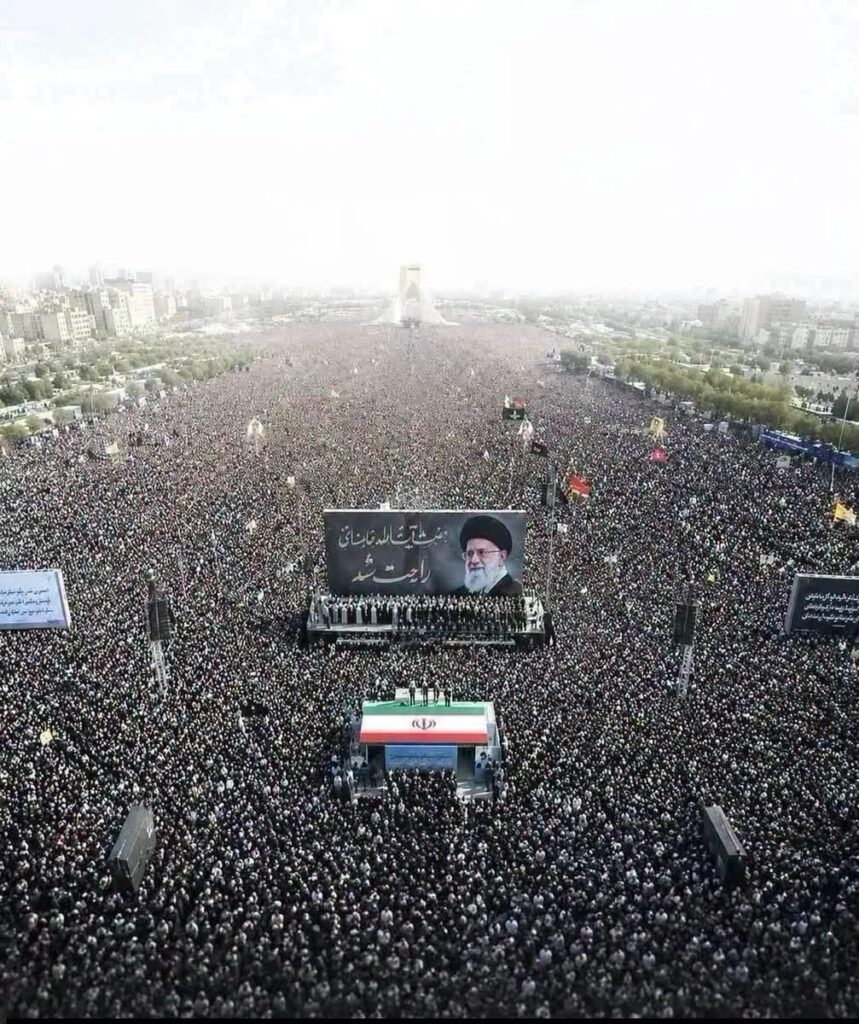
When Iran delayed the burial of its Supreme Leader, Ayatollah Ali Khamenei, for four months following his assassination, Western intelligence and media outlets quickly coalesced around a predictable consensus: security. The delay, Washington concluded, was a logistical necessity driven by the fear of subsequent strikes and the need to stabilize the regime’s transition of power. This assessment was not entirely incorrect; it was simply superficial. In focusing exclusively on the mechanics of state continuity, Western observers missed the profound theological theatre that transpired. Iran did not merely bury a head of state. It intentionally paused the geopolitical clock to align Khamenei’s interment with Muharram, embedding his death into the foundational narrative of Shia Islam. In doing so, Tehran transformed a devastating political assassination into one of the most potent, theologically charged acts of mass mobilization in modern history.
The Geometry of Grief: The Power of Muharram
To understand the scale of this miscalculation, one must understand the sacred calendar. Muharram is the first month of the Islamic lunar year—a period designated by Islamic tradition for reflection, mercy, and the eternal struggle against tyranny. At the emotional apex of this month lies Ashura, the tenth day, which commemorates the 7th-century martyrdom of Imam Hussain ibn Ali, the grandson of the Prophet Muhammad, at the Battle of Karbala. For 14 centuries, this event has served as the emotional and spiritual bedrock of Shia identity. It teaches a fundamental lesson: the righteous must stand against the oppressor, no matter the cost. By orchestrating a six-day state funeral that culminated during this specific month, the Iranian state masterfully mapped contemporary geopolitics onto an ancient, cosmic canvas.
The Message was Unambiguous: Khamenei did not simply die as a casualty of a covert shadow war. He was martyred in the tradition of Imam Hussain, positioned as a defender of the faithful against modern imperial transgressions.
The Liturgy of the Streets
The geography and choreography of the six-day funeral procession were designed with exquisite historical consciousness. The ritual did not begin in Tehran, but in Najaf, Iraq—the resting place of Imam Ali, the father of Hussain. This cross-border procession served a dual purpose: it reinforced Iran’s trans-national religious authority and unified the regional Shia consciousness. When the procession finally reached Tehran, the imagery was overwhelming. An estimated nine million people flooded the capital’s thoroughfares, marching beneath vast canopies of red flags inscribed with Quranic verses. In Shia iconography, red is explicitly the colour of unavenged martyrdom and blood vengeance. For the global Shia diaspora—numbering roughly 200 million—this funeral transcended ordinary political assembly. It was elevated to a profound spiritual duty, an echo of the Karbala narrative that resonated across borders. The timing of the assassination—occurring amid active, albeit fragile, peace negotiations—further fueled this narrative. It allowed Tehran to frame the strike by American and Israeli forces not as a tactical victory, but as an act of treachery by an unyielding oppressor, mirroring the historical betrayal of Hussain at Karbala.
Washington’s Analytical Blind Spot
Where Tehran saw an eternal spiritual drama, Washington saw only a crowd. This cognitive dissonance highlights a persistent, half-century-old failure in Western foreign policy: the inability to comprehend that in the Middle East, the sacred and the political are not separate analytical categories. They are a singular, fused reality. Western secular frameworks routinely reduce religious behavior to political manipulation or mass hysteria, failing to recognize that sacred narratives possess a durability that material power cannot easily dismantle. This analytical blind spot manifests as a profound divergence in interpretation. Where Western secular frameworks diagnosed the four-month delay as a mere symptom of security vulnerabilities and logistical panic, the regional reality was a calculated patience designed to align with the holiest month of Shia grief. Similarly, what Washington dismissed as a highly engineered state rally was, in truth, a profound religious liturgy drawing on 1,400 years of collective identity. Ultimately, while the West chalked up the assassination as a devastating tactical setback for the “Axis of Resistance,” for the millions in the streets, it represented the renewal of an eternal covenant against oppression. This misapprehension explains why decades of sanctions and military containment have repeatedly failed to produce the internal collapse Western architects anticipate. Policymakers in Washington consistently count tanks and oil barrels while remaining blind to the cultural and spiritual grammar that animates the societies they seek to influence.
The Durability of the Sacred
To be clear, sublime symbolism does not erase structural reality. The red flags of Muharram cannot fix Iran’s systemic economic malaise, pacify its restless youth, or bridge the deep socio-political fractures within Iranian society. The regime’s internal contradictions remain acute. However, a civilization that has outlasted successive empires does so because it understands the architecture of the human spirit. Symbolism, in this context, is never merely symbolic. It is the framework through which a society interprets its suffering, rationalizes its hardships, and unifies in moments of existential crisis. By anchoring Khamenei’s legacy in the timeless soil of Karbala, Tehran ensured that his death would serve as a rallying cry long after the immediate political crisis subsides. Until Washington learns to read these signs with the same precision as those who write them, it will remain an outsider looking at a crowd, entirely unaware of the force that moves it.