

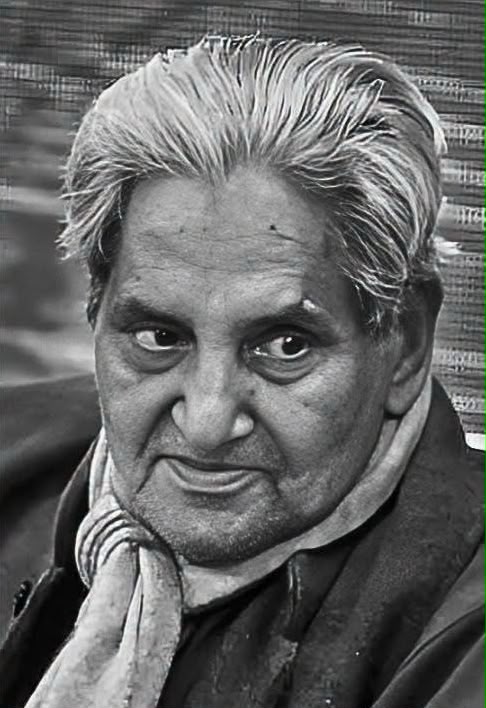
Eight Years After His Passing, the Voice That Bridged Literature and Cinema Still Waits to Be Fully Remembered
“Aur hum khade-khade bahaar dekhte rahe,
Karvaan guzar gaya, gubaar dekhte rahe.”
(“We stood watching the spring unfold, while the caravan moved on and all that remained for us was the dust.”)
Few lines in modern Hindi poetry have captured the tragedy of missed opportunities and the relentless march of time with the haunting simplicity of these immortal verses by Gopaldas Saxena “Neeraj”. Ironically, they have also become the most fitting epitaph for the poet himself. Eight years after his passing on 19 July 2018, India remembers his songs but has increasingly forgotten the extraordinary poet who wrote them.
Neeraj belonged to that rare constellation of literary figures who erased the artificial divide between serious poetry and popular culture. He was equally at home before thousands gathered at kavi sammelans as he was in the recording studios of Bombay. His verses could stir political conscience, explore philosophical truths, celebrate love, or melt seamlessly into unforgettable melodies without ever compromising their literary elegance.
In an era when film lyrics often aspired to poetry, Neeraj ensured that poetry itself became music.
The Poet Who Rose from Adversity
Born on 4 January 1925 in Puravali village near Etawah in Uttar Pradesh, Neeraj’s life began with hardship. Losing his father at the age of six, he grew up amidst financial struggles, supported largely by relatives who recognised his hunger for education. Those early years of deprivation would later deepen his empathy for ordinary people and enrich the emotional honesty of his poetry.
Even as a schoolboy, he displayed an astonishing gift for verse. His participation in kavi sammelans quickly established him as a young voice of uncommon promise. During the turbulent years of the freedom movement, his poetry acquired a rebellious edge. His celebrated poem “Main Vidrohi Hoon” attracted official attention and reportedly forced him into hiding for a period—a reminder that Neeraj’s poetry was never merely ornamental. It carried within it the courage to question authority.
After completing his education, he briefly worked as an Information Officer before finding his true calling as a teacher of Hindi literature at Dharma Samaj College in Aligarh. The classroom became another stage from which he nurtured a generation’s love for language while continuing to write poetry that resonated across North India.
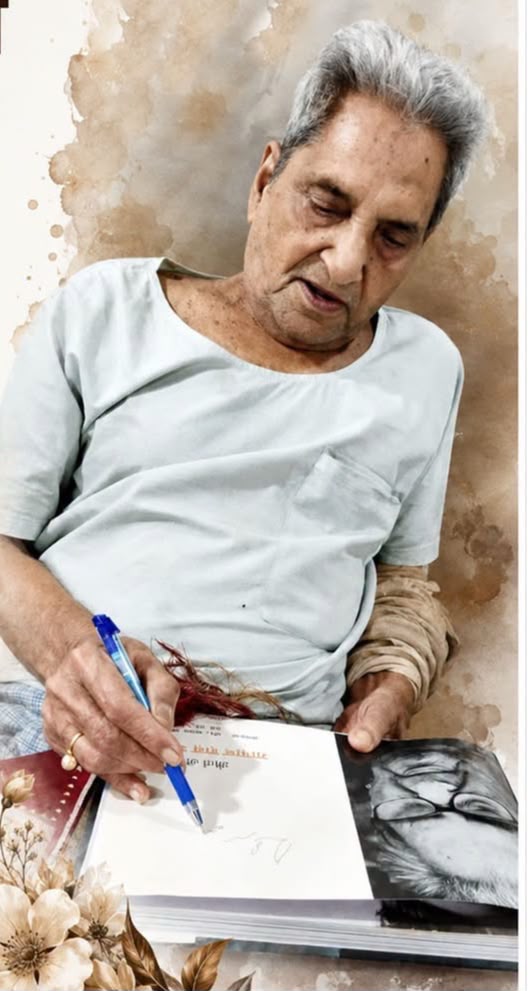
When Poetry Entered Hindi Cinema
Neeraj entered Hindi cinema almost accidentally, but once he arrived, he transformed film lyrics.
His poem “Karvaan Guzar Gaya” so impressed filmmaker R. Chandra that it became the emotional centrepiece of “Nai Umar Ki Nai Fasal” (1966). Yet his cinematic debut had already come earlier with “Cha Cha Cha” (1964), where “Subah Na Aayi Shaam Na Aayi” announced the arrival of a lyricist unlike any other.
What distinguished Neeraj from many of his contemporaries was that he never wrote merely to fit a tune. He brought the dignity of literature into cinema without making his songs inaccessible. His lyrics retained philosophical depth while remaining instantly memorable.
His collaborations with composers such as S. D. Burman and Shankar-Jaikishan, and filmmakers including Dev Anand and Raj Kapoor, produced some of the most enduring songs in Indian cinema.
Who can forget the intoxicating romance of “Shokhiyon Mein Ghola Jaaye”, the painterly imagination of “Phoolon Ke Rang Se Dil Ki Qalam Se”, the wistful melancholy of “Dil Aaj Shaayar Hai”, the aching longing of “Likhe Jo Khat Tujhe”, or the philosophical warning embedded in Ae “Bhai Zara Dekh Ke Chalo”?
These songs continue to find new listeners decades after their creation because they were never merely songs. They were poems set to music.
The Philosophy of Love, Time and Humanity
“Swapna jhare phool se, meet chubhe shool se…”
(“Dreams fell like flowers; friendships pricked like thorns.”)
Neeraj’s poetry occupied a unique space where romance coexisted with existential reflection. His poems celebrated beauty while remaining acutely aware of its impermanence.
Like the great Urdu poets, he understood that love could become a metaphor for life itself. Yet unlike many romantics, he refused to surrender to despair. Even in sorrow there remained hope; even in separation there remained tenderness.
His celebrated collections—including “Asavari”, “Geet Jo Gaye Nahin, Pushp Parijat Ke”, “Nadi Kinare”, “Neeraj Ke Prem Geet”, “Karvaan Geeton Ka” and the multi-volume Neeraj “Rachnavali”—demonstrate the remarkable breadth of his literary imagination. His language remained accessible without ever becoming simplistic, allowing readers from vastly different backgrounds to discover themselves within his verses.
Perhaps this explains why Neeraj became equally beloved by literary scholars and ordinary readers.
The Poet of Conscience
“Ab to mazhab koi aisa bhi chalaya jaaye,
Jis mein insaan ko insaan banaya jaaye.”
(“Let there arise a faith whose highest purpose is simply to make human beings more humane.”)
Long before public discourse became deeply polarised, Neeraj articulated an ethical vision rooted in compassion rather than identity.
These lines have acquired renewed relevance in contemporary India. They reject sectarianism without rejecting faith; they advocate humanity without diminishing cultural traditions. Few poets have expressed the essence of Indian pluralism with such disarming simplicity.
Equally memorable are his satirical observations on public life:
“Jyon loot le kahaar hi dulhan ki paalki,
Haalat yahi hai aaj kal Hindustaan ki.”
(“As though the very bearers plunder the bride’s palanquin—that is the condition of India today.”)
In just two lines, Neeraj exposed the tragedy of institutions betraying the people they were meant to serve. His social criticism never descended into bitterness; it remained anchored in moral concern.
A Poet Who Refused Elitism
Unlike many literary figures who remained confined to academic circles, Neeraj carried poetry to the masses.
His recitations at kavi sammelans drew audiences in the tens of thousands. Listeners who had never opened a volume of poetry could nevertheless recite his verses from memory. His diction was rooted in everyday Hindi enriched by Sanskritic cadence and occasionally touched by Urdu elegance.
He demonstrated that popularity need not come at the expense of literary quality.
This rare achievement explains why generations continue to sing his songs without always realising that they are also reciting poetry.
Honours That Could Never Measure His Legacy
The Government of India honoured Neeraj with the Padma Shri in 1991 and the Padma Bhushan in 2007. He also received numerous literary distinctions, including recognition from the Hindi literary establishment and universities across the country.
Yet awards alone cannot explain his stature.
His true honour lies in the fact that his songs continue to accompany India’s most intimate moments—love, separation, celebration, nostalgia and remembrance. They have become part of the nation’s emotional vocabulary.
Few poets can claim such enduring intimacy with millions of lives.
Why Neeraj Matters Today
The contemporary landscape of popular music is driven increasingly by speed, spectacle and digital algorithms. Lyrics are often consumed briefly before being forgotten.
Neeraj belonged to another tradition altogether. He believed words should endure beyond the moment. A song, for him, was not merely entertainment but an artistic and moral experience.
His work reminds us that poetry can remain profound without becoming obscure; that popular culture need not abandon literary excellence; and that humanism remains the highest form of patriotism.
As India reflects on the eighth anniversary of his passing, perhaps the greatest tribute would be to return not only to his famous songs but also to his books, his poems and his larger vision of humanity.
For Neeraj never wrote merely to be heard.
He wrote to awaken.
And perhaps that is why his voice still echoes across generations, reminding us that while caravans inevitably move on, great poetry never truly departs. It remains behind—not as dust, but as light.

~Hasnain Naqvi is a former member of the history faculty at St. Xavier’s College, Mumbai….
The opinions expressed here are solely those of the author.

