

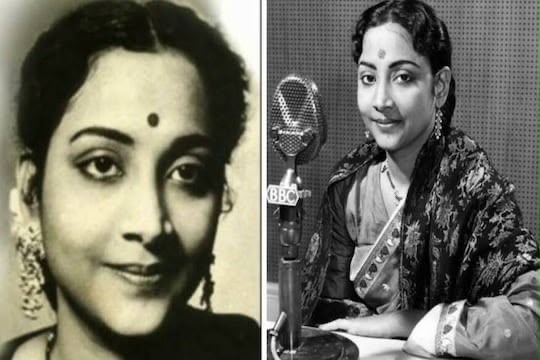
On her 54th death anniversary, a tribute to the singer whose fragile, intimate voice continues to echo across generations
“Waqt ne kiya kya haseen sitam, tum rahe na tum, hum rahe na hum.”
“Time has played such beautiful cruelties; you are no longer yourself, nor am I mine.”
Few lines in Hindi cinema capture the bittersweet passage of time as poignantly as these immortal words from Kaagaz Ke Phool (1959). Sung by Geeta Dutt with breathtaking tenderness and composed by S.D. Burman to Kaifi Azmi’s poetry, the song has become synonymous not merely with an unforgettable film but with Geeta Dutt’s own life—one that soared to extraordinary artistic heights before descending into heartbreaking personal tragedy.
More than five decades after her untimely passing on 20 July 1972, Geeta Dutt remains one of the most distinctive voices Indian cinema has ever known. She was not merely a playback singer; she was an interpreter of human emotions. In every note she sang, there was intimacy, vulnerability, mischief, longing and an effortless naturalness that made listeners believe the heroine herself was singing.
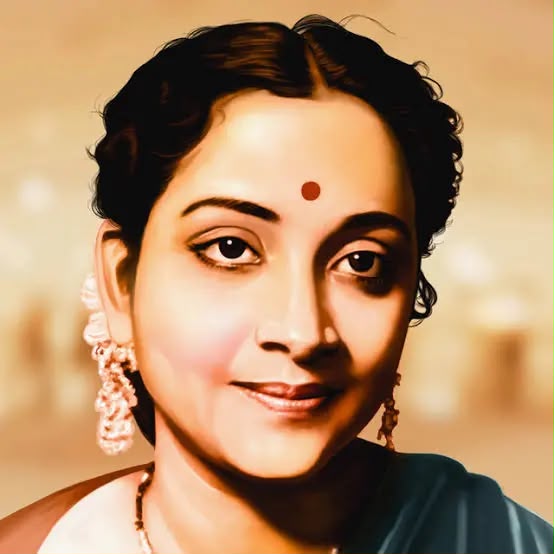
The Skylark of Indian Cinema
Born Geeta Ghosh Roy Chowdhury on 23 November 1930 in Faridpur (now in Bangladesh), she belonged to a zamindar family forced to migrate to Bombay during the turbulent years preceding Independence. The family settled in Dadar, where destiny intervened in the most unexpected manner.
Music director K. Hanuman Prasad, passing by the family’s residence, happened to hear the teenage Geeta singing. Mesmerised by the freshness of her voice, he introduced her to films through Bhakt Prahlad (1946). It was a modest beginning, but greatness was already waiting in the wings.
The defining breakthrough arrived when S.D. Burman entrusted the seventeen-year-old with songs in Do Bhai (1947). Her haunting rendition of “Mera Sundar Sapna Beet Gaya” transformed overnight into a national sensation.
“Mera sundar sapna beet gaya…”
“My beautiful dream has slipped away…”
The aching maturity in that youthful voice astonished audiences. Here was a teenager capable of expressing grief with astonishing emotional depth.
Soon followed another unforgettable lament:
“Yaad karoge, yaad karoge, ek din humko yaad karoge.”
“One day you will remember me; one day you surely will.”
History has fulfilled that prophecy.
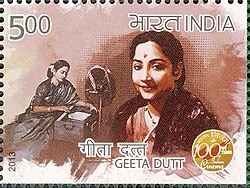
A Voice Unlike Any Other
The golden age of Hindi film music was blessed with extraordinary female singers, each possessing an unmistakable identity. Yet Geeta Dutt occupied a space entirely her own.
Where technical perfection often defined playback singing, Geeta offered emotional truth. There was a conversational ease in her voice, a smoky warmth, an almost jazz-like freedom in phrasing and an ability to convey joy and heartbreak with equal conviction. Music historians have often observed that while other singers dazzled with precision, Geeta enchanted with personality.
Whether singing a playful club number, a classical composition, a bhajan or a ghazal-inspired melody, she never sounded manufactured. Every song carried the unmistakable stamp of lived emotion.
Her contemporaries admired her deeply, and generations of musicians have acknowledged the singular quality of her voice. Music lovers continue to marvel at how effortlessly she could move from coquettish charm to profound melancholy within the same composition.
The Muse of Great Composers
Few singers enjoyed such fruitful collaborations with India’s greatest music directors.
With S.D. Burman, she created timeless classics including Mera Sundar Sapna Beet Gaya, Aaj Sajan Mohe Ang Laga Lo, Hum Aap Ki Aankhon Mein, Nanhi Kali Sone Chali and the immortal Waqt Ne Kiya Kya Haseen Sitam.
Her partnership with O.P. Nayyar revealed an entirely different facet of her artistry. She injected irresistible vitality into songs such as “Babuji Dheere Chalna,” “Jaane Kahan Mera Jigar Gaya Ji,” “Aye Dil Hai Mushkil Jeena Yahan,” “Mera Naam Chin Chin Chu,” and the once-censored “Jaata Kahan Hai Deewane.”
“Babuji dheere chalna, pyaar mein zara sambhalna.”
“Walk gently, dear sir; tread carefully in the lanes of love.”
The playful flirtation in her voice remains unmatched.
With Hemant Kumar, she gave unforgettable performances in “Na Jao Saiyan Chhuda Ke Baiyan,” “Piya Aiso Jiya Mein Samaye Gayo,” “Na Yeh Chand Hoga,” and the devotional evergreen “Jai Jagdish Hare.”
“Na jao saiyaan chhuda ke baiyaan…”
“Do not leave me, beloved, slipping away from my embrace.”
Rarely has longing been rendered with such aching intimacy.
She also enriched the compositions of Madan Mohan, Kanu Roy, Salil Chowdhury, Hemant Kumar, Ravi, Anil Biswas, Chitragupta, Roshan and numerous other composers, leaving behind a repertoire of well over 1,500 songs across Hindi, Bengali and several other Indian languages.
Her devotional singing was equally moving. The bhajan “Ghunghat Ke Pat Khol” from Jogan and numerous non-film recordings demonstrated that spirituality, too, found an authentic voice in her music.
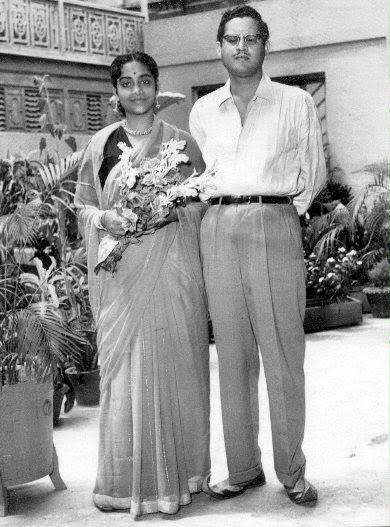
The Guru Dutt Years
No account of Geeta Dutt’s life can ignore her profound association with filmmaker Guru Dutt.
They first met during the making of Baazi and married in 1953. Together they became one of Indian cinema’s most celebrated creative couples. Her voice became inseparable from the emotional landscape of Guru Dutt’s films—Baazi, Pyaasa, CID, Kaagaz Ke Phool, Sahib Bibi Aur Ghulam and others.
The artistic synergy between Guru Dutt’s visual poetry and Geeta’s emotionally transparent singing produced some of Hindi cinema’s greatest musical moments.
Yet behind this creative brilliance lay growing personal turmoil. Their marriage became strained amid professional pressures, conflicting expectations and Guru Dutt’s widely discussed closeness to actress Waheeda Rehman. As domestic unhappiness deepened, Geeta’s recording assignments diminished. Alcohol gradually entered her life, damaging both her health and career.
Guru Dutt’s death in 1964 dealt another devastating emotional blow from which she never fully recovered.
A Swan Song That Became Immortal
Despite years of hardship, Geeta Dutt proved that true artistry could never be extinguished.
In Anubhav (1971), music director Kanu Roy entrusted her with one of the finest songs of her career:
“Mujhe jaan na kaho meri jaan…”
“Do not merely call me your life, my beloved…”
There is astonishing maturity in that rendition. Every phrase carries the wisdom of suffering transformed into music. Critics and listeners alike regard it as one of the greatest playback performances ever recorded.
Less than a year later, on 20 July 1972, Geeta Dutt succumbed to liver disease at the tragically young age of forty-one. Indian cinema lost one of its most original voices, leaving behind three young children and an irreplaceable musical legacy.
A Legacy Beyond Time
In the decades since her passing, Geeta Dutt’s stature has only grown. Music scholars, archivists and collectors continue to rediscover forgotten gems from her vast repertoire. Digital platforms have introduced her voice to younger audiences who find in it a freshness that transcends generations.
Her songs continue to be analysed in books on Hindi film music, celebrated in documentaries, revisited in concerts and cherished by connoisseurs who recognise in her singing a rare combination of technical finesse and emotional authenticity.
Unlike many singers whose brilliance depended on vocal virtuosity alone, Geeta Dutt possessed something far rarer: she made every lyric believable. She never merely sang; she conversed, pleaded, laughed, flirted, prayed and wept through music.
The Voice That Time Could Not Silence
Perhaps no other singer’s life mirrors her own songs as poignantly as Geeta Dutt’s. The woman who gave voice to heartbreak eventually lived it herself. Yet the sorrow that shadowed her personal life has never diminished the radiance of her art.
If time altered the circumstances of her life, it only deepened the immortality of her music.
“Yaad karoge, yaad karoge, ek din humko yaad karoge.”
“One day you will remember me.”
Indeed, every generation does.
And every time Waqt Ne Kiya Kya Haseen Sitam, Na Jao Saiyan, Babuji Dheere Chalna or Mujhe Jaan Na Kaho Meri Jaan fills the air, Geeta Dutt returns—not as a memory of a bygone era, but as a living voice that continues to remind us that the greatest music is not merely heard.
It is felt.

~Hasnain Naqvi is a former member of the history faculty at St. Xavier’s College, Mumbai….
The opinions expressed here are solely those of the author.

