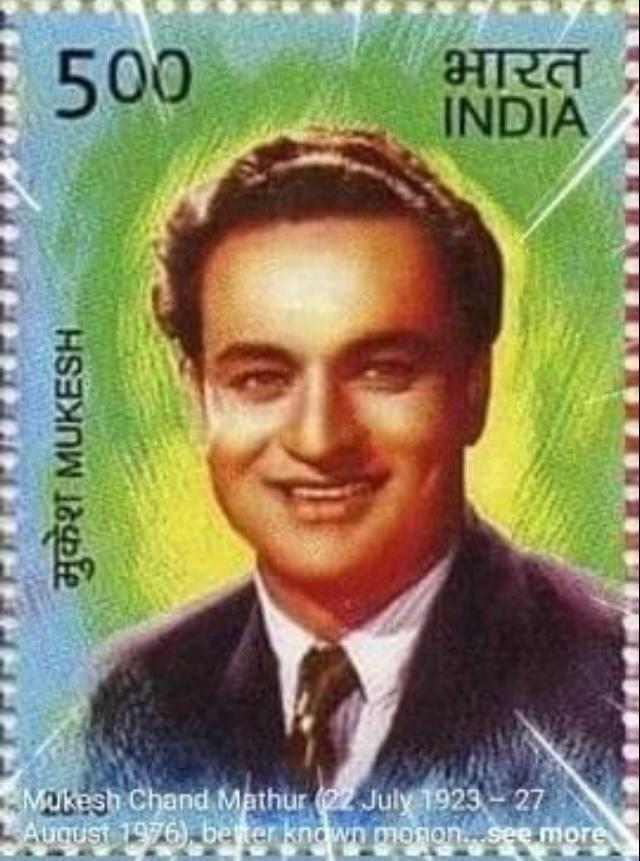
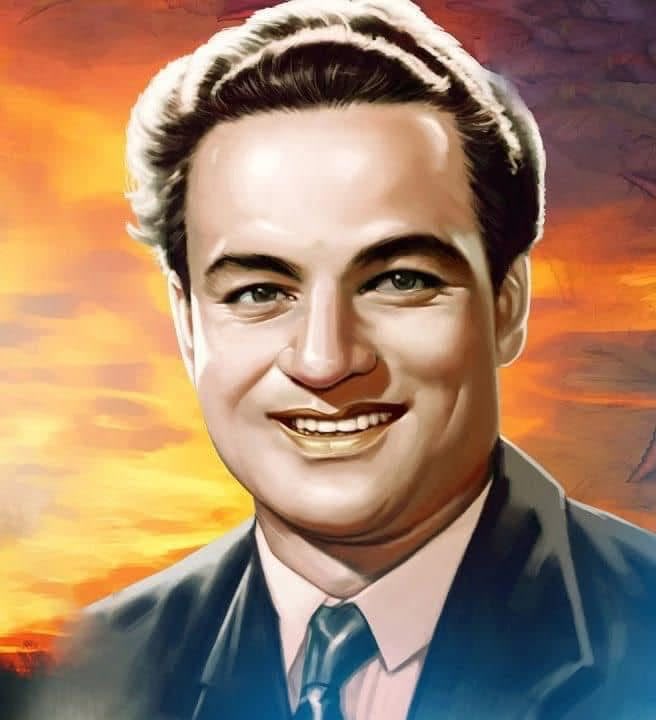
In the golden tapestry of Hindi cinema’s playback era, five giants defined the musical contours of a newly independent nation: Mohammed Rafi, Kishore Kumar, Manna Dey, Talat Mahmood, and Mukesh. Yet, among these luminaries, Mukesh Chand Mathur held a space uniquely his own. He was not a vocal gymnast, nor did he possess a wide, dramatic octave range. Instead, Mukesh possessed something far rarer: an undeniable sincerity that transformed simple melodies into profound human truths. On July 22, as music lovers celebrate his 103rd birth anniversary, the lingering resonance of his voice reminds us why a repertoire of roughly 1,300 songs—a modest figure compared to his contemporaries—carries an immortal weight. For Mukesh, art was never about volume; it was about purity.
From Imitation to Identity: The Architect of a Signature Sound
Mukesh’s journey began innocently at a sister’s wedding, where his distant relative, the renowned actor Motilal, overheard the young singer and immediately recognized an unpolished gem. Motilal brought him to Mumbai and arranged classical training under Pandit Jagannath Prasad. Mukesh initially stepped into the film world as an actor-singer with Nirdosh (1941), rendering his first screen song, “Dil Hi Bujha Hua Ho To”. By 1945, he delivered his breakthrough playback track for Motilal in Pehli Nazar, composed by Anil Biswas with lyrics by Aah Sitapuri. The song was “Dil Jalta Hai To Jalne De”, sung in a style heavily influenced by his idol, K.L. Saigal. Legend has it that when Saigal himself first heard the track, he remarked in wonderment, “That’s strange, I don’t recall singing that song.”
Dil jalta hai to jalne de, aansoo na baha fariyaad na kar (“Let the heart burn if it must; shed no tears, offer no plea.”)
Recognizing that mimicry would limit his longevity, master composer Naushad Ali stepped in during the recording of Andaz (1949). Naushad gently nudged Mukesh away from Saigal’s shadow, helping him forge his own trademark vocal identity—one anchored in deep emotional intimacy and gentle sorrow.
The Voice of the Common Man
In the late 1940s and early 1950s, Mukesh initially lent his voice to Dilip Kumar across hits like Anokhi Ada, Mela, Anokha Pyar, Yahudi, and Madhumati, working with stalwarts like Anil Biswas, Salil Chowdhury, and Shankar-Jaikishan. However, as Dilip Kumar gradually aligned with Mohammed Rafi, destiny paved another path: Mukesh became the indispensable “screen voice” of Raj Kapoor. Together, Raj Kapoor and Mukesh created one of the most iconic actor-singer pairings in cinematic history. Mukesh gave acoustic shape to Kapoor’s screen persona—the tragi-comic tramp, the honest everyday man navigating a cynical world. Their collaboration yielded timeless Filmfare Award-winning classics like “Sab Kuch Seekha Humne” from Anari (1959).
Sab kuch seekha humne na seekhi hoshiyaari, sach hai duniya waalon ke hum hain anaadi (“I learned everything except cleverness; it is true, world, that I remain a simpleton.”)
Beyond Raj Kapoor, Mukesh forged an exceptionally rich creative partnership with the composer duo Kalyanji-Anandji, recording more songs with them than with any other maestro. From early tracks like “Naina Hai Jadoo Bhare” (Bedard Zamana Kya Jane) to enduring classics in Chalia, Himalay Ki Godmein, Upkar, Purab Aur Paschim, and Safar, Kalyanji-Anandji utilized Mukesh’s subtle vulnerability to capture the social ethos of the era.
Quality Over Quantity: The Anatomy of a Master
The 1970s brought significant shifts to Hindi film music, marked by the explosive surge of Kishore Kumar and Mukesh’s own deteriorating heart health. Yet, even as his recording frequency slowed, the artistic weight of his output only deepened. Mukesh garnered numerous accolades throughout his career, including Filmfare Awards for “Sabse Bada Naadan Wahi Hai” (Pehchaan), “Jai Bolo Beimaan Ki” (Beimaan), and the haunting title track of “Kabhi Kabhie”. His crowning artistic recognition arrived in 1974, when he won the National Film Award for Best Male Playback Singer for his delicate rendering of “Kai Baar Yuhi Dekha Hai” in Basu Chatterjee’s Rajnigandha. In songs like Anand’s “Kahin Door Jab Din Dhal Jaaye” and Shor’s “Ek Pyaar Ka Nagma Hai”, Mukesh sang not merely as an entertainer, but as a philosopher of the human condition.
Kahin door jab din dhal jaaye, saanjh ki dulhan badan churaye, chupke se aaye (“Somewhere far away when the day sets, and the evening bride slips away softly into the night…”)
An Eternal Echo
Decades after his untimely passing in 1976, Mukesh’s legacy remains immune to the passage of time. He proved that a singer does not need endless flourishes or complex vocal gymnastics to touch millions of hearts; a genuine feeling, quietly expressed, is enough. As we mark his 103rd birth anniversary, his own words from Mera Naam Joker serve as both his epitaph and his promise to future generations of music lovers:
Jeena yahan marna yahan, iske siva jaana kahan… kal khel mein hum ho na ho, gardish mein taare rahenge sada (“To live here, to die here; where else is there to go? Whether I remain in this play tomorrow or not, these stars will revolve forever.”)