

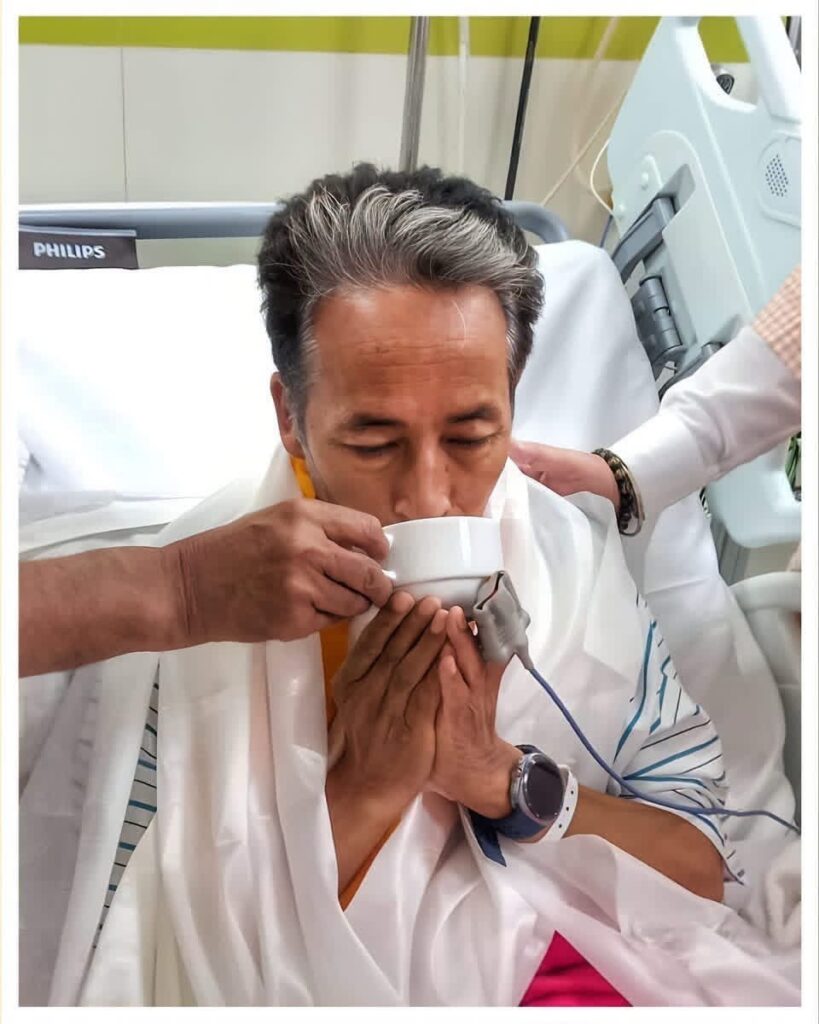
Sonam Wangchuk’s decision to end his 26-day hunger strike at Medanta Hospital in Gurugram, accepting juice from Union Minister JP Nadda in the presence of another minister, Jitendra Singh, marks a stunning capitulation. The Ladakh activist, who positioned himself as a champion of students protesting the NEET paper leaks and systemic failures in education, walked away without securing the central demand: the resignation or removal of Education Minister Dharmendra Pradhan. Far from a triumphant resolution, the midnight hospital-room ceremony has left the broader student agitation fractured, its moral high ground eroded, and its leadership exposed as unreliable.
What was billed as a principled fast for accountability has instead delivered vague assurances of future talks while the minister at the heart of the controversy remains firmly in place. The optics could not have been more damaging: the protester who fasted against the government broke bread—literally—with its representatives in a five-star hospital setting, away from the Jantar Mantar epicentre where lathi-charged students and their families continue to demand justice. No representatives of the core student unions on hunger strike were present. The symbolism was unmistakable: a personal exit strategy, not a movement victory.
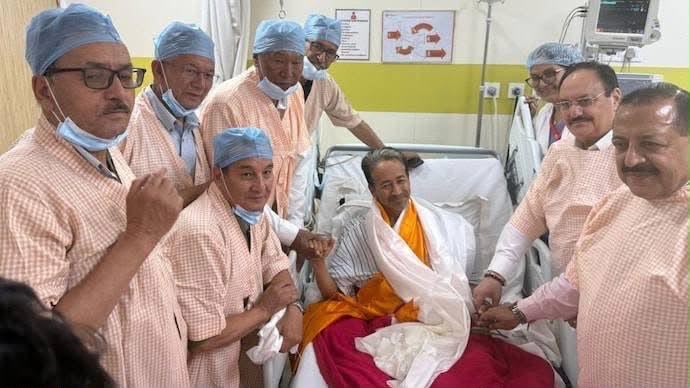
Engineered Optics and the Midnight Deal
The choreography of Wangchuk’s surrender raises troubling questions about coordination. Ministers from the very government he was confronting stood at his bedside as he accepted their terms. In exchange, the government offered no concrete concessions on Pradhan’s position or systemic reforms in the examination process. Instead, the understanding reportedly included a plea against “legal cases, harassment or vindictive action” against protesters—language that implicitly concedes the possibility of student wrongdoing rather than rejecting the state’s narrative of violence on July 20.
This framing is particularly damaging. Credible accounts from the ground describe peaceful demonstrators carrying placards and result sheets, only to face violence amid allegations of planted outsiders who manufactured chaos to justify a crackdown. By seeking clemency instead of forcefully rejecting the “violent students” label, Wangchuk effectively lent credence to the government’s version. A genuine advocate would have insisted the youth were victims, not perpetrators requiring forgiveness. Gandhi, as historical parallels remind us, never conceded the moral equivalence of protest and riot; he fought the label as fiercely as the policy itself. Wangchuk’s compromise, by contrast, hands the state a quiet propaganda win: the protests can now be painted as unruly elements deserving restraint rather than a legitimate outpouring of generational anger.
The absence of injured students or their parents at the hospital room meeting further underscores the disconnect. This was not a negotiation rooted in the movement’s grassroots but a carefully staged denouement involving government insiders. Wangchuk’s own history—contact facilitated through official channels, past legal entanglements including NSA invocation, and scrutiny of his NGOs—has fuelled speculation about his role. Whether planted to divert attention from NEET scandals or simply opportunistic, his exit at this juncture has siphoned energy from a leaderless, nationwide youth unrest that spans dozens of cities.
Echoes of Past Spectacles
The episode uncomfortably mirrors Anna Hazare’s 2011 anti-corruption crusade: massive public mobilization, media hype, personal fasting as spectacle, and ultimate dilution into nothing substantive. Hazare’s movement promised sweeping change but delivered fleeting drama. Wangchuk, more sophisticated in presentation and leveraging Ladakh’s cultural resonance (including his earlier celebration of Article 370’s abrogation), has similarly converted raw youth fury into a personal narrative that collapsed when real stakes emerged. The result is familiar: disillusionment among participants who invested hope in a figure who ultimately prioritized face-saving over confrontation.
Notably, prominent opposition voices like Rahul Gandhi maintained distance from what increasingly appears as a managed sideshow. Meanwhile, parties like AAP offered vocal backing, only to see the fast dissolve without pressure on core issues. The timing—ending precisely when broader student protests risked sustaining momentum—suggests either naivety or calculation. In either case, it undercuts the perception of unified resistance against examination leaks, paper leaks that have ruined careers and exposed deep rot in the National Testing Agency and education ministry.
Credibility Collapse and Leadership Vacuum
Wangchuk had built significant sympathy. His past activism, resilience under state pressure, and articulate advocacy resonated with students feeling abandoned by the system. Yet by retreating from the Pradhan resignation demand and conducting talks in a private hospital rather than at the protest site—ideally accepting sustenance from an injured student—he squandered that capital. The movement’s decentralized nature, lacking a single steering body, was both its strength (organic spread) and vulnerability (susceptibility to individual defections). No single figure’s compromise should have binding power, yet Wangchuk’s high profile lent his actions outsized weight.
This surrender risks portraying the protests as leaderless and easily defused. Students agitating nationwide may now question whom to trust. If the government can peel away visible symbols through backstage deals, the collective pressure dissipates. The BJP, with its deep bench of strategists and bureaucratic machinery, appears to have navigated the crisis by isolating one voice rather than addressing root grievances. Prime Minister Modi’s image takes a hit with every passing day of unresolved deadlock, but the immediate casualty is the movement’s coherence.
Implications for the Future of Student Agitation
The long-term fallout is concerning. A generation already battered by pandemic learning losses, job scarcity, and repeated examination scandals now witnesses another high-profile activist fold without delivering accountability. This breeds cynicism: if even a 26-day fast ends in symbolic gestures and unkept promises of dialogue, what hope for sustained change? The core issues—NEET leaks, opaque recruitment, and ministerial responsibility—remain unaddressed, likely fueling underground resentment rather than organized protest.
Future mobilizations may turn more fragmented or radical, wary of charismatic individuals who can be co-opted or compromised. Decentralized networks might endure, but without mechanisms to vet leaders or enforce accountability, they risk repeated hijackings. The government gains breathing room to manage optics, perhaps through minor administrative tweaks while shielding key figures like Pradhan. Yet unresolved grievances rarely vanish; they metastasize.
Wangchuk’s exit also highlights deeper challenges in Indian protest politics: the ease with which state power can exploit personal ambitions, historical baggage, or fatigue. For the youth, the lesson is stark—true change demands persistence beyond any single fasting figure. The lathi charges, the missing accountability for planted violence, and the examination mafia require structural confrontation, not negotiated mercy.
In the end, Sonam Wangchuk’s hospital-room denouement is less about one man’s physical limits than a movement’s exposed fragility. By accepting juice from Nadda instead of solidarity from the streets, he traded moral clarity for a staged exit. The students he claimed to represent deserve better: justice, not forgiveness for crimes they did not commit. Until the system confronts its failures head-on, this generation’s anger will simmer, waiting for leadership that refuses to surrender the narrative—or the fight.

~Hasnain Naqvi is a former member of the history faculty at St. Xavier’s College, Mumbai….
The opinions expressed here are solely those of the author.