

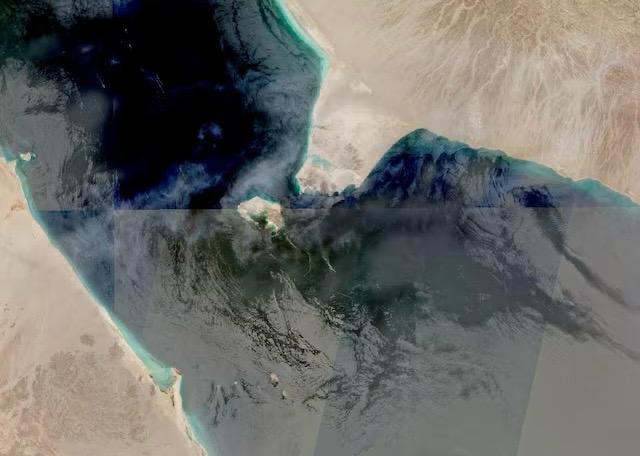
Saudi oil under pressure, global trade at risk, and the strategic consequences of Yemen’s expanding maritime campaign
For decades, global energy security revolved around a single maritime chokepoint: the Strait of Hormuz. Today, however, another narrow stretch of water—Bab el-Mandeb—has emerged as an equally consequential strategic flashpoint. The recent decision by Yemen’s Ansarullah (Houthis) to impose what it describes as a maritime embargo on Saudi shipping, followed by attacks claimed against Saudi oil tankers and threats of further operations by military spokesperson Yahya Saree, has transformed the Red Sea into one of the world’s most volatile theatres of geopolitical contestation.
Whether one accepts or rejects the Houthis’ justification, their actions have underscored an uncomfortable strategic reality: a relatively inexpensive arsenal of drones, anti-ship missiles and naval capabilities can impose disproportionate costs on some of the world’s largest economies.
The implications extend far beyond Yemen or Saudi Arabia. They reach every economy dependent on uninterrupted maritime trade—from Europe and Asia to Africa and North America.
The World’s “Double Choke Point”
Bab el-Mandeb, literally meaning the “Gate of Tears”, connects the Gulf of Aden with the Red Sea and, ultimately, the Suez Canal. Barely 26 kilometres wide at its narrowest point, it is among the world’s most strategically significant maritime corridors.
Its importance becomes even greater because it functions alongside the Strait of Hormuz. Together, these two narrow waterways form what may be described as the double choke point of global energy trade.
Saudi Arabia has long relied on the East-West Pipeline carrying crude from its eastern oilfields to the Red Sea port of Yanbu precisely to reduce dependence on Hormuz. However, if Bab el-Mandeb itself becomes unsafe, that alternative route is severely compromised. The result is strategic vulnerability on both coasts.
Ansarullah’s New Maritime Strategy
In recent official statements, Ansarullah spokesman Yahya Saree announced what the movement called a naval embargo targeting Saudi maritime traffic through Bab el-Mandeb. He argued that the measure was retaliation for renewed Saudi military actions and what the movement describes as years of blockade imposed on Yemen.
Subsequently, Saree claimed responsibility for attacks on Saudi oil tankers in the Red Sea, warning that further operations would continue if military action against Yemen persisted. Independent reporting has confirmed that the Houthis publicly claimed these attacks, although assessments of operational damage have varied among different media organisations.
For shipping companies, however, the distinction between confirmed destruction and credible threat matters little. Insurance premiums rise, vessels alter routes and freight costs increase even when attacks are merely anticipated.
In modern maritime warfare, fear itself becomes an economic weapon.
Why Saudi Arabia Faces an Unprecedented Challenge
The current crisis places Saudi Arabia in a uniquely difficult strategic position.
For years, Riyadh invested billions in infrastructure designed to bypass Hormuz through Red Sea exports. Yet the present conflict has demonstrated that bypass routes remain useful only when every connecting maritime corridor remains secure.
Recent reports indicate that several tankers altered course or reconsidered planned transits following Houthi announcements, while shipping companies have increasingly evaluated longer voyages around the Cape of Good Hope as a safer alternative. Such diversions increase fuel consumption, delay deliveries and substantially raise transportation costs.
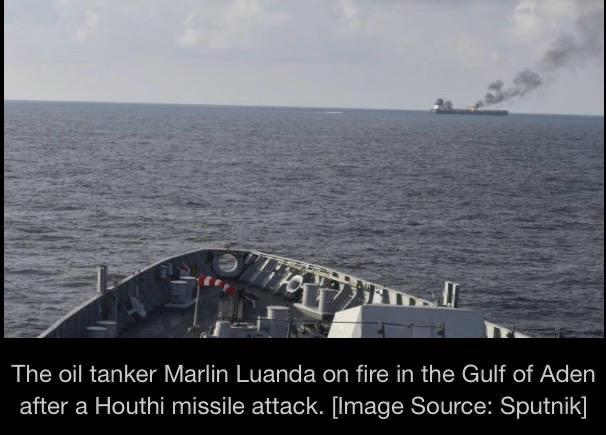
The economic impact extends beyond Saudi Arabia.
Egypt risks reduced Suez Canal revenues.
European importers face longer supply chains.
Asian refiners encounter delayed crude deliveries.
Global shipping insurers reassess risk calculations almost daily.
Economic Shockwaves Beyond Oil
The Red Sea carries not merely crude oil but a significant share of global container traffic linking Asia with Europe.
When vessels avoid Bab el-Mandeb, they often sail around southern Africa via the Cape of Good Hope.
This diversion adds thousands of nautical miles, increases voyage duration by weeks and significantly raises shipping expenses.
Such disruptions eventually appear in consumer markets through higher freight rates, more expensive imported goods, inflationary pressures and supply-chain uncertainty. Analysts have warned that a prolonged disruption could push oil prices substantially higher while affecting diesel, aviation fuel and industrial inputs across multiple economies.
Unlike previous regional conflicts, the economic consequences are no longer geographically confined.
The New Mathematics of Asymmetric Warfare
Perhaps the most striking lesson from the Red Sea crisis is the changing nature of military power.
Traditional naval superiority no longer guarantees uninterrupted commercial navigation.
Relatively inexpensive missiles, drones and unmanned maritime systems can compel multinational shipping corporations to reroute billion-dollar cargoes.
This represents a profound shift in maritime security.
Instead of destroying fleets, non-state actors can simply make passage appear sufficiently risky that commercial operators avoid it voluntarily.
In strategic terms, deterrence has become decentralised.
The Houthis need not permanently close Bab el-Mandeb. They merely need to create persistent uncertainty.
The Limits of Military Solutions
The United States, European naval forces and regional partners have devoted considerable resources to protecting Red Sea shipping since the beginning of the broader maritime crisis.
Yet repeated attacks and continued threats suggest that military escorts alone cannot eliminate the underlying strategic problem.
Commercial shipping depends not merely upon naval protection but upon predictability.
As long as missile launches remain possible from Yemen’s coastline, shipping companies will continue incorporating geopolitical risk into operational planning.
Consequently, insurance markets may become as influential as military deployments.
Diplomacy or Escalation?
The future trajectory depends upon wider developments across the Middle East.
If hostilities between Saudi Arabia, Iran and Yemen continue intensifying, Bab el-Mandeb could witness sustained disruption.
Conversely, renewed diplomatic engagement between regional powers could gradually restore confidence among commercial operators.
Yet confidence, once lost, returns slowly.
Shipping companies generally require months—not days—before fully restoring previous routes after major security crises.
Even if military tensions ease, insurers, traders and energy companies will likely remain cautious.
A Warning for the Global Economy
The Red Sea embargo illustrates an increasingly interconnected geopolitical reality.
Energy security can no longer be analysed solely through production volumes or reserve capacities.
Maritime geography has become equally decisive.
The simultaneous vulnerability of Hormuz and Bab el-Mandeb exposes the fragility of an international trading system built upon uninterrupted maritime movement.
Should both chokepoints remain under sustained pressure, the consequences would extend well beyond oil markets, affecting food supplies, manufacturing, container logistics and global inflation.
For policymakers, the lesson is unmistakable.
Protecting global commerce requires more than naval deployments. It demands sustained diplomacy, regional de-escalation and renewed efforts to address the political conflicts that transform strategic waterways into battlegrounds.
Bab el-Mandeb has long been called the “Gate of Tears”. Recent events suggest that this ancient name has acquired a contemporary geopolitical meaning.
What unfolds in this narrow corridor may determine not merely the future of Saudi oil exports but the resilience of an increasingly fragile global trading order.

~Hasnain Naqvi is a former member of the history faculty at St. Xavier’s College, Mumbai….
The opinions expressed here are solely those of the author.

