

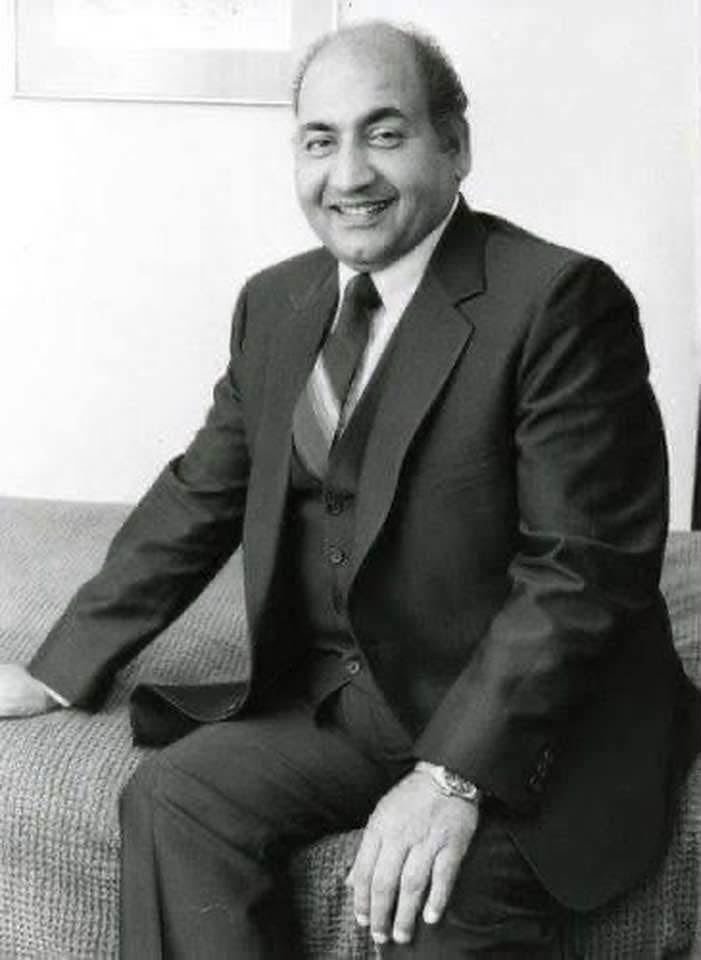
Zindagi to bewafa hai ek din thukrayegi
Zindagi to bewafa hai ek din thukrayegi
Maut mehbooba hai
Maut mehbooba hai apne saath lekar jayegi
Mar ke jeene ki ada jo duniya ko sikhlayega
Wo Muqaddar ka Sikandar
Wo Muqaddar ka Sikandar janeman kahlayega
(Life, a fleeting mistress, will one day turn away,
Life, a fleeting mistress, will one day turn away.
Death, my beloved,
Death, my beloved, will carry me away.
He who learns to live beyond the veil of dying,
He, the conqueror of fate,
He, the conqueror of fate, my love.)
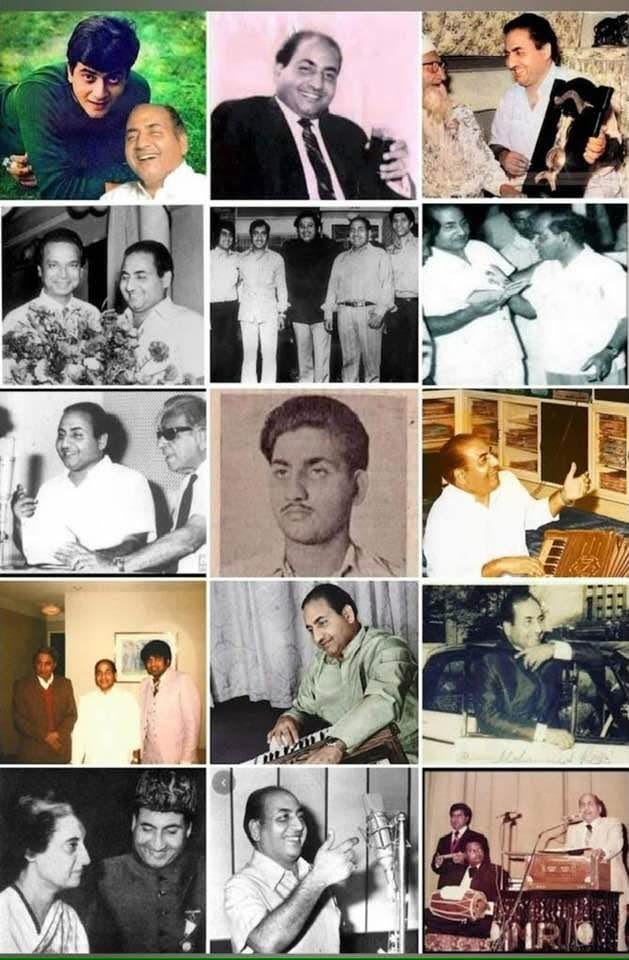
“A voice may fall silent, but a legend never does.”
Forty-six years after his passing, Mohammed Rafi (24 December 1924 – 31 July 1980) continues to reign supreme as one of the greatest playback singers in the history of Indian cinema. Revered as Shahenshah-e-Tarannum—the Emperor of Melody—his voice remains timeless, effortlessly transcending generations, languages and geographical boundaries. Few artists have combined such extraordinary versatility with such profound humility, making Rafi Sahab not merely a singer but an enduring cultural institution.
Whether singing exuberant romantic melodies, heart-rending songs of separation, devotional bhajans, soulful qawwalis, patriotic anthems or demanding classical compositions, Rafi infused every lyric with remarkable emotional depth. His greatest gift lay in his uncanny ability to adapt his voice to the personality of the actor on screen. From Dilip Kumar and Dev Anand to Shammi Kapoor, Rajendra Kumar, Joy Mukherjee, Dharmendra, Jeetendra, Rajesh Khanna, Rishi Kapoor and Amitabh Bachchan, Rafi became the singing soul of generations of Hindi cinema’s leading men.
From Punjab to Bombay
Born in Kotla Sultan Singh near Amritsar, Rafi’s fascination with music began in childhood when he imitated the chants of a wandering fakir. After his family moved to Lahore in 1935, he received rigorous classical training under Ustad Abdul Wahid Khan, Pandit Jiwan Lal Mattoo and Firoze Nizami. At the age of thirteen, he gave his first public performance alongside K. L. Saigal, revealing a prodigious talent that would soon transform Indian film music.
His first playback recording came under composer Shyam Sunder for the Punjabi film Gul Baloch. Soon afterwards, he became a regular performer on All India Radio, Lahore. In 1944, carrying little more than dreams and determination, the young singer moved to Bombay. Living in a modest room in Bhendi Bazar, he struggled through the early years until poet Tanvir Naqvi introduced him to leading film personalities. His Hindi playback debut came with “Gaon Ki Gori”(1945), marking the beginning of a legendary journey.
A Musical Legacy Without Parallel
Over the next three decades, Mohammed Rafi built one of the richest musical legacies in the world, recording more than 7,400 songs for over a thousand films. His repertoire extended far beyond Hindi cinema, embracing Punjabi, Bengali, Marathi, Gujarati, Telugu, Tamil, Assamese, Odia and Konkani, besides songs in English, Farsi, Arabic, Sinhala, Creole and Dutch.
One of the earliest milestones of his career came in 1948 when he sang “Suno Suno Ae Duniyawalon, Bapuji Ki Amar Kahani”, a moving tribute to Mahatma Gandhi following his assassination. The song deeply moved Prime Minister Jawaharlal Nehru, who invited Rafi to perform at his residence and honoured him with a silver medal on Independence Day.
His collaborations with Naushad Ali produced some of Hindi cinema’s finest musical treasures, while his work with O. P. Nayyar, Shankar-Jaikishan, S. D. Burman, Roshan, Ravi, Madan Mohan, Laxmikant-Pyarelal and Khayyam enriched the golden age of Indian film music. His ability to breathe life into every composition ensured that each song became far more than a recording—it became an emotion.
Honours and Recognition
Mohammed Rafi’s extraordinary contribution to Indian music earned him numerous distinctions, including the Padma Shri in 1967, the National Film Award for Best Male Playback Singer, six Filmfare Awards, the BFJA Award, the title of Best Singer of the Millennium in the Stardust–Hero Honda poll (2001), and recognition as the Greatest Voice in Hindi Cinema in the CNN-IBN poll (2013).
The Final Farewell
On the night of 31 July 1980, at 10.25 p.m., Mohammed Rafi passed away following a massive heart attack. He was only fifty-five. Among his last recordings for the movie “Aas Paas” were the haunting songs “Shaam Phir Kyun Udaas Hai Dost” and “Shehar Mein Charcha Hai”, which now seem almost prophetic.
Despite torrential rain, more than ten thousand mourners joined his funeral procession to the Juhu Muslim Cemetery, reflecting the immense affection he inspired across every section of society.
Composer Naushad Ali captured the nation’s grief in unforgettable words:
“Kehta hai koi dil gaya, dilbar chala gaya,
Sahil pukaarta hai samandar chala gaya.
Lekin jo baat sach hai woh kehta nahin koi,
Duniya se mausiqee ka payambar chala gaya.”
(Some say the heart has gone, the beloved has gone; the shore cries that the ocean has departed. Yet no one speaks the deepest truth—that the prophet of music has left this world.)
Equally poignant are the immortal lines that beautifully echo the triumph of art over mortality:
“Zindagi to bewafa hai ek din thukrayegi,
Maut mehbooba hai apne saath lekar jayegi.
Mar ke jeene ki ada jo duniya ko sikhlayega,
Wo Muqaddar ka Sikandar janeman kahlayega.”
(Life may one day abandon us, and death will inevitably claim us. But the one who teaches the world how to live beyond death becomes the true conqueror of destiny.)
Nothing describes Mohammed Rafi’s immortal legacy more fittingly. Though he departed this world forty-six years ago, his voice continues to breathe life into every generation that discovers his music.
Songs That Will Never Fade
Rafi’s timeless repertoire remains an inseparable part of India’s cultural memory. Among his unforgettable classics are “Chaudhvin Ka Chand Ho”, “Ehsan Tera Hoga Mujh Par”, “Mann Re Tu”, “Tere Mere Sapne”, “Baharon Phool Barsao”, “Jo Waada Kiya Woh Nibhana Padega”, “Din Dhal Jaye”, “Babul Ki Duaaein Leti Ja”, “Kya Hua Tera Wada”, “Kar Chale Hum Fida”, “Tu Hindu Banega Na Musalman Banega”, “Mann Tadpat Hari Darshan Ko”, “Chahe Koi Mujhe Junglee Kahe”, “Yeh Chand Sa Roshan Chehra”, “Parda Hai Parda”, and countless others that continue to enchant listeners across the world.
A Voice That Belongs to Eternity
Mohammed Rafi was much more than a playback singer. He was a rare artist whose simplicity, generosity and spiritual grace matched the magnificence of his voice. He never sought the spotlight; instead, he allowed his songs to speak for him. Decades after his passing, they still comfort the lonely, inspire the hopeful, celebrate love and evoke nostalgia with the same freshness they possessed when first recorded.
On his 46th death anniversary, millions of admirers across the globe remember not only an unparalleled vocalist but also a humble and compassionate human being whose music continues to unite people across faiths, languages and generations. In an age of fleeting fame, Mohammed Rafi remains the gold standard of artistic excellence.
His voice has outlived the era that created it, proving that while mortal lives end, true music is eternal. Few artists have enriched India’s cultural heritage as profoundly as Mohammed Rafi, whose enduring legacy continues to make a compelling case for the nation’s highest civilian honour—the Bharat Ratna

~Hasnain Naqvi is a former member of the history faculty at St. Xavier’s College, Mumbai….
The opinions expressed here are solely those of the author.

