

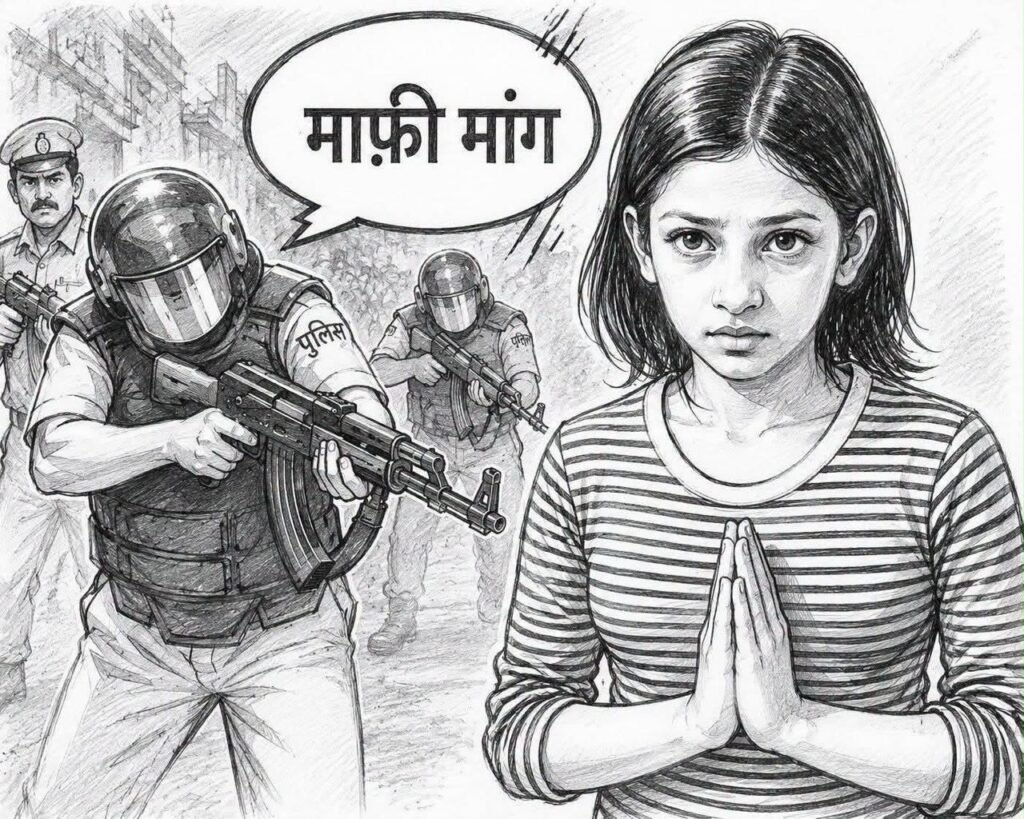
A 15-year-old’s angry words at a protest should not cost her safety, privacy or childhood. Yet that is precisely what the machinery of outrage, online mobs and selective policing has delivered.
At Delhi’s Jantar Mantar, during the recent Gen Z protests, young women raised their voices against the government. Videos circulated. Within hours, the response was not argument or rebuttal but a coordinated campaign of digital violence. Names, phone numbers and addresses were allegedly put into circulation. Rape and murder threats followed. Families went into hiding. Police visited homes. FIRs were registered. The message was unmistakable: certain forms of dissent, especially when voiced by teenage girls, would be met with the full weight of intimidation.
The Child Who Apologised and Was Still Hunted
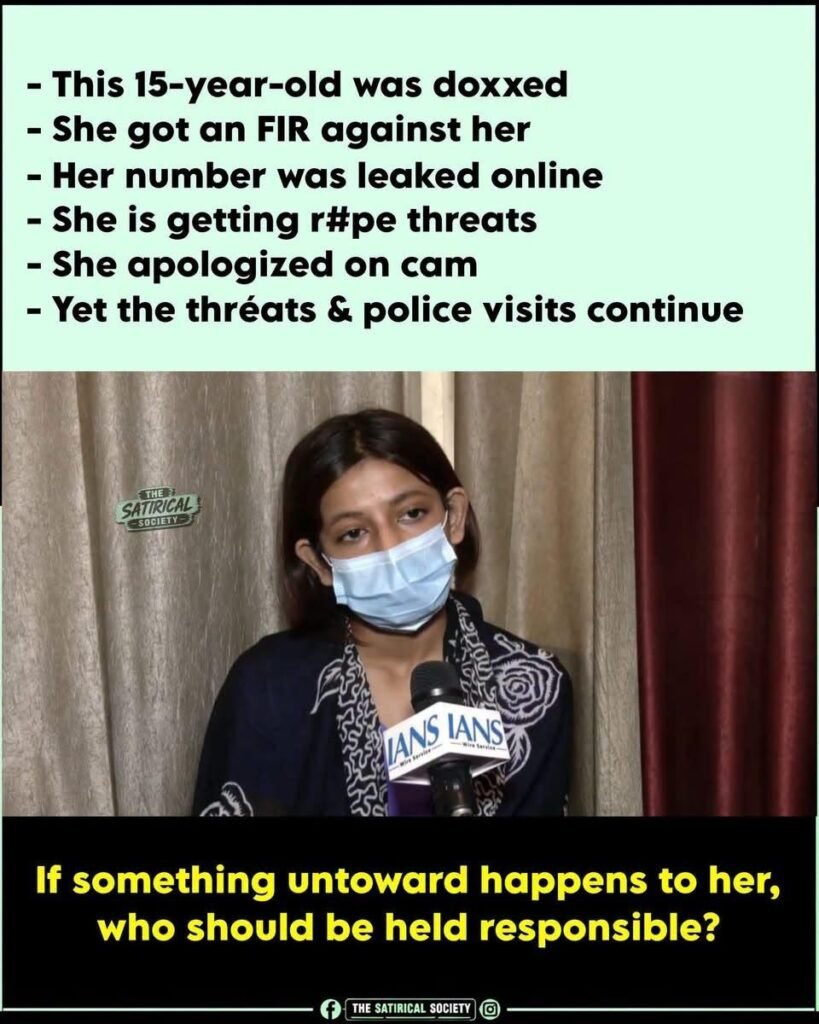
Ruchika Singh, fifteen years old, used harsh language against the Prime Minister. That language was wrong. Children should be taught better. Yet what followed reveals far more about the climate of power than about one girl’s vocabulary.
An FIR was filed. Her personal details were reportedly leaked. Threatening videos appeared. Appeals were made for people to locate her home. The family was forced into fear. Under pressure, the child publicly apologised. Even after Prime Minister Narendra Modi stated that the young protesters should be forgiven, the harassment did not end. Police continued to visit. Unknown numbers kept delivering the same message: if she is found, she will be raped and discarded.
This is not accountability. This is the systematic stripping of a minor’s privacy and safety. Article 21 of the Constitution guarantees the right to life and personal liberty, which the Supreme Court has clearly held includes the right to privacy. Treating a child’s identity, address and mobile number as fair game in a political fight is not the defence of culture. It is its abandonment.
“Sanskari”Outrage, Selective Memory
Those who now invoke Sanatan values, Indian culture and the dignity of daughters appear strikingly selective in their sensitivity. A powerful adult male politician once referred to a woman as “₹50 crore ki girlfriend.” That remark entered the public record without comparable national hand-wringing about cultural shock. Indian political discourse has long featured crude, sexualised and misogynistic attacks on women — attacks that reduce them to bodies, relationships or price tags rather than ideas. When the insult travels upward, from a teenage girl to a powerful man, suddenly “culture” is declared wounded.
This is not the defence of civilisation. It is the defence of hierarchy. Traditional patriarchal systems across religions have long taught that women may speak, but not too loudly; may disagree, but not with male authority; may be educated, but must remain “respectable” by remaining controlled. When that hierarchy is challenged by a child’s language, the reaction is swift and brutal. When powerful men breach the same standards of decency, the reaction is muted or excused as political rough-and-tumble.
Police Priorities and the Absentee Accountability
While a 15-year-old faces repeated police visits and online death threats, the same system has shown little urgency in addressing documented police excesses during student protests — pellet guns that blinded, batons allegedly embedded with nails, tear gas and water cannons used against largely unarmed demonstrators. The Home Minister, responsible for Delhi Police, has declined to address Parliament on these matters. Official statements speak of investigations. The pattern is familiar: swift action against the vulnerable, prolonged silence regarding the powerful.
The right-wing digital ecosystem and its IT cells have perfected the art of turning private information into a public weapon. Doxxing, coordinated abuse and calls for physical confrontation are not spontaneous moral indignation. They are tactics of intimidation designed to teach young women, and especially young girls, that political speech carries personal risk far beyond any courtroom. Those who claim to uphold Sanskari ideals while cheering or participating in the public humiliation and sexualised threatening of minors expose the hollowness of their own rhetoric.
Power, Not Principle
A democracy confident in its strength does not need to mobilise police machinery and online mobs against a child. It does not need to make a teenager’s home address a matter of public speculation. It does not need to force a frightened girl into repeated apologies while rape threats continue to arrive on her phone.
Condemn the language if it offends. Teach better habits. Enforce the law proportionately when it is broken. But do not pretend that the subsequent campaign of harassment, doxxing and threats is about protecting culture. It is about protecting power from being spoken to in ways it finds inconvenient.
Civilisation is not measured by how fiercely the powerful demand respect from those with none. It is measured by restraint when retaliation is easy. Culture is not a shield for patriarchy. And the privacy and safety of young women are not negotiable collateral in anyone’s political theatre.

~Hasnain Naqvi is a former member of the history faculty at St. Xavier’s College, Mumbai….
The opinions expressed here are solely those of the author.