

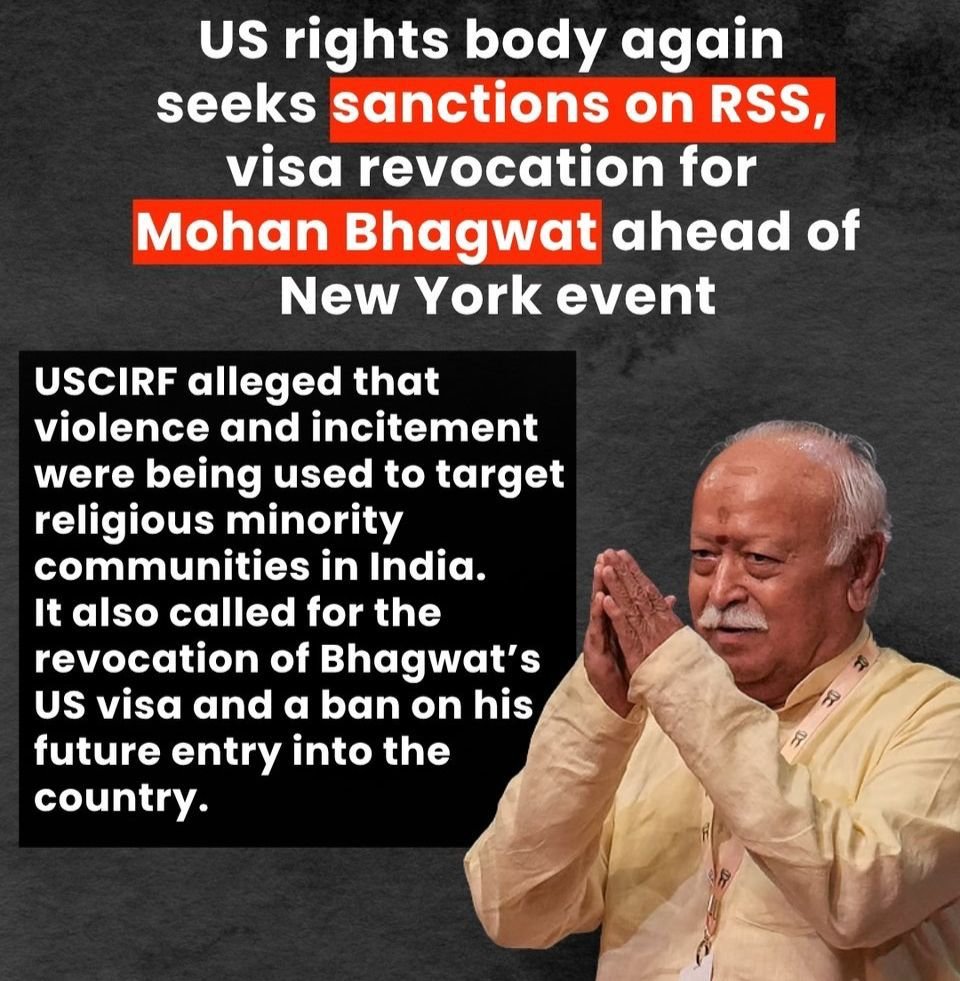
On August 29, 2026, Rashtriya Swayamsevak Sangh (RSS) chief Mohan Bhagwat will address an estimated 5,000 members of the Indian diaspora at New York’s Madison Square Garden in an event billed as the “Universal Oneness Celebration”. The gathering, organised by American Hindus for Engagement and Dialogue, marks the high point of Bhagwat’s 17-day tour of the United States, Canada and the United Kingdom—part of the RSS’s centenary-year global outreach programme. Yet, as the RSS seeks to project a message of harmony and dialogue, the visit has ignited fierce opposition from civil rights groups, interfaith coalitions and elected officials, raising urgent questions about what the organisation truly represents—and what it seeks to achieve on American soil.
The Agenda: Outreach, Image-Building, or Lobby Formation?
According to RSS statements, Bhagwat’s international tour has three stated objectives: to counter “misconceptions” and “propaganda” about India, Hindus and the RSS; to present a “factual perspective” on Hindu society and the principle of Vasudhaiva Kutumbakam (the world as one family); and to promote dialogue on the interests and rights of Hindus and people of Indian origin in the West. The organisation frames the Madison Square event as an “open dialogue” inclusive to all, emphasising themes of interconnectedness, social harmony and universal brotherhood.
But the context complicates the narrative. The RSS—an “unregistered” organisation that Indian Prime Minister Narendra Modi described in his 2025 Independence Day speech as the “largest NGO of the world”—is approaching its centenary year amid heightened scrutiny over its role in India’s majoritarian politics and its treatment of religious minorities. In this light, Bhagwat’s visit can be read as an attempt to reclaim credibility and rehabilitate the RSS’s image on the global stage, especially as the organisation faces renewed criticism from international watchdogs.
Whom Does Bhagwat Represent?
The central question remains: whom is Mohan Bhagwat representing? Is he the head of a Hindu nationalist and cultural organisation long accused of promoting regressive and divisive communal ideology—or the ambassador of an “Idea of India” rooted in pluralism, syncretism and composite culture? The RSS is the ideological parent of the Bharatiya Janata Party (BJP), and its fronts in the United States—including the Hindu Swayamsevak Sangh (HSS), Hindu American Foundation (HAF) and Vishwa Hindu Parishad of America (VHPA)—have been extensively documented for their ties to Hindu majoritarian politics.
Critics argue that the RSS’s vision is fundamentally at odds with multiculturalism, the bedrock of American and Western societies. New York City Mayor Zohran Mamdani, the first Muslim and Indian American to hold the office, has described the RSS ideology as “exclusionary” and said he is “in deep opposition” to the movement, even as he acknowledged the city likely lacks jurisdiction to cancel a private event.
The Opposition: Why So Much Resistance?
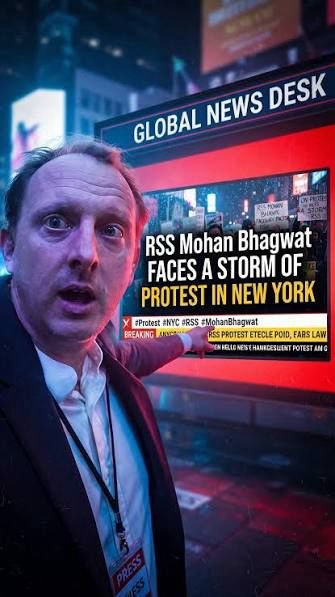
The resistance to Bhagwat’s visit has been swift and organised. A coalition of groups—including the Indian American Muslim Council (IAMC), Hindus for Human Rights, and various interfaith, civil rights and Dalit organisations—has launched “No Platform for Hate” campaigns, held press conferences and circulated petitions calling on U.S. authorities to deny diplomatic courtesies or take action regarding the RSS. Activists have even organised billboard truck campaigns circling Madison Square Garden to amplify their message.
More significantly, the U.S. Commission on International Religious Freedom (USCIRF) has recommended targeted sanctions—including visa restrictions—against RSS leadership. In a statement on August 26, USCIRF Chair Asif Mahmood urged the U.S. government to “consider targeted sanctions against RSS members and Indian officials complicit in religious freedom violations, including revoking the visa issued to Mohan Bhagwat”. The commission’s March 2026 annual report had already faulted India for religious freedom violations and recommended designating the country a “Country of Particular Concern”, with the RSS specifically named for alleged responsibility or tolerance of severe violations.
A Lobby in the Making?
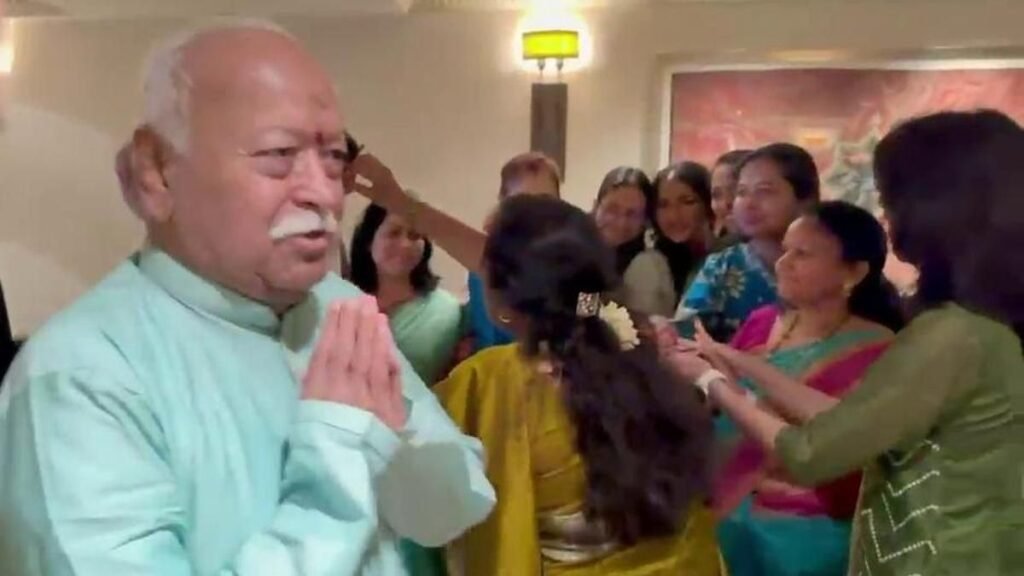
Beyond image rehabilitation, observers are asking whether the RSS is attempting to build a powerful lobby in the United States akin to the Israeli lobby, leveraging its international wings such as the HSS and HAF to influence policy and public opinion. Others see the visit as a fundraising drive aimed at securing more donations from supporter NRIs in America and Canada. The Hindu American Foundation, for its part, has issued a security advisory ahead of the Madison Square event, urging the community to “stay vigilant” amid the controversy.
Risks of Backlash: Could the Visit Be Counterproductive?
Given the scale of opposition, there is a real risk that Bhagwat’s visit could prove counterproductive—potentially inflaming social tensions and leading to more hate crimes against Indian immigrants in the United States and other Western countries. The CIA’s World Factbook briefly classified the VHP and Bajrang Dal as “militant religious organisations” in 2018 before those references were later removed—a history that critics argue should not be casually erased.
For Mayor Mamdani and President Donald Trump, the moment presents a test of principle. Mamdani has said he does not support the rally but stopped short of calling for its cancellation, citing jurisdictional limits. Trump, meanwhile, has framed his administration as defending America from national security threats—yet critics argue that allowing organisations linked to sectarian and majoritarian politics to operate without serious scrutiny undermines that claim.
The Stakes for Pluralism
As Bhagwat prepares to take the stage at Madison Square Garden, the stakes extend far beyond a single event. The RSS’s centenary-year outreach is not merely about presenting a message of “Universal Oneness”; it is about defining what kind of India—and what kind of Hinduism—the organisation seeks to project to the world. For critics, the answer remains clear: the RSS represents an exclusionary vision that threatens the pluralistic fabric of both India and the West. For supporters, the event is an opportunity to correct misconceptions and foster dialogue.
In the end, the true test will be whether the RSS can reconcile its majoritarian ideology with the multicultural realities of the societies it seeks to engage—or whether its visit will deepen divisions, both at home and abroad.

~Hasnain Naqvi is a former member of the history faculty at St. Xavier’s College, Mumbai….
The opinions expressed here are solely those of the author.