

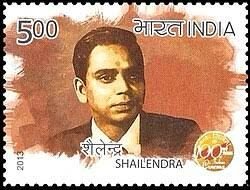
On August 30, 2026, lovers of literature and music commemorated the 103rd birth anniversary of Shankardas Kesarilal, known to the world simply as Shailendra. Fondly bestowed with the title Kaviraj (the king of poets) by his peers, Shailendra remains one of the most beloved figures in Indian cultural history. Though he passed away at the young age of 43 on December 14, 1966, he penned over 900 songs across a prolific 17-year career. His lyrics did not merely accompany cinematic melodies; they gave voice to a newly independent nation’s joys, heartbreaks, social awakenings, and philosophical dilemmas, using a language so delightfully simple that it belonged to everyone.
From the Rhythm of Hammers to Revolutionary Verses
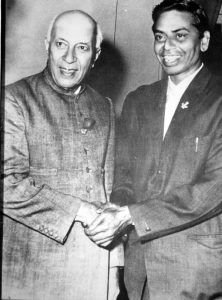
Born in Rawalpindi with deep ancestral roots in Ara, Bihar, Shailendra’s early life in Mathura was shaped by financial hardship and personal tragedy. When he arrived in Bombay in 1947 to work as an apprentice welder at the Matunga Railway Workshop, the clanging of iron and sparks of welding torches provided the backdrop for his blossoming poetic voice. Immersed in the leftist movement through the Indian People’s Theatre Association (IPTA), he composed fiery, anti-imperialist verses that championed the working class. Songs like “Tu Zinda Hai To Zindagi Ki Jeet Par Yakeen Kar” and his famous post-Partition poem “Jalta Hai Punjab” established him as an unyielding voice of human resilience.
It was at an IPTA mushaira where filmmaker Raj Kapoor heard Shailendra recite “Jalta Hai Punjab” and immediately offered to purchase the poem for his film Aag (1948). True to his artistic ideals, the young railway worker famously refused, stating that his poetry was not for sale. However, when pressing financial demands arose during his wife Shakuntala’s pregnancy, Shailendra eventually turned to Kapoor for help. Kapoor offered him creative work rather than a loan, leading to his cinematic debut in Barsaat (1949) with unforgettable tracks like “Barsaat Mein Hum Se Mile Tum” and “Patli Kamar Hai”.
The Golden Quartet and the Anthem of a Nation
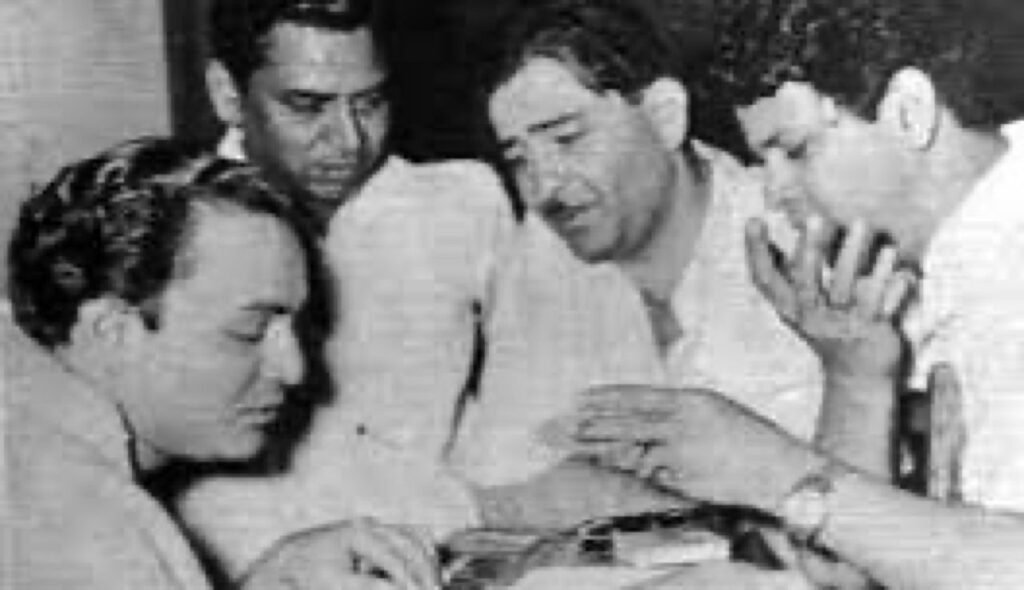
This initial union sparked one of the most iconic creative partnerships in Hindi cinema: the legendary quartet of Raj Kapoor, the composer duo Shankar–Jaikishan, singer Mukesh, and lyricist Shailendra (frequently joined by Hasrat Jaipuri and Lata Mangeshkar). Shailendra had a rare gift for weaving complex political optimism and humanist philosophy into infectious, accessible couplets.
In Awara (1951), his title track “Awara Hoon” evolved into a global phenomenon, resonating across Russia, China, and the Middle East as a universal ode to the dispossessed searching for hope. In Shree 420 (1955), “Mera Joota Hai Japani” articulated self-respect and identity in a globalizing world, while “Pyar Hua Iqraar Hua” captured the timeless magic of love under a shared umbrella. In Anari (1959), his classic line “Sab kuch seekha humne na seekhi hoshiyari” captured the innocence of an honest soul in an uncompromising society. Whether writing for Boot Polish (1954) or Ujala (1959)—where he wrote “Chulha hai thanda par pet mein aag hai”—his verses illuminated the quiet dignity of the marginalized with deep empathy.
Mastery Across Genres and Directors
Shailendra’s versatility reached far beyond the RK banner. Working alongside Salil Chowdhury, he brought haunting rustic charm to Bimal Roy’s Do Bigha Zamin (“Dharti Kahe Pukar Ke”) and ethereal romance to Madhumati (“Aaja Re Pardesi”, “Suhana Safar”). With S.D. Burman, he penned the evocative soundtrack for Vijay Anand’s Guide (1965), gracefully depicting liberation in “Aaj Phir Jeene Ki Tamanna Hai,” intimate warmth in “Tere Mere Sapne,” and profound grief in “Din Dhal Jaaye”.
From the melancholic romanticism of Yahudi (“Yeh Mera Deewanapan Hai”) to the aching longing in Bandini (“O Jaanewale Ho Sake Toh Laut Aana”), Shailendra proved that writing simply required the highest form of poetic rigor. As veteran lyricist Gulzar famously noted, Shailendra was the finest lyricist Hindi cinema ever saw—a poet who could express the deepest truths of life using everyday Hindustani words without ever relying on heavy, obscure vocabulary.
The Heartbreak of Teesri Kasam and an Unfading Legacy
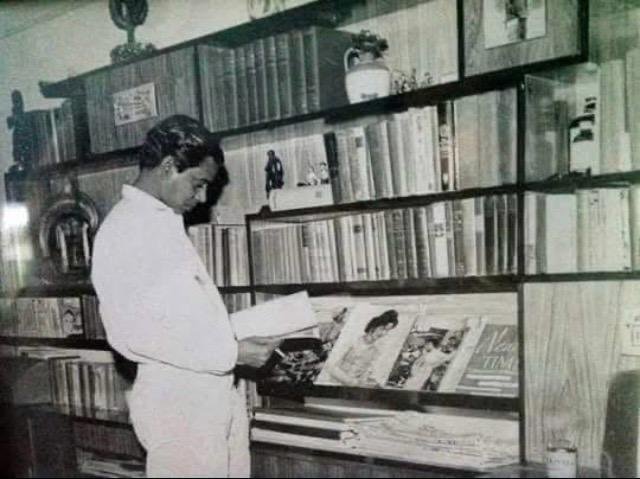
In his quest to create pure, unadulterated cinema, Shailendra turned producer for Teesri Kasam (1966), an adaptation of Phanishwar Nath Renu’s short story Mare Gaye Gulfam. Directed by Basu Bhattacharya and starring Raj Kapoor and Waheeda Rehman, the film featured immortal folk-infused gems like “Sajan Re Jhooth Mat Bolo” and “Duniya Banane Wale”. Though the film went on to win the prestigious National Film Award for Best Feature Film, its initial commercial failure broke the gentle poet emotionally and financially.
Compounded by failing health, Shailendra passed away on December 14, 1966—poignantly on Raj Kapoor’s birthday. His final composition, “Jeena Yahan Marna Yahan” for Mera Naam Joker, remained unfinished at his death; its verse was completed by his son Shailey Shailendra.
Six decades after his premature departure, Shailendra’s songs remain as vibrant and deeply relevant as ever.
On his 103rd birth anniversary, we honour a poet who brought literature to the streets, turned cinema into philosophy, and gave the common man a voice that time can never silence.

~Hasnain Naqvi is a former member of the history faculty at St. Xavier’s College, Mumbai….
The opinions expressed here are solely those of the author.