

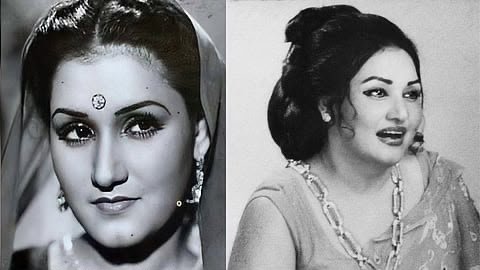
“Awaaz de kahan hai, duniya meri jawaan hai…” (Call out, where are you? My world is still young…)
A century after her birth on 21 September 1926 in the quiet Punjabi town of Kasur, the voice of Noor Jehan continues to rise across the subcontinent like a luminous call across time. Born Allah Wasai into a family of musicians, she was the first female single star whose presence on screen and whose voice on the soundtrack defined an era of cinema that straddled undivided India and the new nation of Pakistan. Malika-e-Tarannum — the Queen of Melody — she remains not merely a singer or actress but a living bridge of shared cultural memory.
From Kasur’s Courtyards to the Silver Screen
In the modest lanes of Kot Murad Khan, a child’s cry was said to have already held the correct scale. Trained by the sarangi maestro Gaamey Khan and later refined under classical influences, the young Allah Wasai entered the world of performance as Baby Noor Jehan. By the mid-1930s she was appearing in films, her natural gift for melody and her expressive face making her an immediate presence. In Bombay she rose with remarkable speed. Films such as Khandan, Zeenat, Anmol Ghadi and Jugnu established her as a complete star — one who could both act and sing with equal authority. She was the rare artist who did not merely lend her voice; she embodied the song.
In Anmol Ghadi the duet “Awaaz De Kahan Hai”became an anthem of longing:
“Awaaz de kahan hai, duniya meri jawaan hai
Aabaad mere dil mein ummeed ka jahaan hai”
(Call out, where are you? My world is still young.
In my heart lives a world of hope.)
The melody, set by Naushad, carried the ache of separation and the stubborn radiance of youth — qualities that would later define her own journey across a partitioned land.
Crossing the Divide, Building a New Stage
When Partition came in 1947, Noor Jehan chose the soil of her birth. With her husband Shaukat Hussain Rizvi she settled in Lahore, taking over the ruined Shori Studios and renaming them Shahnoor. In 1951 she co-directed and starred in Chan Wey, becoming Pakistan’s first woman film director. The film was a triumph on both sides of the border, its songs — particularly the playful yet poignant Punjabi numbers — reminding listeners that language and melody refused to acknowledge political frontiers.
She continued to act through the 1950s in films such as Dopatta, Intezar, Anarkali and Koel, while gradually shifting the centre of her artistry toward playback. The decision was not retreat but expansion. Freed from the camera’s gaze, her voice soared into thousands of songs across Urdu, Punjabi and Sindhi. Estimates place the total near ten thousand; in Pakistani cinema alone she recorded more than two thousand, a record she shares with Ahmed Rushdi.
The Voice of Longing and the Nation
Among her most enduring non-film offerings stands the Faiz Ahmed Faiz nazm she made immortal:
“Mujh se pehli si mohabbat mere mehboob na maang
Maine samjha tha ke tu hai to darakhshan hai hayat
Tera gham hai to gham-e-dahr ka jhagda kya hai”
(My love, do not ask of me the love I once gave you.
I had believed that with you life would shine eternally;
If I carry your sorrow, what quarrel remains with the world’s grief?)
The poem’s turn from private passion to the larger wounds of the age found its perfect interpreter in her. When she sang it, the personal became collective; the lover’s plea became a quiet reckoning with history itself.
During the 1965 war her patriotic songs — “Ae Watan Ke Sajiley Jawano, Ae Puttar Hattan Te Nahi Wikde”— entered the national bloodstream. Field Marshal Ayub Khan is said to have remarked that half the credit for the nation’s spirit belonged to her. The same voice that had once whispered romantic yearning now steadied a people under fire.
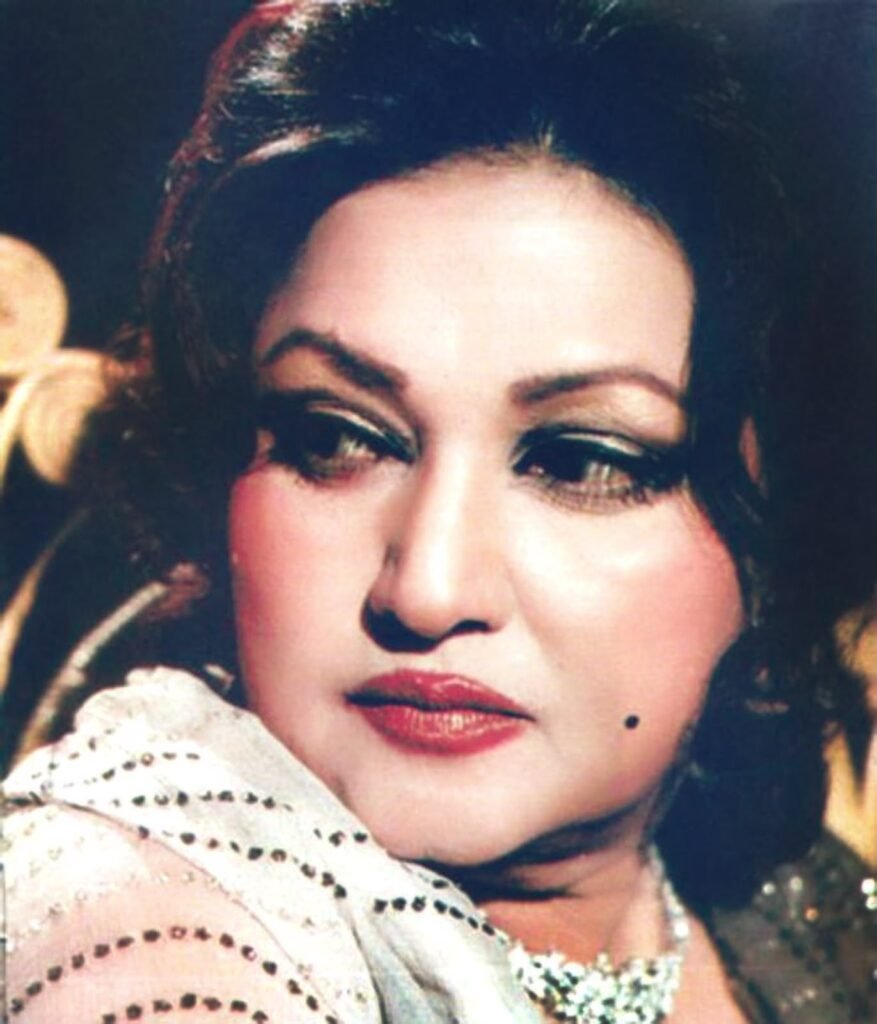
Grace Across Borders
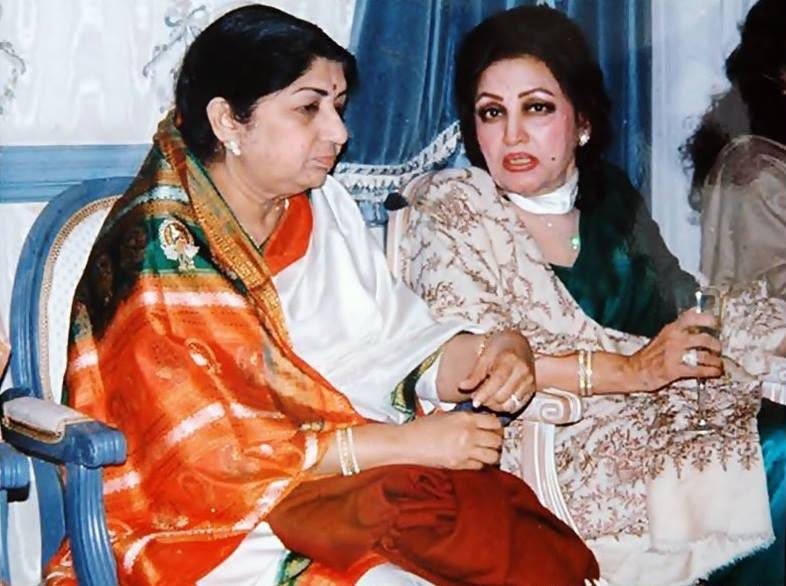
In 1982 she returned to India for the golden jubilee of the talkies. At the “Mortal Men, Immortal Melodies” concert she sang “Awaaz De Kahan Hai” and “Mujh Se Pehli Si Mohabbat.”Performer and audience wept together. Lata Mangeshkar, Dilip Kumar and Indira Gandhi received her with the warmth reserved for a sister who had never truly left. The moment dissolved decades of distance into a single shared silence of recognition.
Her later years were marked by failing health, yet the voice retained its power. She continued recording into the 1990s, her final film credit arriving in 1996. On 23 December 2000, on the night of 27 Ramadan, she passed away in Karachi after a heart attack. Hundreds of thousands attended her funeral; the nation mourned as though a family member had gone.
The Legacy That Refuses Silence
A century after her birth, Noor Jehan’s achievement is clear. She was the first female single star whose name alone could open a film, whose voice alone could fill a theatre. She directed when women directors were almost unimaginable. She sang across classical, folk, filmi and ghazal traditions with equal authority. She carried the music of undivided Punjab into two new nations and kept the conversation alive between them.
Listen again to those opening lines of longing:
“Awaaz de kahan hai…”
The question is no longer addressed to a vanished beloved. It is addressed to time itself. And time, for once, answers with her own voice — clear, unbroken, and forever young.

~Hasnain Naqvi is a former member of the history faculty at St. Xavier’s College, Mumbai….
The opinions expressed here are solely those of the author.