

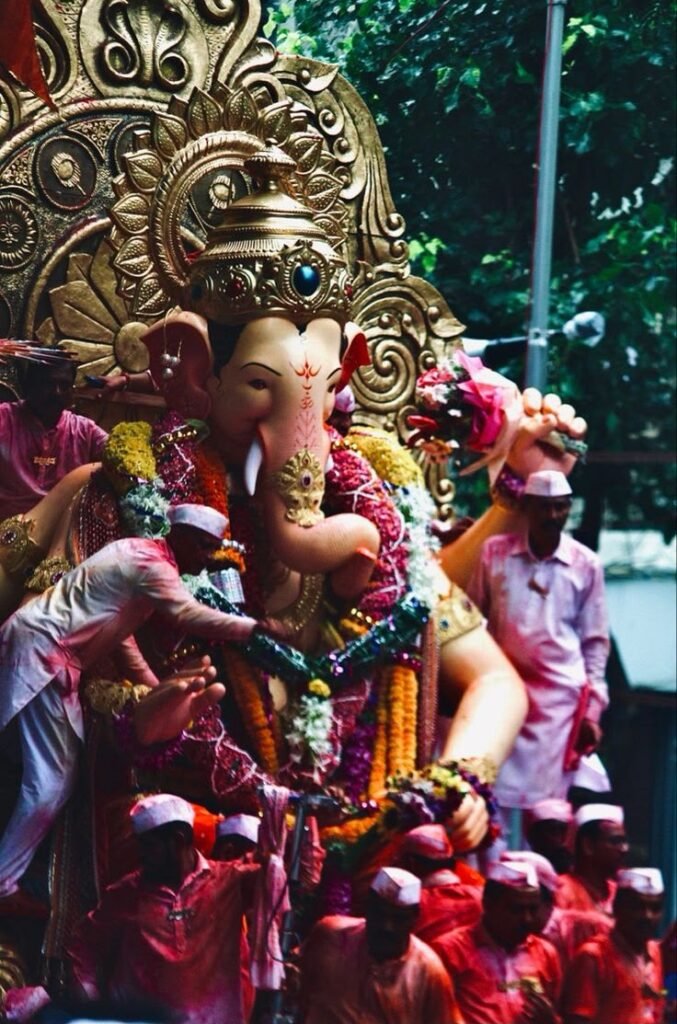
On the fourteenth day of the bright fortnight of Bhadrapada, Maharashtra’s streets pulse with devotion as the ten-day Ganeshotsav reaches its emotional climax and devotees honour Lord Vishnu in his boundless form.
In the heart of Mumbai, the air fills each year with the thunder of dhol-tasha, the swirl of gulal, and the resonant cry of “Ganpati Bappa Morya, Pudhchya Varshi Lavkar Ya.” This is Anant Chaturdashi — a day that carries dual spiritual weight. It marks the ceremonial immersion of Lord Ganesha’s idols after days of fervent worship and, independently, the observance dedicated to Lord Vishnu as Anant, the eternal and infinite. In Maharashtra, and nowhere more vibrantly than in Mumbai, the two traditions converge into one of the city’s most spectacular cultural spectacles.
The Spiritual Duality of the Day
Anant Chaturdashi falls on the Chaturdashi tithi of Shukla Paksha in the Hindu month of Bhadrapada. The word “Anant” means endless or infinite. Devotees worship Vishnu in this form, often visualised reclining on the cosmic serpent Shesha, as the sustainer who pervades all realms without beginning or end. The central ritual is the Anant Vrat and the tying of the Anant Sutra — a sacred cotton or silk thread dyed with turmeric or kumkum and knotted fourteen times. These fourteen knots are traditionally understood to represent the fourteen lokas, or worlds, of Hindu cosmology. Men usually wear the thread on the right arm and women on the left, seeking protection, prosperity, and freedom from long-standing difficulties.
Scriptural accounts, including references in the Bhavishya Purana and popular legends involving figures such as Sage Kaundinya or the devoted Sushila, emphasise the vrat’s power to restore lost fortune and grant stability when observed with sincerity, often over a cycle of fourteen years. Offerings typically include panchamrit, sweets such as malpua and puri, and the recitation or hearing of the Anant Katha. The day thus stands as a quiet affirmation of continuity and divine guardianship even as public attention turns to the more visible drama of visarjan.
In Maharashtra the same tithi has long served as the principal day for the final immersion of Ganesha idols. While some families and mandals perform visarjan earlier — on the 1.5th, third, fifth or seventh day according to tradition — the tenth day remains the grand culmination for the majority of public celebrations. The choice is practical as well as symbolic: Anant Chaturdashi is the last auspicious day before the inauspicious period of Pitru Paksha begins. Immersion on this date ensures the deity’s respectful return before the calendar turns sombre.
From Private Ritual to Public Awakening
The scale of Anant Chaturdashi’s celebrations owes much to the organisational genius of Lokmanya Bal Gangadhar Tilak in the late nineteenth century. At a time when public Hindu gatherings faced colonial restrictions, Tilak transformed Ganesh Chaturthi from a largely domestic observance into a sarvajanik festival. Community pandals, processions with music, and collective immersion became instruments of social cohesion and quiet nationalist assertion. The first official permissions for music during immersions in Mumbai paved the way for the massive, disciplined yet exuberant processions that define the festival today.
What began as a political and cultural revival has matured into a deeply emotional civic ritual. For ten days, Ganesha resides in homes and elaborately decorated mandals across the city. On Anant Chaturdashi he is escorted back to the waters with the same affection with which he was welcomed. Devotees believe the idol carries away their obstacles and sorrows, leaving behind blessings of wisdom and prosperity until the following year. The dissolving of clay idols in water also serves as a powerful reminder of impermanence — that form is temporary while the divine principle remains eternal, a theme that resonates with the simultaneous worship of Anant Vishnu.
Mumbai’s Streets Come Alive
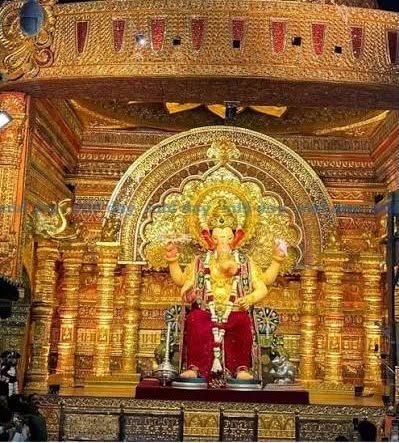
Nowhere is the spectacle more intense than in Mumbai. Processions wind through Lalbaug, Parel, Girgaon and the suburbs towards major immersion sites: Girgaon Chowpatty, Dadar Chowpatty, Juhu Beach, Versova, Marve and artificial lakes created by the Brihanmumbai Municipal Corporation to reduce pressure on natural water bodies. Iconic mandals such as Lalbaugcha Raja and Mumbaicha Raja draw enormous crowds. Devotees shower flower petals, dance to the relentless rhythm of dhol-tasha, and chant until the final moment when the idol is lowered into the water.
Civic authorities prepare meticulously. Thousands of police personnel, BMC staff, lifeguards, ambulances and motorboats are deployed. In recent years, metro services have been extended overnight on key corridors to ease movement. Environmental consciousness has grown steadily: eco-friendly clay idols are actively promoted, and a significant share of immersions now take place in artificial ponds. The atmosphere remains charged yet largely orderly, a testament to the city’s ability to manage devotion on a massive scale.
For ordinary Mumbaikars the day is both festive and poignant. Families perform the final aarti at home or in the pandal, offer modaks and laddus, and then join the procession. Children wave small flags; elders wipe tears as the familiar form disappears beneath the waves. Street vendors, flower sellers, musicians and transport operators participate in an informal economy that briefly transforms the city’s rhythm. Foreign tourists are often guided to special viewing points at Chowpatty so they too can witness the living tradition.
Meaning Beyond the Spectacle
Anant Chaturdashi ultimately teaches balance. Ganesha’s departure after ten days of intense presence underscores the cycle of arrival and departure, attachment and release. Vishnu as Anant affirms that behind every ending lies continuity. In a metropolis defined by relentless change — rising towers, shifting populations, economic flux — the festival offers a collective pause. It renews community bonds, reaffirms cultural identity and allows millions to participate in a shared narrative of faith, farewell and hope for return.
Across Maharashtra the pattern repeats in Pune, Nagpur and smaller towns, each with local flavour yet united by the same dual observance. In Mumbai, however, the density, diversity and sheer energy elevate the day into a defining expression of the city’s character: loud yet disciplined, commercial yet deeply spiritual, modern yet rooted in ancient cosmology.
As the last processions disperse and the beaches quieten, the Anant Sutra remains tied on many wrists — a quiet, personal reminder of the infinite amid the finite. And already the promise echoes: “Pudhchya Varshi Lavkar Ya” — come back soon next year. In that simple prayer lies the enduring significance of Anant Chaturdashi in Maharashtra: the recognition that devotion, like the divine it honours, knows neither beginning nor end.

~Hasnain Naqvi is a former member of the history faculty at St. Xavier’s College, Mumbai….
The opinions expressed here are solely those of the author.

