

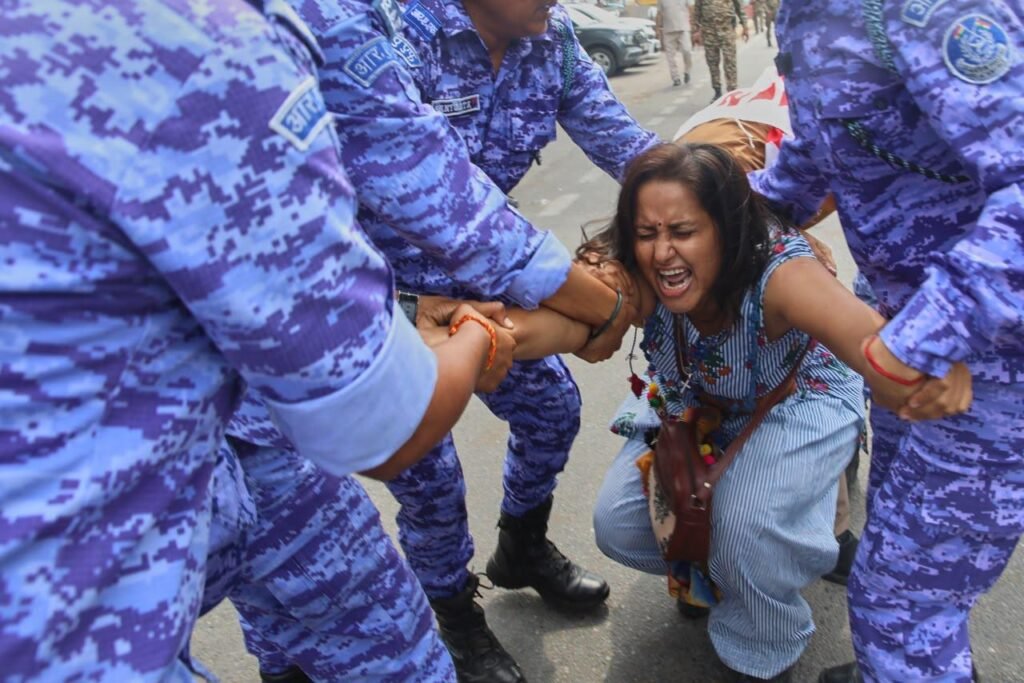
The images from New Delhi in the second week of October were not merely those of a city under security lockdown. They were images of a democracy testing the limits of its own tolerance: students dragged into buses, journalists pushed behind barricades, phones seized, footage demanded to be deleted, and young people alleging beatings in custody. The trigger was a demand that should be ordinary in a republic—the resignation of Chief Election Commissioner Gyanesh Kumar and the withdrawal of the Special Intensive Revision (SIR) of electoral rolls. The response, according to protesters, independent reporters and press-freedom groups, was anything but ordinary.
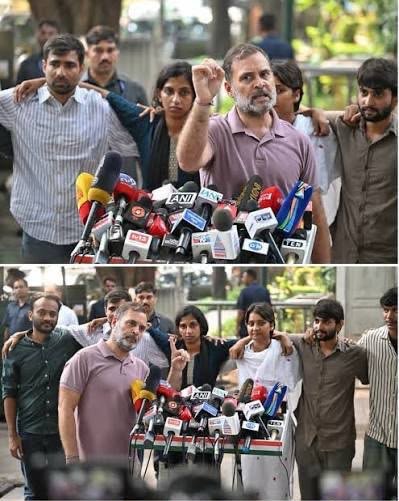
At a press conference at Rahul Gandhi’s residence on October 14, students and content creators who had joined the demonstrations gave firsthand accounts of detention and assault. Their testimony turned scattered videos and social-media posts into a public charge sheet against the Delhi Police: that a protest over electoral integrity was met not with constitutional restraint, but with force, humiliation and an attempt to control who could witness it.
A protest about the voter list
The demonstrations began as a broad coalition of student organisations, youth wings, the Cockroach Janta Party and opposition-backed groups converged on Jantar Mantar. Their demands were specific: Kumar’s resignation, the scrapping of the SIR exercise, and the restoration of Jantar Mantar as a designated site for peaceful protest. The SIR, initiated state by state since late 2025, has been criticised by opposition parties and civil-society groups for allegedly removing large numbers of voters from electoral rolls through an opaque process.
The scale of the concern is not trivial. Reports citing official and media estimates have said that around 130 million names were struck off voter lists during the revision process, a figure that has fuelled suspicions of mass disenfranchisement even as the Election Commission defends the exercise as an updating of rolls.
That context matters. This was not a spontaneous outburst against an abstract policy. It was a protest directed at the institution that decides who may vote, how rolls are revised, and whether the machinery of elections remains credible. When citizens protest an election authority, the state’s duty is to protect their right to assemble and speak—not to make the act of assembly itself appear criminal.
A capital sealed off
By October 10, central Delhi had been transformed into a security zone. Metro stations were shut, railway stations closed, roads barricaded, cab services disrupted and internet access restricted. More than 35,000 police and paramilitary personnel were deployed, according to a firsthand account by a video journalist who attempted to cover the day.
The official justification was crowd control and public order. But the practical effect was to prevent citizens from reaching a protest site before they could protest. Reporters described checkpoints far from Jantar Mantar, officers demanding Press Information Bureau cards despite police advisories recognising organisational press IDs, and journalists being turned away on the grounds that “there are no protests”—even as detentions were already under way.
A democracy may regulate traffic, protect public property and prevent violence. It cannot legitimately convert an entire city into a no-go zone for political expression. The question is not whether the police had the power to deploy in large numbers; it is whether that power was used proportionately, transparently and with respect for constitutional rights. The accounts emerging from October 10 and 11 suggest it was not.
Journalists treated as suspects
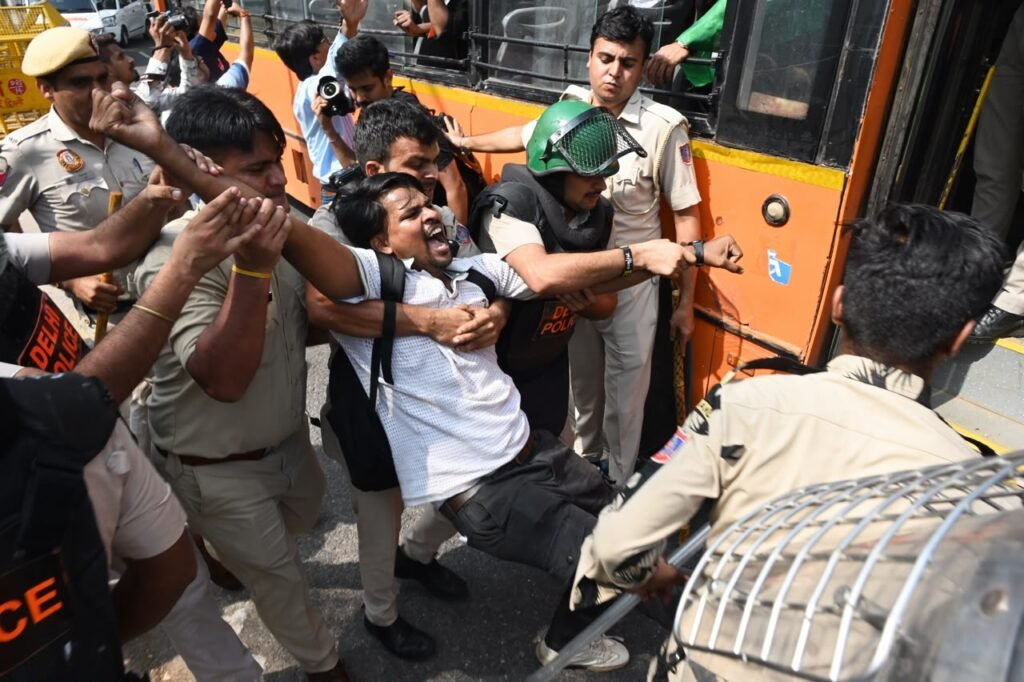
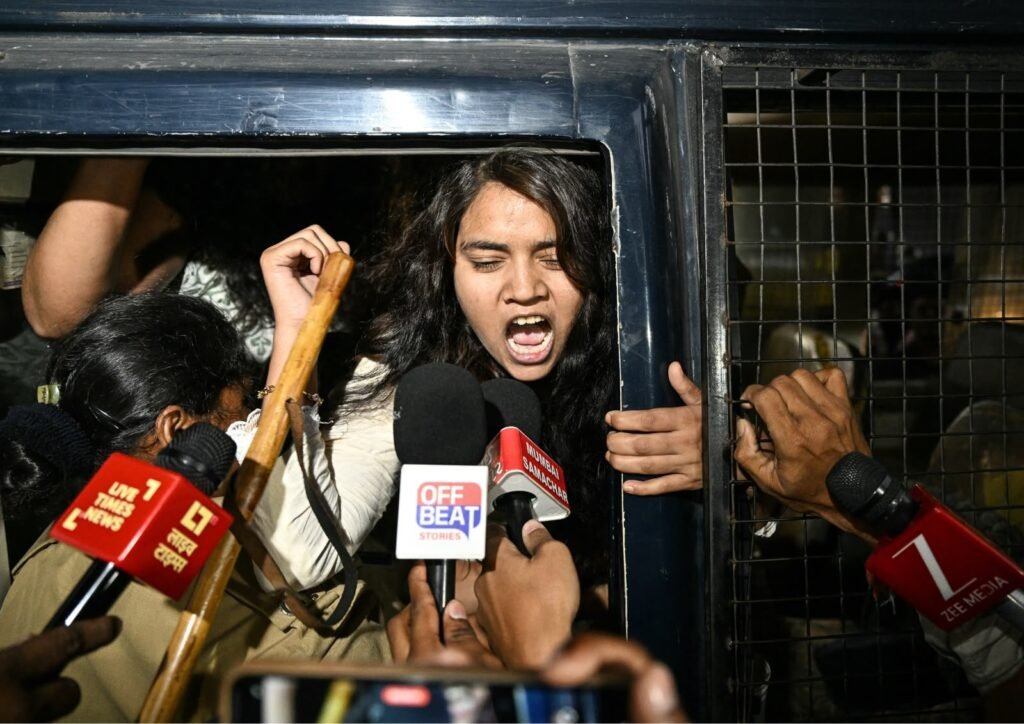
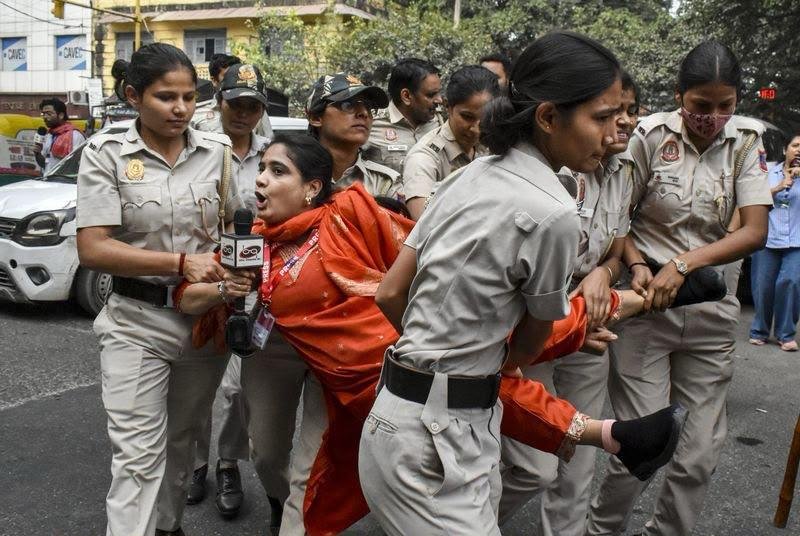
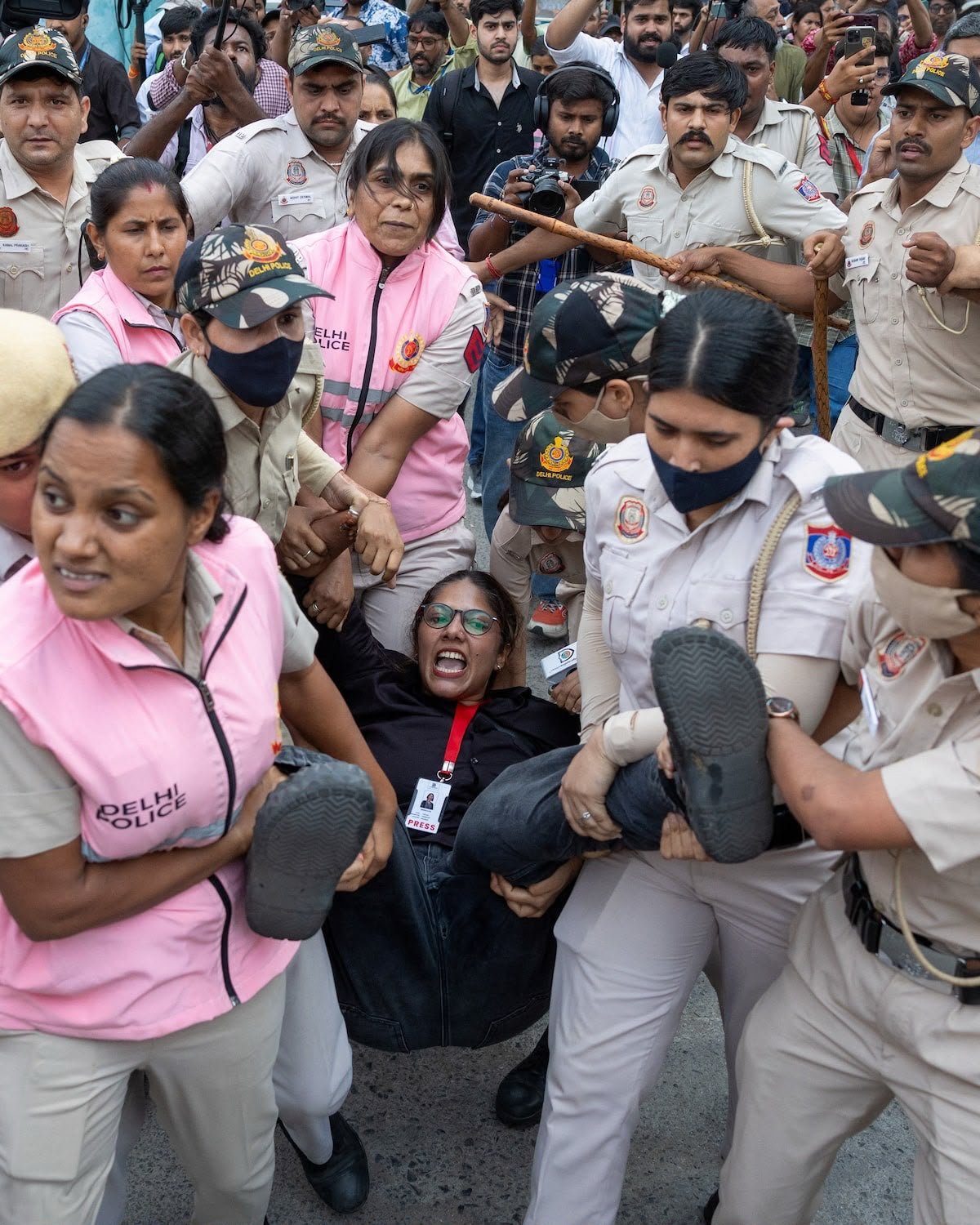
The most damning evidence concerns the treatment of the press. Journalists from independent digital outlets and mainstream organisations alike say they were detained while visibly carrying press identification. Some were allegedly dragged by their clothes, pushed, manhandled and forced into police buses. Others had their phones snatched or were pressured to delete recordings of police action.
A Scroll reporter said he was recording a police action when an officer ordered colleagues to “drag him away.” Despite displaying his press card and identifying himself as a journalist, he was pushed hard enough to tear his shirt and sustain a scratch. A Business Standard journalist said she was dragged by her bag and clothes after repeatedly identifying herself as media. A Reuters journalist alleged he was dragged and kicked by a masked officer without a visible name tag.
These are not allegations from anonymous activists alone. They come from named reporters working for established news organisations, supported by video footage, contemporaneous social-media posts and the accounts of editors who lost contact with detained colleagues. Press-freedom groups said more than 30 journalists were temporarily detained during the crackdown.
The police response—that some protesters may have posed as journalists—does not answer the charge. If officers could not distinguish between reporters and demonstrators, the remedy was verification, not indiscriminate detention. If they could distinguish, then the detention of credentialed journalists becomes even more serious. Either way, seizing phones and demanding deletion of footage strikes at the heart of journalistic work: documentation.
The digital witness under threat
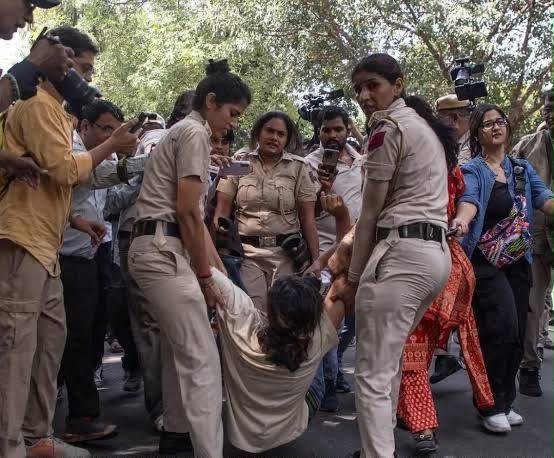
The crackdown has exposed a new vulnerability in Indian public life: the independent digital journalist, YouTuber and social-media creator who documents power from the ground. Reporters from Newslaundry, Scroll, The Quint, Boom, Molitics, Navbharat Times and India Today’s digital video wing were among those detained or obstructed, according to contemporaneous reports.
Newslaundry said its reporters’ phones were seized and that one journalist was pushed and had his device snatched. When they identified themselves as press, they were allegedly told there was “no media here.” An India Today digital creator filmed his own detention, saying on camera that he was pushed and thrashed despite repeatedly identifying himself as a journalist.
This matters beyond the individual incidents. Independent creators often reach audiences that legacy television does not, particularly younger citizens disillusioned with broadcast conformity. Their cameras can capture what official statements omit: a protester dragged by the collar, a journalist shoved into a bus, a barricade closing on a neighbourhood. To target those cameras is to target the public’s ability to know.
The Press Club of India became the site of a protest by journalists on October 13, where reporters who had been detained or allegedly brutalised shared their experiences. The gathering was itself a reminder that the issue is not confined to one newsroom or one political party. It concerns the conditions under which any journalist can report on state power in the capital.
Testimonies from custody
At Rahul Gandhi’s press conference on October 14, the focus shifted from professional journalists to the young protesters themselves. Students associated with the National Students’ Union of India and other groups described being detained in buses, denied basic safeguards and assaulted in custody.
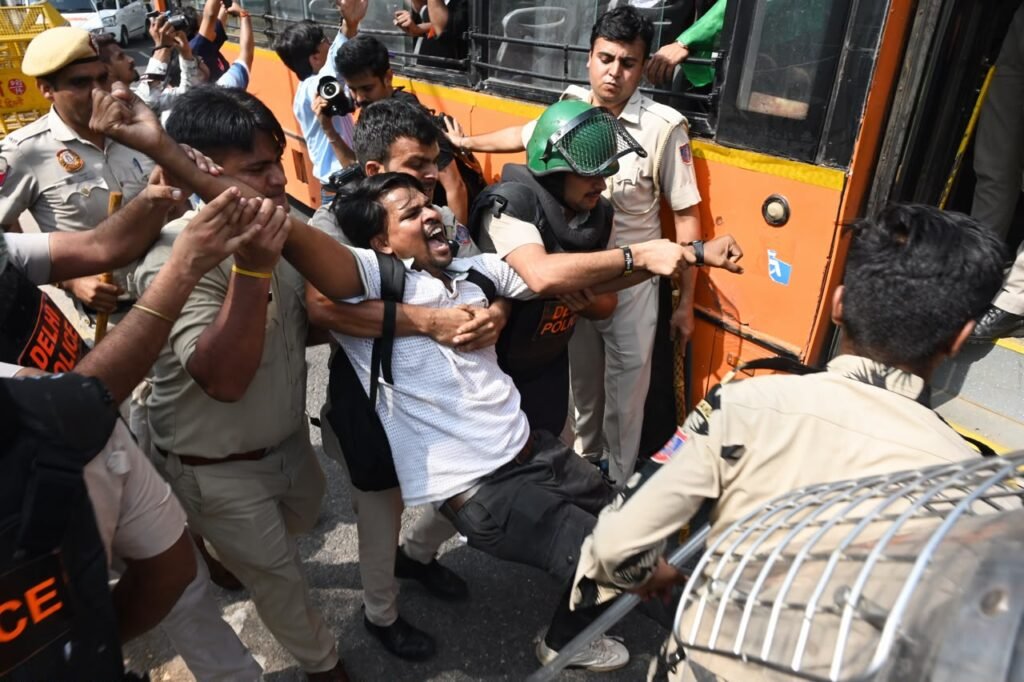
One Delhi University student from Kerala alleged that she was beaten after questioning the absence of a woman police officer on the bus carrying detainees. She said the bus stopped near Connaught Place police station, where personnel struck her repeatedly on the face. Another protester, associated with the NSUI, said demonstrators were held in three buses during the October 13 protest.
Other students alleged more degrading violence. Some claimed they were struck even in private parts and abused verbally to “teach them a lesson” for participating in the demonstrations. Gandhi said some of those present had injuries and urged protesters to preserve video evidence, insisting that those responsible would be held accountable.
These accounts require independent investigation, medical documentation and judicial scrutiny. Allegations are not proof. But the pattern is too consistent, too public and too corroborated by journalists’ own experiences to be dismissed as the ordinary friction of crowd control. When multiple detainees describe beatings, humiliation and the absence of procedural safeguards, the state owes the public more than denial.
The gendered dimension of force
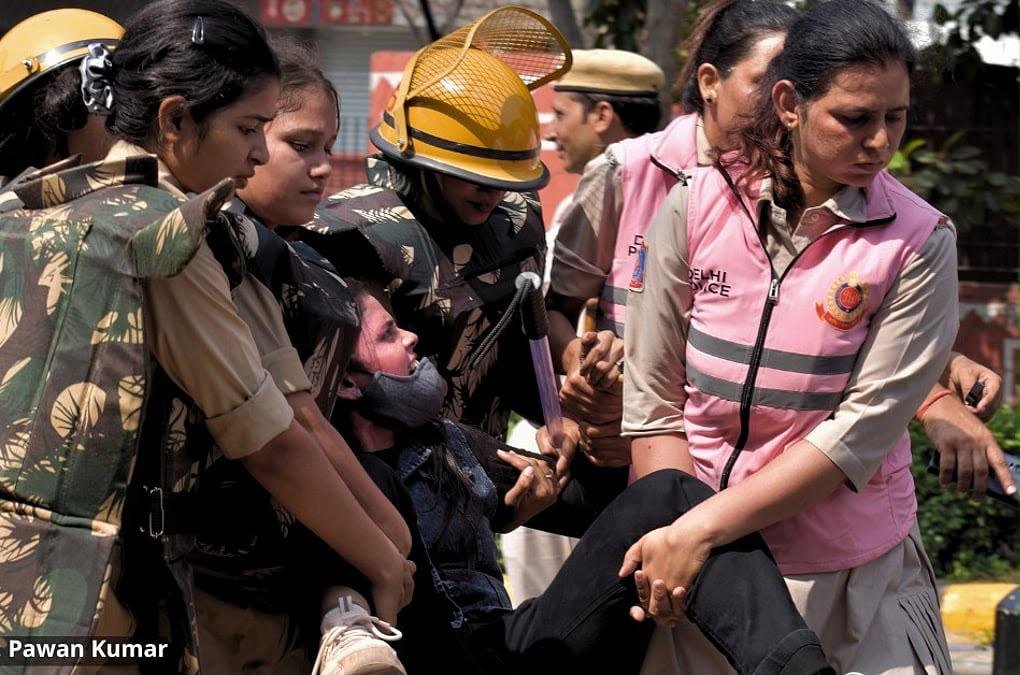
The accounts also carry a disturbing gendered dimension. Female journalists and protesters describe clothes being pulled, bodies dragged, privacy disregarded and, in some cases, sexual harassment. Three women journalists had earlier accused police officers of sexual harassment during protests demanding Kumar’s resignation.
A journalist with Business Standard said her shirt was pulled up as officers dragged her, and that they did not care. An Alt News correspondent detained in Ahmedabad said women officers were instructed to hold her and make her sit despite her repeated identification as media.
Force against women protesters and women reporters is not merely excessive policing; it is a particular form of intimidation. It signals that public visibility itself is dangerous for women who challenge authority. A police force that cannot guarantee the bodily dignity of women in its custody forfeits its moral authority to speak of public order.
Due process in reverse
The legal architecture of these detentions remains murky. Journalists were reportedly picked up kilometres from protest sites, held in buses or stadium premises, and released hours later without clear charges. A Scroll editor was allegedly detained outside his home in South Delhi, more than 20 kilometres from Jantar Mantar, after a routine conversation with an officer at a checkpoint.
Detention without clarity of offence, access to counsel or prompt judicial oversight is not preventive policing; it is punishment by inconvenience and fear. The reported registration of 25 FIRs related to the SIR protests since October 2, with senior opposition leaders named, deepens concern that criminal law is being deployed to chill political participation.
The Supreme Court’s intervention, and the opposition’s memorandum to the Chief Justice demanding an end to the SIR and Kumar’s resignation, underline that the dispute has moved beyond street politics into constitutional territory. But courts can only act on evidence. If footage has been deleted, phones seized and witnesses intimidated, the state itself becomes the principal obstacle to accountability.
What the crackdown reveals
The Delhi Police’s actions cannot be understood in isolation. They fit a wider political method: treat dissent as disorder, treat documentation as provocation, and treat the press as an obstacle rather than a constitutional check. The fact that the protests concern the Election Commission makes the pattern more alarming, because the credibility of elections depends on the public’s ability to question electoral institutions without fear.
India’s constitutional order promises assembly, speech and press freedom not as gifts of the government but as limits on it. A state confident in its legitimacy does not need to shut metro stations, seize phones, detain reporters and allegedly beat students to answer a demand for an election commissioner’s resignation. It can defend its record in public, submit to scrutiny and allow citizens to be heard.
The demand for Gyanesh Kumar’s resignation and the scrapping of the SIR may be contested. The right to make that demand peacefully is not. If the Delhi Police’s conduct is not independently investigated, the message to every future protester will be blunt: come with your grievance, but leave your camera, your dignity and your voice at home. That is not public order. It is the quiet dismantling of the public sphere.

~Hasnain Naqvi is a former member of the history faculty at St. Xavier’s College, Mumbai….
The opinions expressed here are solely those of the author.