
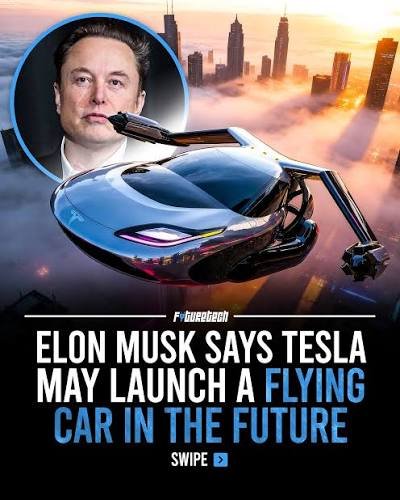
NEW DELHI: Elon Musk’s new Tesla Roadster has taken the idea of a supercar to an extraordinary level.
The electric sports car demonstrated how it could lift off the ground, rotate in mid-air and land using rocket-style thrusters developed with SpaceX. But the technology behind these manoeuvres is not quite what the word “rocket” might suggest.
The secret is compressed air, high-pressure gas and Newton’s third law of motion. Instead of burning rocket fuel, the system expels pressurised gas through nozzles to generate thrust.
The Roadster’s proposed Rocket configuration uses a high-pressure gas storage system connected to multiple nozzles positioned around the vehicle.
Reports from the unveiling describe approximately 250-260 kilograms of compressed air stored in composite pressure vessels, with 10 nozzles helping control the car’s movement.
When a valve opens, the compressed gas rushes out through a nozzle at high speed. This produces a force in the opposite direction, pushing the vehicle forward or upward, depending on how the nozzle is oriented.
This is an application of Newton’s third law: every action has an equal and opposite reaction.
Unlike conventional rocket engines, these are known as cold-gas thrusters because they generate thrust without combustion. There is no rocket fuel burning inside the thruster to produce hot exhaust. Instead, the energy comes from gas that has already been compressed and stored under pressure.

We are a multimedia news network. Website : www.7xnews.com Based in New Delhi (India)
Youtube : umakantlakheraspeaks@gmail.com