
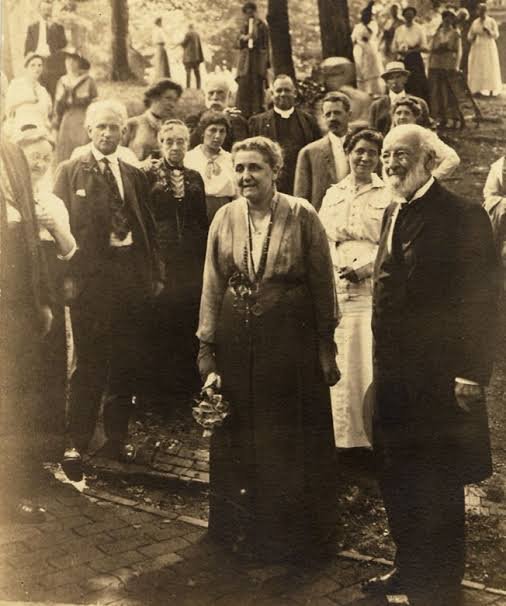
President Donald Trump, who has been passed over for the second year for the Nobel Peace Prize, can take hope from the fact that another American, Jane Addams, a social reformer and pacifist, was nominated 91 times between 1916 and 1931 before she was finally awarded the prize. The Finnish peace activist and politician Väinö Tanner was nominated for the Peace Prize over 60 times, but never received it.
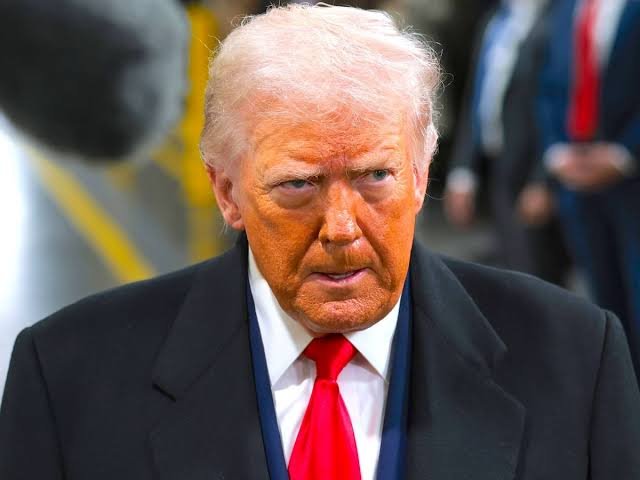
Trump’s repeated claims about working for peace and resolving nine conflicts got complicated when his administration abducted Venezuelan President Maduro last year and killed Iran’s top leaders, igniting the Gulf war that he is desperate to end — on his terms. But then, we are not the judges or award-givers.
He is angry with the Norwegian committee that decides the winner and, indeed, the Norwegian Government. In an unusual act for a serving president, he lobbied the Norwegian finance minister last year. It was ignored. Now Trump has threatened: “We will not forget.” Will it be sanctions, punitive tariffs or worse on Norway?
Eventually, if he does not win, he will be in good company: another US President, Franklin Roosevelt. Eleanor Roosevelt was also ignored. Václav Havel, President of the erstwhile Czechoslovakia, was overlooked many times. There are many.
Trump would be aware that Mahatma Gandhi was ignored five times between 1937 and 1948, under pressure from the British who then ruled India. They had cautioned the Norwegians that Gandhi was “too much of a nationalist.” The last bid on his behalf ended after his assassination.
Because the Nobel statutes at the time did not allow posthumous awards unless the recipient died after selection, the committee decided not to award the Peace Prize in 1948, stating that there was “no suitable living candidate”.
Four decades later, Nobel Committee members publicly admitted that the omission was the greatest mistake in their history. When the Dalai Lama won in 1989, the committee explicitly stated it was partly a tribute to Gandhi.
Gandhi was not alone; Jawaharlal Nehru offended the West when he pioneered non-alignment and got in Cold War crosshairs.
Gandhi was born in Porbandar in 1969. Abdul Sattar Edhi was born in 1928 in Bantwa, Gujarat, barely 60 kilometres away. He migrated to Pakistan and started the world’s largest volunteer ambulance network, along with homeless shelters, animal shelters, rehabilitation centres, and orphanages. Whenever Karachi was in flames and under curfew, the government and warring groups welcomed only Edhi Foundation’s ambulances.
Pakistan’s ‘angel of mercy’ received the Ramon Magsaysay Award and the Lenin Peace Prize, but not a Nobel. The Norwegians ignored pleas after his death. But in his lifetime, Edhi had famously stated: “I don’t care about it. It doesn’t mean anything to me. I want these people, I want humanity.”
When even selfless work like Edhi’s is overlooked, for whatever reason, it has a lesson for those who use war and peace to suit their political ends.
Returning to Trump, the ‘official’ India observed silence, with a smile, when media outlets, including the state-owned Doordarshan, celebrated the “Indian origin” South African jurist Navanetham (Navi) Pillay, this year’s winner.
The reason for the ‘smile’ was dual and was easy to discern: one, Trump, who claims to have resolved nine conflicts, including one between India and Pakistan, which Pakistan welcomes, but India has consistently denied, lost out.
India’s differences with the Trump administration range from high tariffs and absence of a trade agreement to harsh deportations of ‘illegal’ Indians, to the latest suspension of the visa regime under which over half a million Indians have contributed to America’s leadership in science, technology and more. Brickbats hitting the bilateral relations come flying every other day. Indians and Indian Americans hit by the visa uncertainties are asking: What have we done to deserve this?
Two: A tactical brownie for India. Rival Pakistan’s endorsement of Trump was automatically passed over. Worse, Pakistan Prime Minister Shahbaz Sharif endorsed it, one last time, hours before the official announcement, to reiterate Pakistan’s proximity to Trump. Sharif may be asking: what has Trump done to deserve this?
These current geopolitical jostling aside, India has hosted for long ‘foreign’ Nobel Laureates like the Dalai Lama from Tibet and Mother Theresa, the Albanian-born saint. Myanmar’s Aung San Suu Kyi was educated in India.
India also applauded the award to Malala Yousafzai of Pakistan, the youngest Nobel Laureate to date.
It applauded Bangladeshi ‘Grameen’ economist Mohammed Yunus. However, on being appointed, with more than a nod from the Clintons, to head an interim government, Yunus leaned on the anti-India Islamists. He incessantly attacked India because it hosts his bete noire, ousted former premier Sheikh Hasina, who once put him in jail.
Welcoming the freedom fighters of Asia and Africa and awarding the Nobel has been part of India’s ethos. India honoured four other South Africans: Nelson Mandela, Desmond Tutu and Albert Luthuli. Because of its own history of anti-colonial struggle, India has shared deep political and emotional ties with leaders fighting for liberty, civil rights, and poverty alleviation.
India was among the first developing nations to oppose apartheid in South Africa. Even today, African leaders acknowledge the inspiration and contribution of Mahatma Gandhi and Jawaharlal Nehru in their respective freedom movements.
India’s record has been fair. Since the Nobel was instituted, it has produced nine laureates across various fields, including physics, medicine, literature, economics, and peace.
Durban-born Navi Pillay has served on the International Criminal Court (ICC), including the International Criminal Tribunal for Rwanda. The Hague-based ICC has long been a target of Trump, whose campaign against it has escalated since the court announced arrest warrants against Israeli Prime Minister Benjamin Netanyahu and his former defence minister.
In awarding her the Nobel Prize, the Committee has, even if symbolically, righted some of the worst wrongs the world has witnessed in our time
Mahendra Ved is a veteran Journalist and an Expert on international affairs.