

A single public meeting in 1966 turned a cartoonist’s protest into a durable political institution—and changed the grammar of power in Maharashtra.
The Meeting That Filled a Maidan
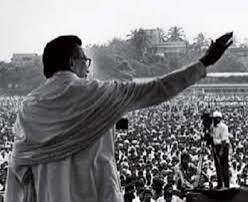
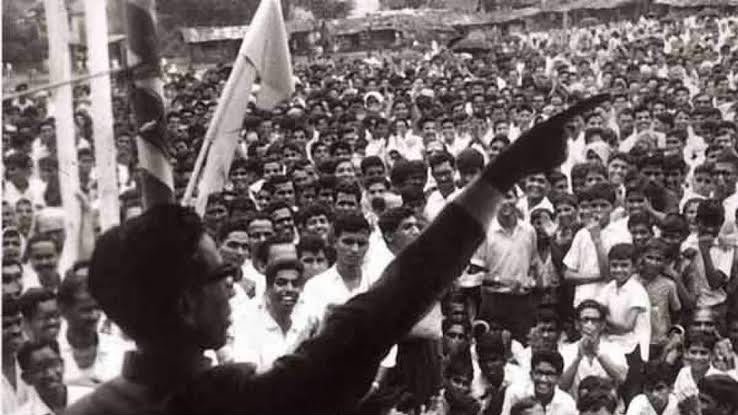
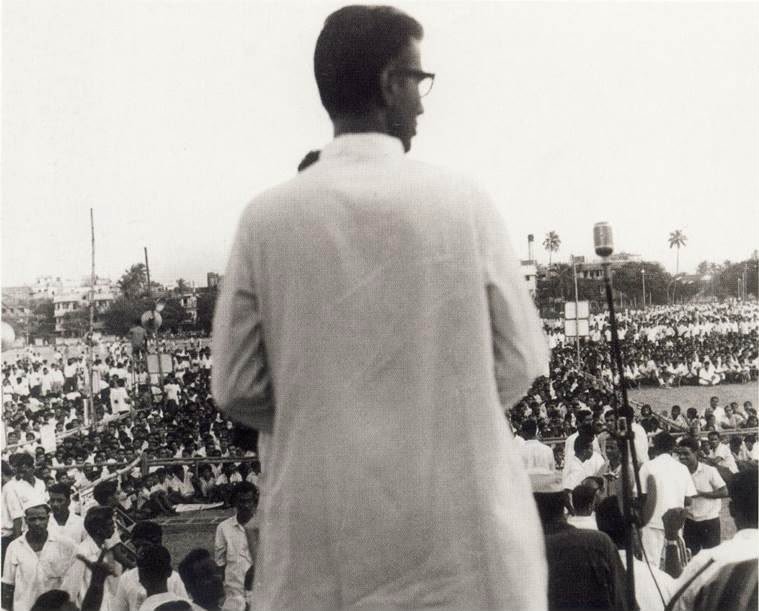
Sixty years ago, Bal Thackeray was advised not to risk Shivaji Park. The Shiv Sena, founded barely four months earlier on June 19, 1966, was an untested organisation; Dadar’s vast ground seemed too large for a new movement built around the grievances of Marathi-speaking Bombay. Thackeray refused a smaller venue. On October 30, 1966, the park filled beyond the organisers’ expectations, giving the Sena its first proof that street-level anger could be converted into public presence.
The occasion was Dussehra, though the rally was held a week after the festival because preparations had taken longer. Thackeray, then known chiefly as the sharp-tongued editor and cartoonist behind Marmik, addressed a crowd mobilised through chawls, neighbourhood clubs and local gymnasiums. A steel tiffin box passed among supporters collected small donations for a party that had neither office nor electoral history.
That meeting did more than launch an annual ritual. It established Shivaji Park—“Shivtirth” in Sena vocabulary—as a stage on which Maharashtra’s political anxieties could be performed, amplified and translated into organisation.
From Marmik to the Street
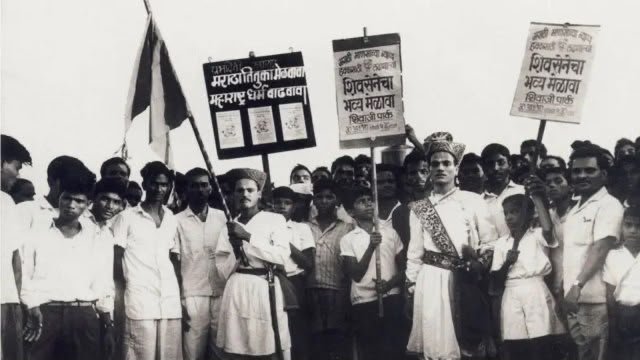
The first Dussehra gathering distilled the Sena’s founding argument: that Marathi speakers were being displaced in their own city, denied jobs, housing and cultural recognition. Contemporary reports recorded inflammatory slogans against South Indian migrants and, after the meeting, attacks on Udupi hotels. The rally thus revealed both the movement’s mobilising force and the exclusionary edge that would shadow it.
Yet its political method was new. The Sena did not begin as a conventional electoral party seeking office; it began as a pressure group capable of filling a maidan, setting an agenda and making authority nervous. The Dussehra rally became the annual demonstration of that capacity: part festival, part leadership address, part organisational census.
Shivaji Park itself carried history. It had been central to the Samyukta Maharashtra movement, which won a Marathi-speaking state in 1960. By choosing it, Thackeray connected his new organisation to an older politics of linguistic identity—while giving it a more militant, urban and personalised form.
The Annual Theatre of Power
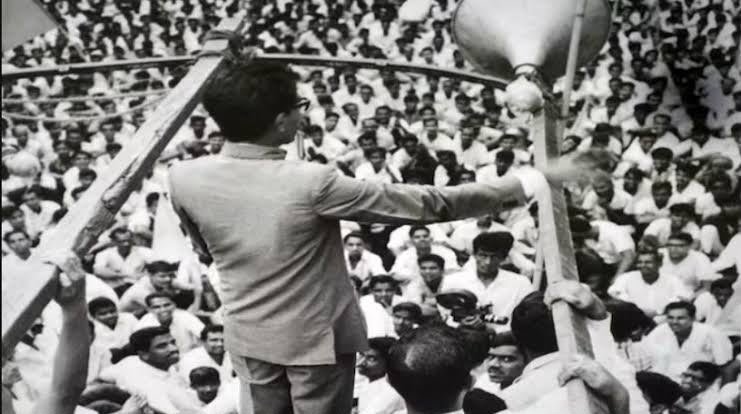
Over the decades, the Dussehra melava became Maharashtra’s most recognisable political theatre. Bal Thackeray used it to announce positions, discipline rivals, celebrate the party’s reach and speak directly to the sainik—the foot soldier whose loyalty often mattered more than formal party structures. He addressed the gathering until close to his death in 2012; in his final year, too frail to appear, his recorded message was played at the venue.
The rally’s importance lay in its repetition. Each year, it renewed the Sena’s claim to speak for Marathi pride, Mumbai’s working classes and, increasingly, Hindu assertion. It also allowed the party to test slogans before elections, reward loyalists and display the cadres, flags and neighbourhood networks that made it formidable between polls.
In 2010, the gathering acquired a dynastic dimension when the Yuva Sena was launched under Aaditya Thackeray, then twenty. The event had become not merely a party meeting but a ceremony of succession, inheritance and ideological renewal.
The Shift to Hindutva
The Sena’s transformation from a Mumbai-centric Marathi movement into a statewide force came through a deliberate ideological widening. In the 1980s, its politics increasingly fused Marathi assertiveness with Hindu nationalism; the slogan “Garv se kaho hum Hindu hain”—say with pride that we are Hindus—marked a decisive departure from the earlier, narrower language of the Marathi manoos.
This shift altered Maharashtra’s political map. In the 1990 Assembly elections, the Sena jumped from two to 52 seats, while its ally, the Bharatiya Janata Party, rose from 12 to 42; together they secured 27 per cent of the vote. Scholars have argued that the Sena’s genius lay in rendering Hindutva legible through idioms of Maratha valour, local grievance and masculine street power, rather than relying solely on the Ramjanmabhoomi campaign.
The Dussehra rally was central to this expansion. It offered a recurring public arena in which regional pride and religious identity could be fused, making the Sena credible beyond Mumbai’s islands and into the Vidarbha, Marathwada and western Maharashtra hinterlands.
Power, and Its Consequences
That expansion culminated in 1995, when the Sena-BJP alliance won a majority and formed Maharashtra’s first non-Congress government of the modern era. Manohar Joshi became chief minister, with the BJP’s Gopinath Munde as deputy; the coalition governed until 1999.
The Sena’s entry into office changed it as much as it changed the state. A movement born in opposition acquired ministries, contracts, municipal leverage and access to state patronage. Its politics also left a difficult inheritance: the party’s rise coincided with communal polarisation, including the devastating Mumbai riots of 1992-93, which remain a moral and historical wound in the city’s memory.
But the rally’s deeper legacy was institutional. It normalised a style of politics in which identity, spectacle and street mobilisation could rival programme, administration and legislative performance. Subsequent parties learned from it: Maharashtra’s politics became more competitive, more personalised and more attentive to regional sentiment.
From One Voice to Two Stages
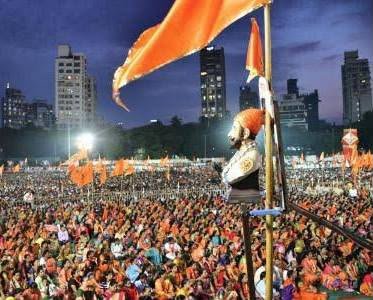
The rally’s sixtieth year arrives amid an irony its founder could scarcely have imagined. The Sena split in June 2022, when Eknath Shinde rebelled against Uddhav Thackeray’s leadership. For the first time in 56 years, rival Dussehra gatherings were held at separate venues: Uddhav Thackeray at Shivaji Park, Shinde at BKC’s MMRDA grounds.
The contest over the rally is therefore also a contest over inheritance. Shivaji Park remains the symbolic prize because it is inseparable from the Sena’s origin story; whoever addresses the crowd there claims continuity with 1966. The dispute shows how powerful a political ritual can become: it outlives leaders, survives splits and becomes property that factions fight to possess.
A Legacy Beyond the Party
Sixty years on, the Dussehra rally’s significance exceeds the fortunes of any one Sena. It demonstrated that a regional movement could build a durable political identity from cultural grievance, festival symbolism and disciplined street organisation. It helped end the complacency of one-party dominance in Maharashtra and forced every subsequent formation to take Marathi aspiration, urban discontent and religious identity seriously.
Its history is not a simple celebration. The same platform that gave voice to marginalised Marathi youth also legitimised majoritarian aggression and made identity a weapon of everyday politics. That duality is the rally’s true legacy: it made Maharashtra more politically alive, and it made its politics harder, more polarised and more emotionally charged.
Shivaji Park will again fill with flags, slogans and memories. But the ground now holds a fractured inheritance. Sixty years after a tiffin box collected the first donations, the question is no longer whether the Dussehra rally can mobilise Maharashtra—it is whether its heirs can still claim the moral meaning of the movement it created.

~Hasnain Naqvi is a former member of the history faculty at St. Xavier’s College, Mumbai….
The opinions expressed here are solely those of the author.