

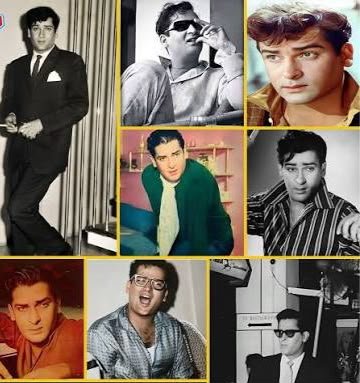
From his explosive “Yahoo!” to an enduring legacy of joy, the legend who redefined the Hindi film hero remains an irreplaceable icon of cinematic exuberance.
On October 21, Hindi cinema pauses to remember a phenomenon who did not merely enter the frame—he exploded into it. On his 95th birth anniversary, the memory of Shammi Kapoor arrives not with quiet nostalgia, but with the thunderous beat of rock-and-roll, the snow-capped expanse of Gulmarg, and an infectious, uninhibited joy that forever altered the landscape of Indian popular culture. Often dubbed the “Elvis Presley of India,” Shammi Kapoor was far more than an echo of Western rockabilly charm; he was an original force of nature who single-handedly liberated the Hindi film hero from the brooding, tragic molds of the 1950s and taught an entire nation how to dance with wild, romantic abandon.
Rooted in Theatre, Forged in Independence
Born Shamsher Raj Kapoor on October 21, 1931, in Mumbai, he was the middle son of theatrical patriarch Prithviraj Kapoor and the brother of cinematic stalwarts Raj Kapoor and Shashi Kapoor. Despite his family’s towering status in Mumbai’s film industry, young Shammi’s upbringing was eclectic and grounded. His early years took him across Peshawar and Kolkata, where his father acted with New Theatres Studios. His initial education began in Kolkata’s Montessori classrooms before continuing in Mumbai at St. Joseph’s Convent, Don Bosco School, and New Era School.
While he briefly enrolled at Ramnarain Ruia College, the pull of the stage was irresistible. In 1948, he stepped into his father’s legendary troupe, Prithvi Theatres, as a junior artiste on a modest monthly salary of Rs 50. Over the next four years, earning his stripes alongside seasoned stage performers, he absorbed the fundamentals of body language, voice modulation, and dramatic timing. By the time he collected his final pay check from Prithvi Theatres in 1952, he was ready to test the waters of silver screen stardom.
The Metamorphosis: From Stiff Hero to Uninhibited Icon
Shammi Kapoor made his cinematic debut in 1953 opposite Chand Usmani in Jeevan Jyoti. However, his early years in cinema were marked by persistent struggle. Throughout the mid-1950s, he was cast in serious, traditional roles—often playing second fiddle to established leading ladies like Madhubala in Rail Ka Dibba and Naqaab, Nutan in Laila Majnu, Shyama in Thokar and Mirza Sahiban, and Suraiya in Shama Parwana. Molded by directors to fit the prevailing archetype of the melancholic lover, Kapoor appeared constrained, unable to find his true voice or persona.
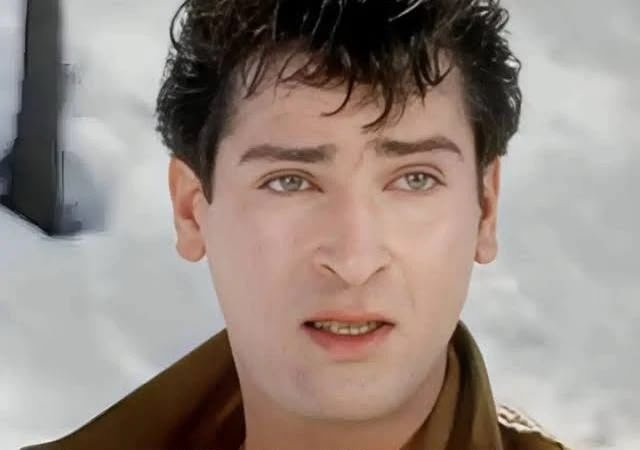
The pivotal transformation arrived when he decided to shed the mustache, alter his hairstyle, and embrace a lighter, sleeker, and far more dynamic screen image. The breakthrough came with Nasir Hussain’s Tumsa Nahin Dekha (1957) opposite Ameeta, followed by the smash success of Dil Deke Dekho (1959) featuring Asha Parekh.
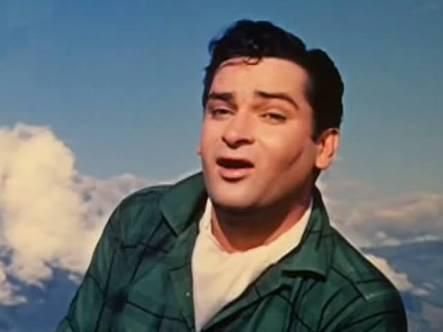
The transformation was sealed with the release of Junglee in 1961. As he slid down snowy slopes yelling “Yahoo!”, Hindi cinema witnessed the birth of its ultimate rebel-romantic. Shammi was no longer the passive hero waiting for fate; he was audacious, stylish, eccentric, and unapologetically energetic.
The King of Rhythm, Voice, and Romance
What made Shammi Kapoor unique was his complete lack of formal dance training, paired with an extraordinary sense of rhythm. He was Hindi cinema’s first true “dancing hero.” Choreographing his own instinctual moves, he used his entire body—head shakes, neck rolls, expressive eyes, and frantic feet—to bring songs alive.
Central to this sonic revolution was his legendary creative union with playback maestro Mohammed Rafi. Rafi possessed an uncanny ability to modulate his singing to match Kapoor’s on-screen breath, energy, and hyper-expressive cadence. Whether it was the raw vigor of Teesri Manzil (1966), the breezy romance of Kashmir Ki Kali (1964), or the soulful depth of Brahmachari (1968)—which earned Kapoor his first Filmfare Award for Best Actor—Rafi was the voice, and Shammi was the living embodiment of the melody.
Kapoor also possessed a remarkable ability to elevate new talent. He served as the launchpad for future screen legends, starring opposite debutantes Saira Banu in Junglee and Sharmila Tagore in Kashmir Ki Kali. His vibrant chemistry with Asha Parekh across four films, including the cult mystery Teesri Manzil, set benchmarks for screen romance. Furthermore, his pairings with Southern superstars like Vyjayanthimala (College Girl, Prince), Padmini (Singapore), and B. Saroja Devi (Pyaar Kiya To Darna Kya) resulted in massive commercial triumphs across India.
Through the golden decade of the 1960s, a string of blockbusters—Professor, China Town, Bluff Master, Janwar, An Evening in Paris, Budtameez, and Sachaai—established him as the undisputed king of youth-centric entertainment.
Grace, Evolution, and an Eternal Legacy
Off-screen, Shammi Kapoor’s life was marked by passionate romance and profound resilience. During the shoot of Rangeen Raaten in 1955, he fell in love with actress Geeta Bali. The two married four months later at Mumbai’s Banganga Temple, going on to welcome two children, Aditya and Kanchan. Tragedy struck in 1965 when Geeta Bali succumbed to smallpox, leaving Kapoor devastated. He later rebuilt his life, marrying Neila Devi of the former royal family of Bhavnagar in 1969, who became a steadfast anchor for his family.
As the 1970s approached, changing physical dynamics prompted Kapoor to reinvent himself once again. After his final romantic lead in Andaz (1971), he seamlessly transitioned into character roles, delivering powerful, dignified performances in films like Zameer, Parvarish, Hero, Hukumat, and Vidhaata (1982)—the latter winning him the Filmfare Award for Best Supporting Actor. He also explored the director’s chair with ambitious projects like Manoranjan (1974) and Bundal Baaz (1976), and later graced television screens in acclaimed series such as Gul Gulshan Gulfaam and Chhattan.
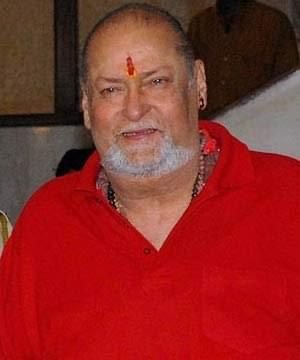
In his later years, Kapoor embraced technology with childlike enthusiasm, becoming one of India’s earliest internet pioneers and founding the Internet Users Community of India. His final screen appearance came in Imtiaz Ali’s Rockstar (2011), performing alongside his grand-nephew Ranbir Kapoor—a fitting symbolic passing of the torch from one generational dynamic force to another.
When Shammi Kapoor passed away on August 14, 2011, at the age of 79, cinema lost its most vibrant spirit. Yet, on his 95th birth anniversary, his physical absence matters little. Whenever a camera zooms into a joyful face, whenever a melody demands an uninhibited dance, and whenever romance chooses exuberance over tears, the immortal spirit of Shammi Kapoor dances on.

~Hasnain Naqvi is a former member of the history faculty at St. Xavier’s College, Mumbai….
The opinions expressed here are solely those of the author.