

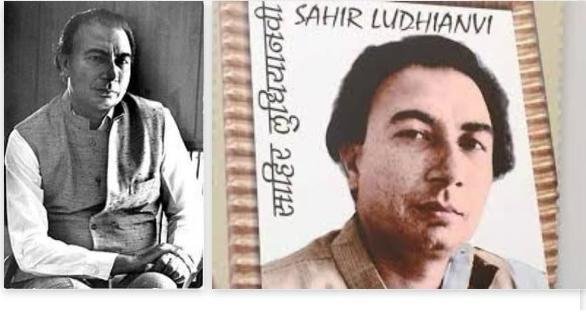
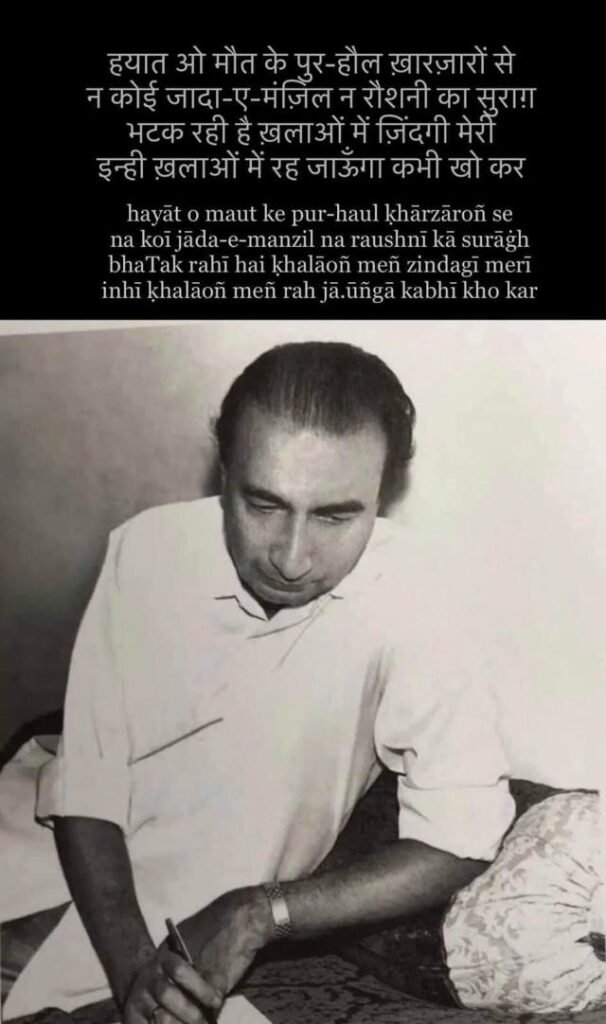
Forty-six years after his passing, Sahir Ludhianvi’s eloquent lyrics continue to resonate with quiet power in the public imagination, occupying a space in Hindi cinema that no successor has ever managed to fill. Yet, to fully measure the height of Sahir’s monument, one must view him among the titans who shared his sky—a golden era of Hindi film music forged by literary masters whose pens gave post-independence India its emotional, social, and political vocabulary.
“Chalo ek baar phir se ajnabi ban jaayen hum dono”
(Let us once again become strangers to each other)
Among Giant Contemporaries: The Distinctive Rebel Soul
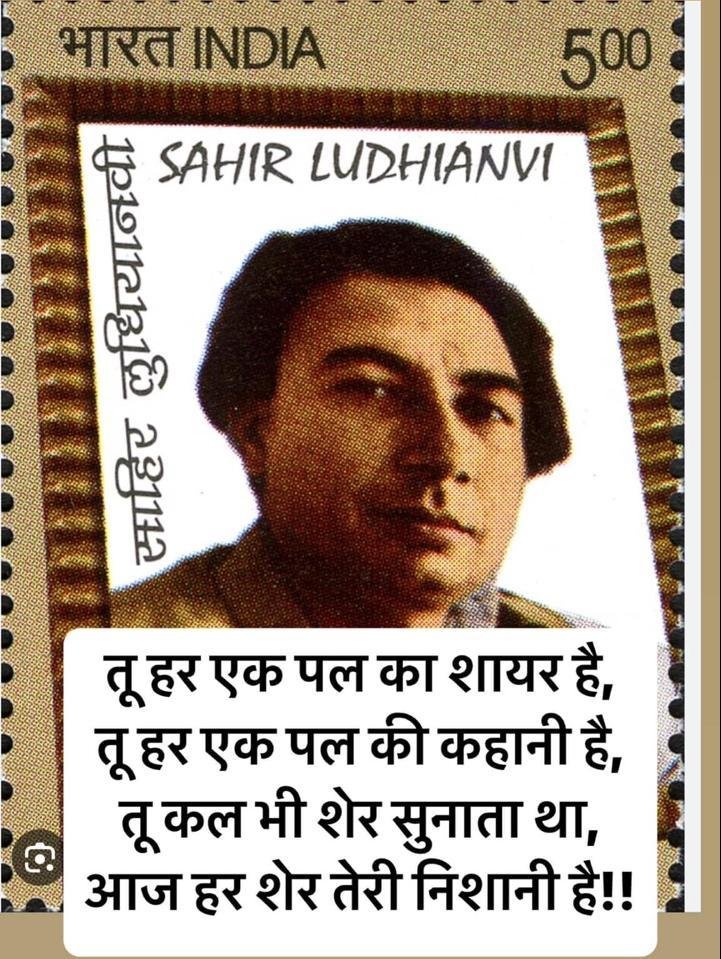
The mid-20th century golden age was defined by an unprecedented constellation of lyricists, each bringing a distinct philosophy to the screen. Where Shailendra brought a rustic, folk-infused empathy for the common man (“Mera joota hai Japani”), Majrooh Sultanpuri infused cinema with breezy romanticism and modern pop vitality (“Chura liya hai tumne”). Meanwhile, Shakeel Badayuni elevated love to an ethereal, classical ghazal realm (“Chaudhvin ka chaand ho”), and Rajinder Krishan demonstrated a boundless, chameleon-like versatility across comedy, folk, and melancholy (“Eena meena deeka”). Yet while his peers celebrated life’s lighter joys, rustic innocence, or classical devotion, Sahir grounded his verse in unvarnished economic reality, stripping romance of naive escapism and confronting social hypocrisy head-on.
Even among fellow ideologues and ardent romanticists, Sahir stood distinct in his rebellious stance. Kaifi Azmi, his comrade in the Progressive Writers’ Association, wrote with collective revolutionary passion and socialist warmth (“Kar chale hum fida”), whereas Hasrat Jaipuri constructed romance as a blissful sanctuary of pure sensory devotion (“Ehsan tera hoga mujh par”). In contrast, Sahir’s anti-establishment posture was fiercely individualistic, deeply personal, and laced with existential cynicism. Where Hasrat sought ecstasy and Kaifi sought collective awakening, Sahir challenged both state and society with an intellectual rage that forced cinematic music to adapt to his unyielding conviction rather than the other way around.
“Maine chaand aur sitaron ki tamanna ki thi / Mujhko raaton ki siyahi ke siva kuch na mila”
(I yearned for the moon and stars / I received nothing but the dark of night)
Romance
Deconstructed: Love in the Shadows of Cynicism
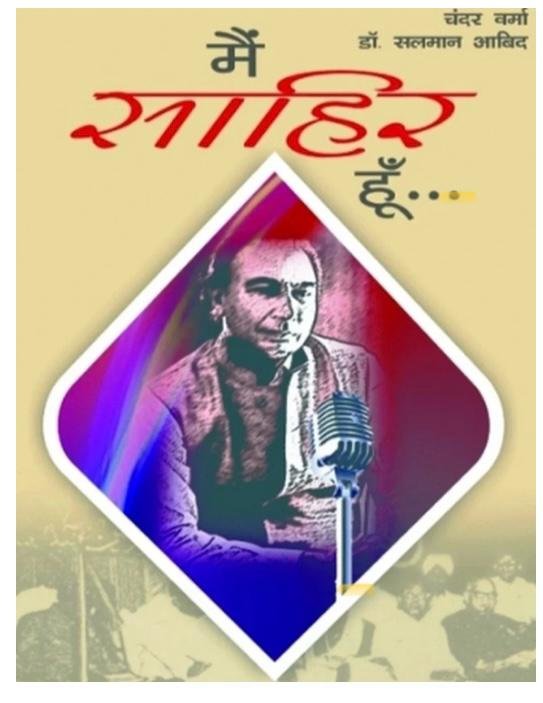
Sahir never allowed cinematic romance to exist in a vacuum of sweet sentimentality. In his hands, love was inseparable from class status, personal pride, and existential friction. In classics like Kabhi Kabhie, Pyaasa, and Hum Dono, Sahir stripped love songs of naive escapism.
Even in his sweetest romantic verses, a quiet thread of skepticism or melancholic self-awareness lingers—reminding the listener that passion cannot remain untainted in a mercenary world where human relationships are bought and sold.
“Jinhe naaz hai Hind par woh kahan hain?”
(Where are those who boast pride in India?)
Patriotism as Uncompromising Social Critique
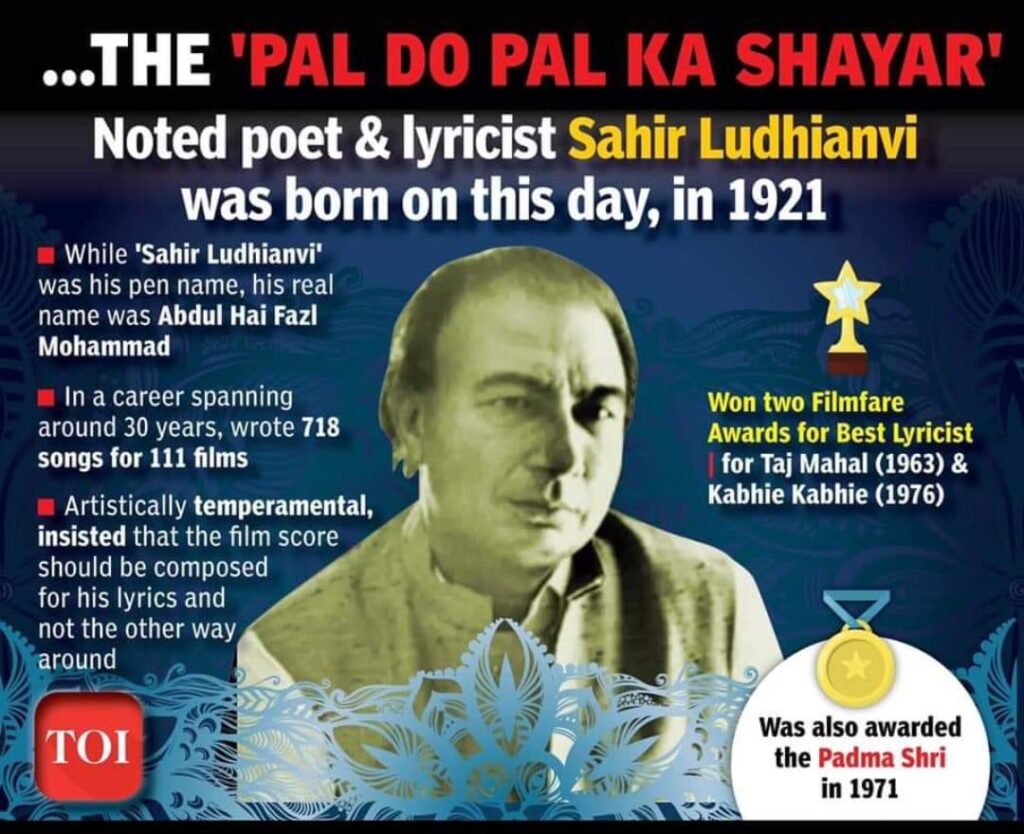
Where conventional patriotic anthems offered uncritical praise or militaristic fervour, Sahir’s national consciousness was sharp, probing, and fearlessly interrogative. His monumental work in Guru Dutt’s Pyaasa transformed a journey through a red-light district into a scathing indictment of post-independence governance and moral complacency.
Even when penning anthems of nation-building, such as “Saathi Haath Badhana”in Naya Daur, Sahir grounded his patriotism in working-class solidarity and anti-feudal pride rather than abstract state worship.
“Na toh karwan ki talash hai, na toh humsafar ki talash hai”
(I search neither for a caravan, nor for a traveling companion)
Devotion, Philosophy, and Qawwali: Subverting the Sacred
Even in genres that traditionally demanded spiritual submission—such as devotional songs and Sufi qawwalis—Sahir injected a streak of intellectual defiance. In Barsaat Ki Raat, his iconic qawwali “Na toh karwan ki talash hai” elevated the traditional form into a cosmic manifesto, celebrating human love as a revolutionary force higher than conventional orthodoxy.
In his philosophical musings (“Main zindagi ka saath nibhata chala gaya”), Sahir met life’s anxieties with cool nonchalance, urging the listener to blow away trouble like smoke while keeping one’s individual dignity intact.
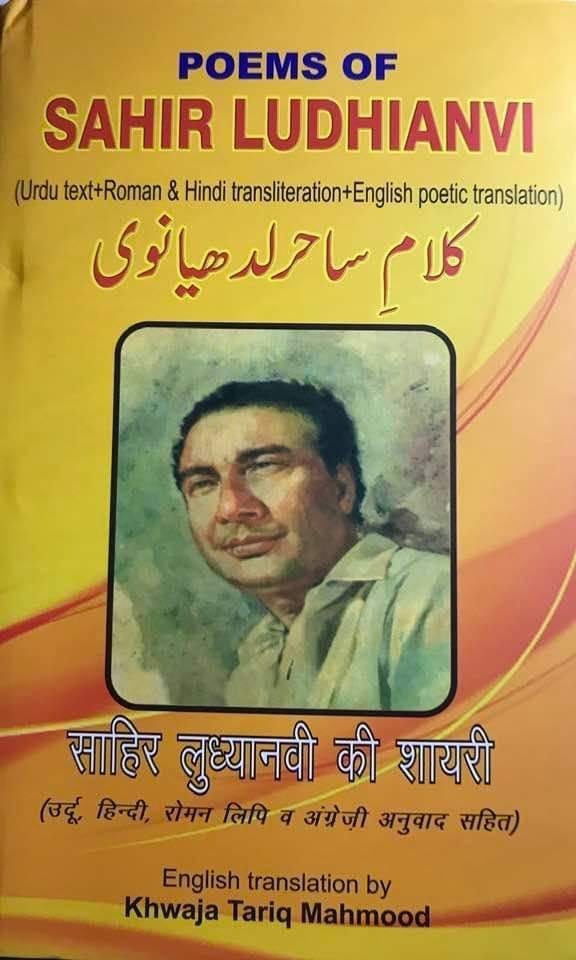
“Woh afsana jise anjam tak lana na ho mukmlin / Usse ek khoobsurat mod dekar chhodna achha”
(A story that cannot be brought to its rightful end / Is best left at a beautiful turn)
The Immortal Poet-Rebel

Sahir Ludhianvi’s cynicism was never born of bitterness; it was the natural defence of a deeply sensitive poet who cared too much for a flawed world. By infusing Hindi film music with literary seriousness, socio-political bite, and emotional realism, he redefined what a song could achieve on screen. Decades after his silence, his verses remain the benchmark against which all cinematic poetry is measured.

~Hasnain Naqvi is a former member of the history faculty at St. Xavier’s College, Mumbai….
The opinions expressed here are solely those of the author.