

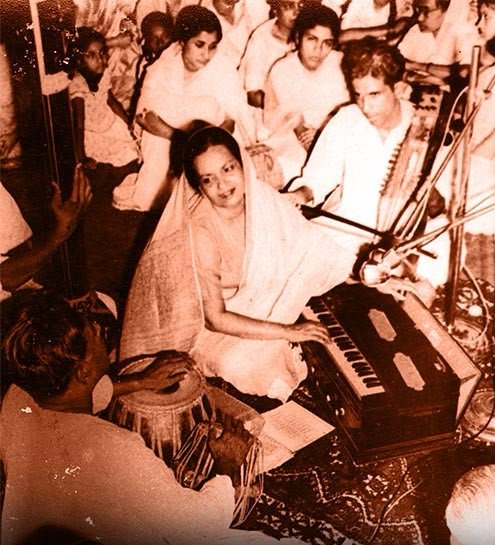
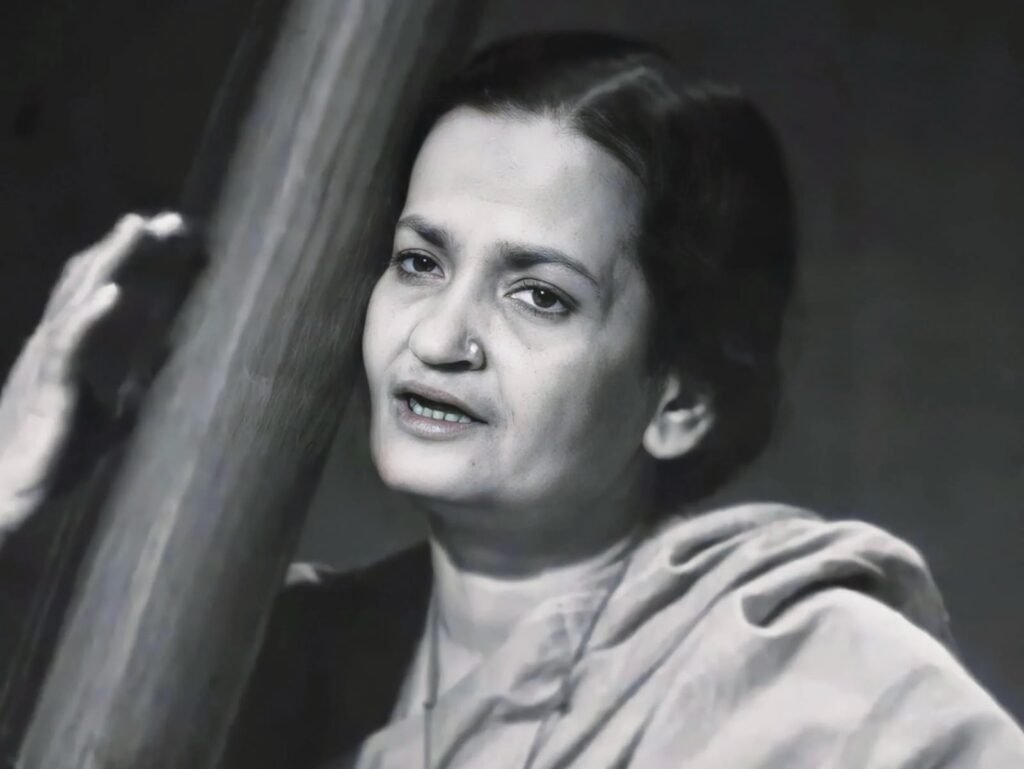
Fifty-two years ago, on October 30, 1974, the world of Hindustani classical music lost its undisputed sovereign. Yet, to speak of Begum Akhtar in the past tense feels like an injustice to a voice that remains timeless, echoing through the corridors of memory whenever heartbreak, longing, or ecstasy seeks expression. Known affectionately as Mallika-e-Ghazal (The Queen of Ghazals), Akhtari Bai Faizabadi did not merely sing poetry; she lived it, breathing a rare, melancholic intimacy into every microtone. On her 52nd death anniversary, her legacy stands not as a relic of a bygone era, but as a living testament to the transformative power of art.
Deewana Banana Hai To Deewana Bana De
(If you must make me mad with love, then make me truly mad)
Born in 1914 in Faizabad, Uttar Pradesh, Akhtari Bai’s journey was paved with personal turbulence. Raised by a single mother, Mushtari, after being abandoned by her father, her escape and salvation was music. Captivated as a child by the performances of touring artists, she underwent rigorous classical training under legendary exponents of the Patiala and Kirana gharanas, including Ustad Ata Mohammed Khan and Ustad Abdul Waheed Khan.
Her public debut at the age of fifteen marked the arrival of a rare prodigy. Performing at a benefit concert for the 1934 Nepal–Bihar earthquake victims, her soulful rendition deeply moved the poet Sarojini Naidu, who recognized that this young girl possessed a gift capable of touching millions. Soon after, her initial recordings with the Megaphone Record Company heralded the emergence of an icon who would shatter norms by bringing classical music out of private mehfils onto the grand public stage.
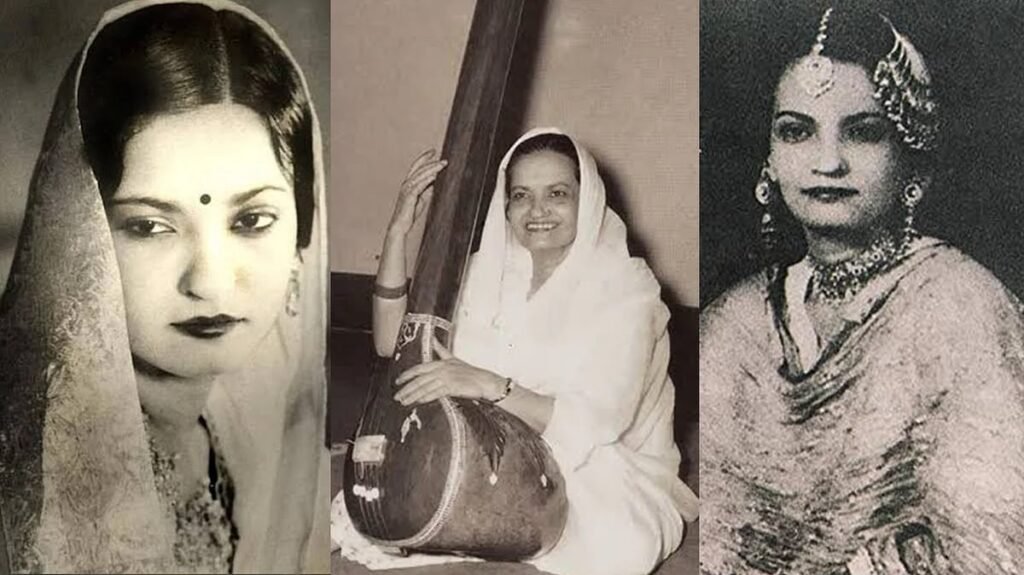
The Cinema Era and Sacrifices of Love:
Wo Jo Hum Mein Tum Mein Qarar Tha:
(That promise of love that existed between us)
Begum Akhtar’s extraordinary beauty and expressive voice naturally drew the film world toward her. In the 1930s and early 1940s, she starred in talkies such as King for a Day, Nal Damayanti, and Mehboob Khan’s classic Roti (1942), for which she sang iconic compositions under the baton of Anil Biswas. Yet, despite the allure of celluloid fame, her soul belonged strictly to the purity of Hindustani classical music. Inspired by titans like Gauhar Jaan, she chose to step away from cinema to preserve her art.
Her life took a dramatic turn in 1945 following her marriage to barrister Ishtiaq Ahmed Abbasi. Conforming to societal norms of the era, she abstained from singing for nearly five years. The silence, however, took a severe toll on her health, leading to deep emotional distress. It was only when doctors famously prescribed a return to music as her ultimate remedy that she re-entered the studio in 1949 through All India Radio. Music was not just her profession; it was her lifeblood.
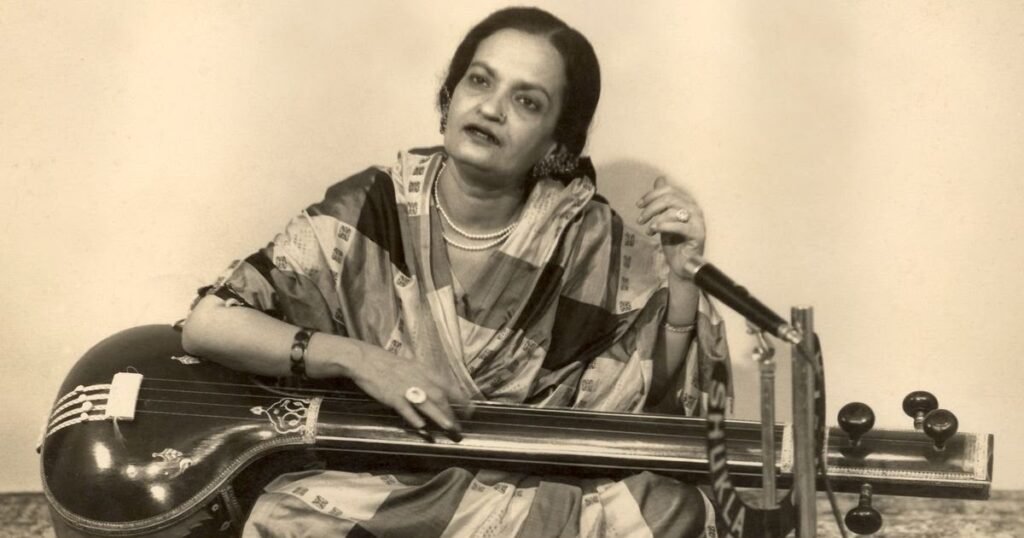
The Golden Age of Classical Artistry:
Hamari Atariya Pe Aao Sawariya:
(Come to my balcony, my beloved)
Upon her return, Begum Akhtar’s music reached unprecedented artistic heights. Her voice had matured into a rich, velvety contralto, laced with a delicate gravel that carried the weight of life’s triumphs and agonies. She elevated the light classical genres—ghazal, dadra, and thumri—to equal footing with pure classical forms, infusing her renditions with nuanced raag-based structures and profound emotional depth.
Whether navigating the romantic yearnings of a dadra, the subtle grief of a thumri, or timeless Bengali classical melodies like Jochona Koreche Aari, her voice possessed an unmatched warmth. She composed most of her ghazals herself, meticulously selecting couplets from legendary poets like Ghalib, Faiz, and Jigar Moradabadi, turning every performance into a soul-stirring dialogue between poet and listener.
A Farewell written in Notes:
Ae Mohabbat Tere Anjam Pe Rona Aaya:
(Oh Love, I wept at what became of you)
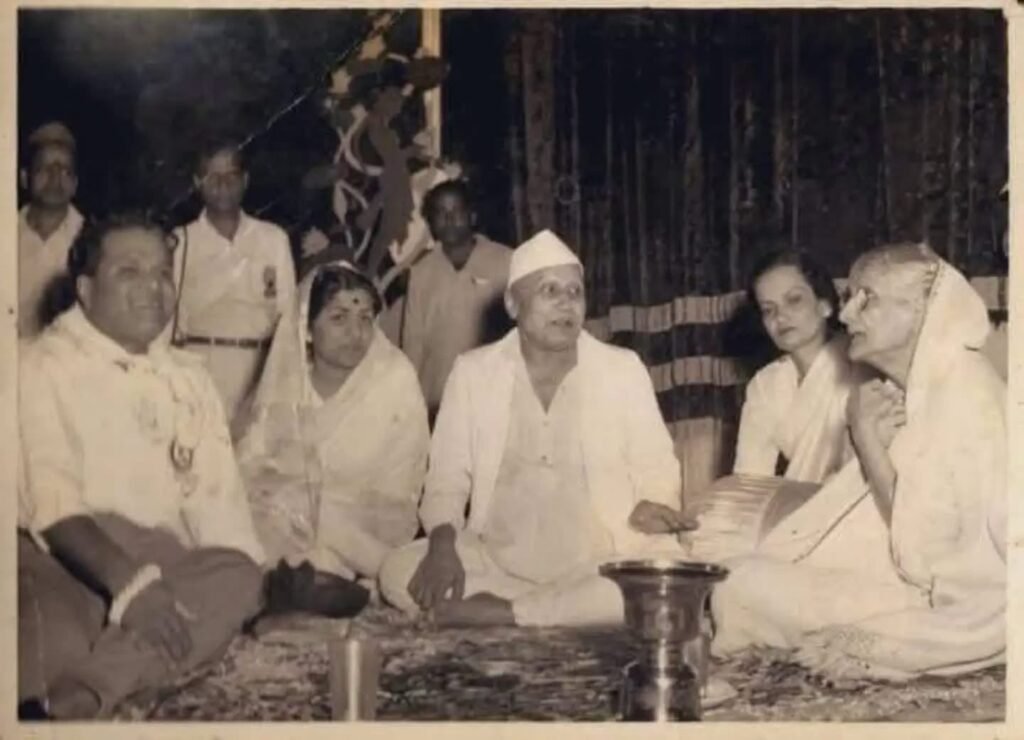
Begum Akhtar lived for her audience, and it was on stage that she surrendered her final breath. During a performance in Gujarat in October 1974, feeling that her voice was not reaching the heights she demanded of herself, she pushed her pitch beyond its physical limits. The exertion led to severe illness, and days later, on October 30, 1974, she passed away in Ahmedabad.
Honored with the Sangeet Natak Akademi Award, Padma Shri, and posthumously the Padma Bhushan, her true monument remains the love of millions of listeners across generations. Fifty-two years after her passing, whenever a night grows quiet and a voice sings “Ae Mohabbat Tere Anjam Pe Rona Aaya,” Begum Akhtar returns—immortal, haunting, and eternally sovereign.

~Hasnain Naqvi is a former member of the history faculty at St. Xavier’s College, Mumbai….
The opinions expressed here are solely those of the author.