

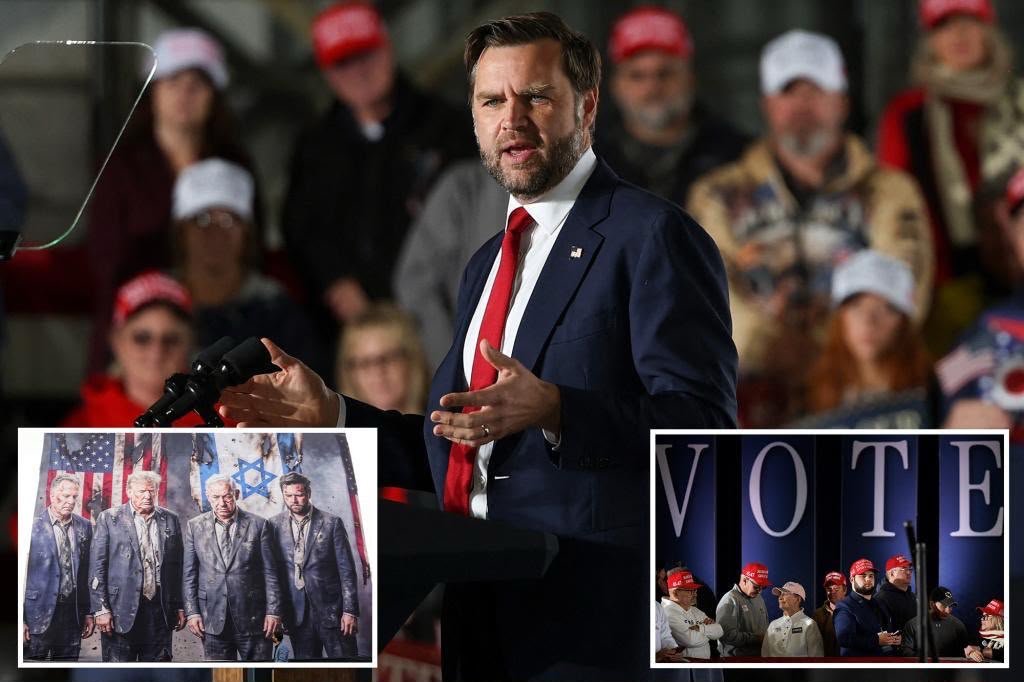
US Vice President J.D. Vance has offered a concise diagnosis for the Republican Party’s crushing defeat in the 2026 midterms. In his telling, four factors explain why voters turned against the governing party so decisively: the war in Iran, the high cost of living, a failure to put America first, and the nation’s relationship with Israel. These explanations deserve careful examination. They contain fragments of truth, yet they also reveal a deeper reluctance to confront the political choices that produced this outcome.
The War That Became a Liability
The conflict with Iran stands first among Vance’s reasons, and for good reason. What began as a joint military campaign with Israel in late February has stretched into its ninth month without a clear strategic endpoint. American forces have conducted repeated strikes, Iranian retaliation has disrupted shipping and energy markets, and the cumulative cost has climbed into the tens of billions of dollars. More damaging still has been the visible impact on household budgets. Fuel prices surged as the Strait of Hormuz remained contested, feeding inflation that voters felt at the pump and in their grocery bills.
Voters did not reject the use of force in principle so much as they rejected an open-ended commitment that delivered neither decisive victory nor a credible off-ramp. The administration presented the war as necessary and nearly complete. Months later, the same language of imminent resolution continues while the economic pain persists. When a war becomes the dominant explanation for electoral failure, it signals that the public has decided the strategic benefits no longer outweigh the domestic costs. Vance’s acknowledgment is therefore significant: it concedes that the conflict itself, not merely its opponents, contributed to the scale of the loss.
Prices That Defined Daily Life
The second reason—the high cost of living—functions as both symptom and independent driver. Inflationary pressure did not begin with the Iran war, but the conflict accelerated it. Tariffs already in place had raised the price of imported goods. Energy shocks from the Middle East compounded the effect. For households already stretched by housing, healthcare and food costs, the cumulative burden became politically toxic.
Midterm elections often turn on pocketbook issues, yet this cycle was unusually severe because the administration had campaigned on restoring economic normalcy. Promises of lower prices and greater prosperity collided with the lived experience of higher bills. When voters conclude that the party in power cannot or will not relieve that pressure, they punish it regardless of foreign-policy justifications. Vance’s recognition of this reality is accurate as far as it goes. What it leaves unexamined is the extent to which policy choices—tariff regimes, energy decisions, and the prioritisation of military spending—actively contributed to the cost pressures rather than merely reacting to external events.
The Ambiguity of “America First”
The third explanation—a failure to put America first—is the most elastic and therefore the most revealing. The slogan that once defined the movement now serves as a critique of its own record. What does “America first” mean when the government is simultaneously engaged in a costly overseas war, managing complex alliances, and pursuing trade policies that raise domestic prices? The phrase can be invoked to justify isolation or intervention, protectionism or selective engagement. Its very flexibility allows it to function as both aspiration and alibi.
In practice, the administration’s decisions often appeared to subordinate domestic economic relief to geopolitical objectives. Resources devoted to the Iran campaign and the management of great-power competition left less political capital for addressing housing shortages, wage stagnation or healthcare costs. When voters hear “America first” while experiencing higher prices and prolonged conflict, the slogan loses persuasive force. Vance’s formulation acknowledges a gap between rhetoric and results, yet it stops short of asking whether the governing philosophy itself generated that gap. A slogan that can explain any outcome is no longer a governing principle; it is a post-hoc narrative device.
The Alliance That Became Contested
The fourth reason—the relationship with Israel—touches the most sensitive nerve. American support for Israel has long enjoyed bipartisan consensus, yet the intensity and visibility of that support during the Iran war have made it a more contested issue. Military coordination, shared targeting decisions and the absence of clear limits on the campaign’s scope have fuelled debate about whether American interests are being advanced or subordinated.
Vance’s inclusion of this factor is notable because it moves the discussion beyond generic foreign-policy criticism into the realm of alliance management. Critics on the left have long questioned unconditional support. Elements on the right have begun to ask whether the strategic partnership imposes costs that are no longer automatically justified. The midterms did not produce a sudden conversion of the electorate against Israel. They did, however, register fatigue with a conflict in which American resources and political capital appeared tightly bound to another nation’s security priorities. When an alliance relationship becomes listed among the causes of electoral defeat, it signals that the terms of that relationship are no longer taken for granted by significant portions of the public.
The Limits of Partial Honesty
Taken together, Vance’s four reasons form a partial accounting. They correctly identify the war, economic hardship, rhetorical inconsistency and alliance tensions as contributors to the Republican defeat. Yet they function more as a catalogue of symptoms than as a diagnosis of underlying choices. Each factor can be traced to decisions made by the administration and the governing party: the decision to launch and sustain the Iran campaign, the decision to maintain tariff structures that raised prices, the decision to prioritise certain geopolitical objectives over domestic relief, and the decision to conduct alliance policy with limited public debate about its costs.
An opposition party that has just seized both chambers of Congress will not be content with this list. It will press for funding restrictions, oversight hearings and legislative constraints on further escalation. The administration retains substantial executive authority, but the political environment has shifted. Claims that the war is nearly finished or that prices will soon moderate now face a sceptical Congress and an electorate that has already rendered its verdict.
The deeper question is whether the Republican Party will treat Vance’s explanation as a starting point for genuine reassessment or as a closed list that assigns responsibility primarily to external events and incomplete execution. The former path requires difficult conversations about strategy, economic priorities and the limits of alliance commitments. The latter path risks repeating the same cycle: ambitious rhetoric, costly commitments, domestic discontent, and eventual electoral punishment.
Voters have demonstrated that they will not indefinitely subsidise foreign policy that exacts a visible price at home. They have also shown that slogans, however resonant, lose power when they diverge from results. Vance has named four reasons for the defeat. The task ahead is to determine whether those reasons will prompt a recalibration of policy or merely a refinement of the explanations offered after the next setback. The midterms have already delivered their judgment. The response to that judgment will shape the remaining years of this presidency and the future of the coalition that sustained it.

~Hasnain Naqvi is a former member of the history faculty at St. Xavier’s College, Mumbai….
The opinions expressed here are solely those of the author.