

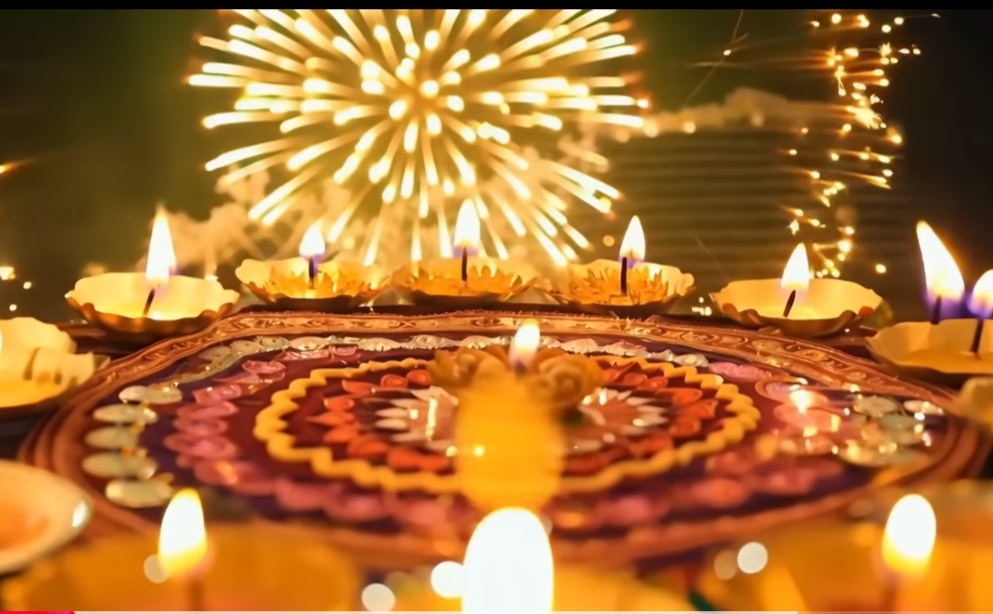
Ghar ghar ujiyaara, ujiyaara, sab jagmagāta hai” — “Every home glows, every heart shines bright”
“Ajab bahār kā hai din banā Dīvālī kā”
“Diwali is a day when spring itself comes alive”
Across the Indian subcontinent, Diwali announces itself each year with jubilant lamps and the cheerful bustle of bazaars, enveloping towns and villages in vibrant celebration. Beyond its religious roots, Diwali radiates an age-old cultural synchrony that transcends boundaries — a spirit beautifully realised by Urdu poet Nazeer Akbarabadi during the late Mughal era. His lively verses, filled with market delights, laughter, and shared festivity, capture the inclusivity and warmth of a collective Diwali.
Nazeer’s India and the Light of Togetherness
“Har ik makān mein jalā phir diyā Dīvālī kā”
“Every house lit again with the lamp of Diwali”
Nazeer’s opening lines transport us into a world illuminated not only by lamps but by the glow of togetherness:
har ik makān mein jalā phir diyā dīvālī kā,
har ek taraf ko ujālā huā dīvālī kā.
Diwali’s brilliance, he writes, reaches every corner and every heart:
sabhī ke dil mein samā bhā gayā dīvālī kā,
kisī ke dil ko mazā khush lagā dīvālī kā.
Festivity, for him, is a tide that lifts all, dissolving boundaries and carrying happiness across the crowd.
The Festival of Bazaars and Sweet Delight
“Khilone, khilon, batāshon kā garm hai bāzār”
“The market of toys and sweets is abuzz with joy”
Nazeer brings the festival alive through the sights and sounds of a bustling marketplace:
khilone khilon batāshon kā garm hai bāzār,
har ik dukān mein charāghon kī ho rahī hai bahār.
Sweet sellers beckon with calls of “lāo lāo! dīvālī hai āyī!” while buyers crowd around trays of barfī, imartī, and laddoo:
mithāiyon kī dukānein lagā ke halwāī pukārte hain ki ‘lāo lāo! dīvālī hai āyī!’
batāshay le koī barfī kisī ne tulwāyī,
khilone wālon kī in se zyādā binā āyī.
Here, Diwali is not confined to ritual—it is a people’s festival of laughter, commerce, and shared sweetness.
The Labour of Celebration
“Makān lep ke thāliyā jo korī rakhwāyī”
“Homes are plastered, utensils cleaned for Diwali”
Festivity is both communal and creative — homes are whitewashed, utensils gleam, and lamps glow at every threshold:
makān lep ke thāliyā jo korī rakhwāyī,
jalā charāgh ko kaurī vo jald jhānkāyī.
Through these lines, Nazeer captures the rhythm of preparation with affection, turning even humble acts into poetry.
Playful Humanity in the Festival’s Gamble
“Ye hār jīt kā charchā paḍā Dīvālī kā”
“Talks of victory and defeat — it is Diwali’s game”
Nazeer observes with humour the light-hearted gambling that accompanies the festival:
kisī ne ghar kī havelī girō rakhā hārī,
ye hār jīt kā charchā paḍā dīvālī kā.
He laughs at himself too:
nazīr āp bhī hain jwāriyā dīvālī kā.
Winners and losers unite in shared amusement — Diwali’s spirit is not about loss or gain, but about participation and joy.
The Beauty and Music of the Festival
“Hamein adāein Dīvālī kī zor bhātī hain”
“We are charmed by the graces of Diwali”
In another poem, Nazeer marvels at Diwali’s splendour:
hamein adāein dīvālī kī zor bhātī hain,
makān-makān mein bahārein hī jhamjhamātī hain.
Toys dance, pictures sing, sweets laugh, and children giggle with delight:
khilone nāchein hain, tasvīrein gaṭ bajātī hain,
batāshay hanste hain aur kheel khilkhilātī hain.
In these lines, everyday life becomes festive art — a vivid celebration of colour, craft, and companionship.
The Festival of Shared Devotion
“Dhare hain toṭe ajab rang ke dukān-dukān”
“Parrots of wondrous hues sit upon every shop”
Nazeer’s most profound image is of faiths intertwined in joy:
dhare hain toṭe ajab rang ke dukān-dukān,
musalmān kahte hain ‘haq allāh’ bolo mitthu jān,
hanūd kahte hain paṛhein jī śrī bhagwān.
Hindu and Muslim vendors alike train their toy parrots to recite different divine names — but the laughter, the marketplace, and the spirit are one. This is the very soul of Ganga-Jamuni tehzeeb that Nazeer immortalised.
A World Bathed in Light
“Eet-eet par Dīvālī hai”
“Every brick glows — there is Diwali upon every brick”
In Nazeer’s exuberant vision, Diwali spreads light upon every surface:
jidhar ko dekho udhar roshnī ujālī hai,
gharaz mein kyā kahūn, eet-eet par dīvālī hai.
The festival becomes an emblem of unity — its light falling equally on every home and every heart.
A Pure and Joyous Festival
“Hai Dasahre mein bhī yun gar farhat-o-zeenat, Nazīr”
“If Dussehra brings joy, then Diwali is purer still”
He concludes with a comparison that elevates Diwali as a festival of pure happiness:
hai dasahre mein bhī yun gar farhat-o-zeenat nazīr,
par dīvālī bhī ajab pakīzatar tyauhār hai.
Its sanctity lies not in ritual but in the shared joy of the people.
The Eternal Spectacle
“Ajab tamāshā hai, ajab sair hai, ajab bahārein hain”
“What a spectacle it is — what a fair, what a spring!”
Through this refrain, Nazeer immortalises the sensory wonder of Diwali:
ajab tamāshā hai, ajab sair hai, ajab bahārein hain.
Coins jingle, sweets fry, fireworks flare — and communities rejoice as one.
Lighting the Present from a Poet’s Lamp
“Ghar ghar ujiyaara”, Nazeer reminds, is not merely a poetic vision but a living philosophy. Diwali, in his verse, stands for inclusion, dignity, and the unity of ordinary joys. The festival’s lamps symbolise more than ritual — they are beacons of harmony and shared humanity.
In the India of today, to read Nazeer Akbarabadi is to relight that same spirit — an India where “har ik makān mein jalā phir diyā dīvālī kā” — every home glows, and every heart shines bright.
Hasnain Naqvi is a former member of the history faculty at St. Xavier’s College, Mumbai

~Hasnain Naqvi is a former member of the history faculty at St. Xavier’s College, Mumbai….
The opinions expressed here are solely those of the author.