

Kanchhi Baans Ke Bahangi Lachkat Jaye” — The Eternal Light of Chhath Puja
“Kanchhi baans ke bahangi lachkat jaae,
Bahangi ghat pe pahunchae,
Bahangi Chhath Maiya ke jaae…”
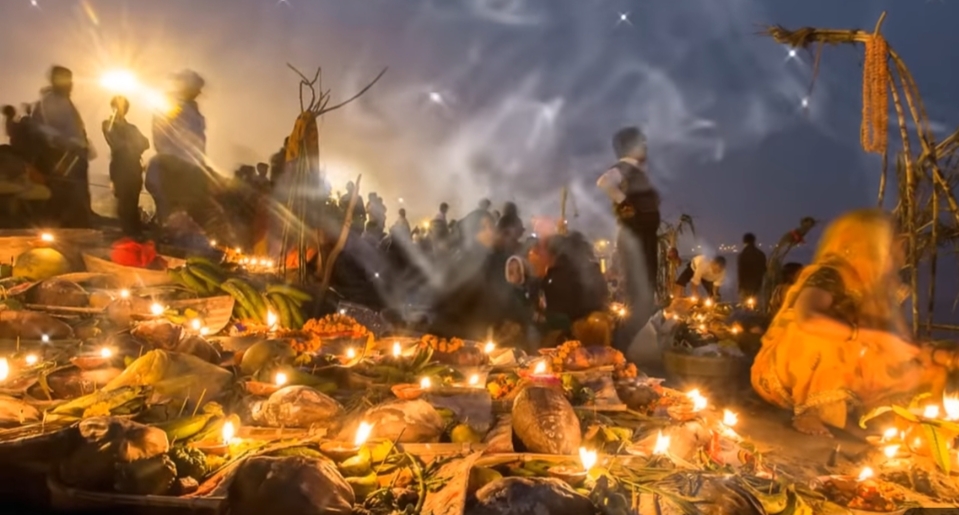
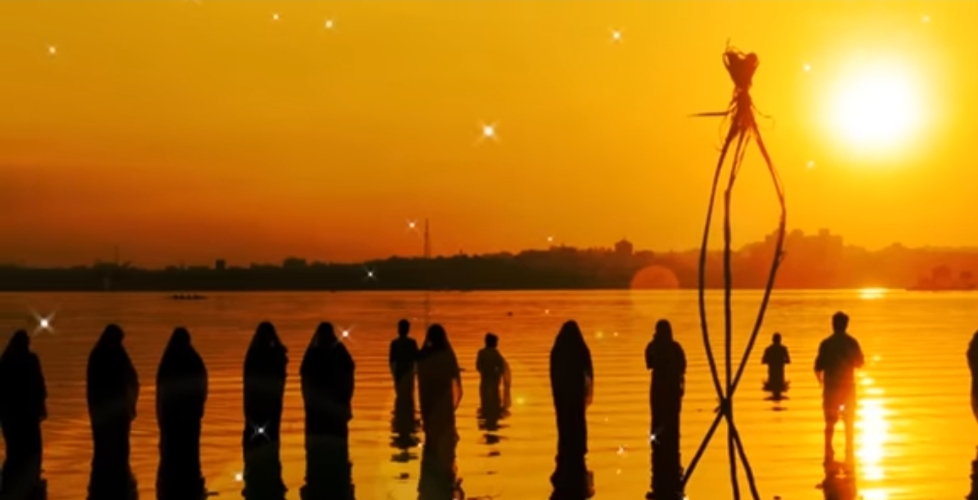
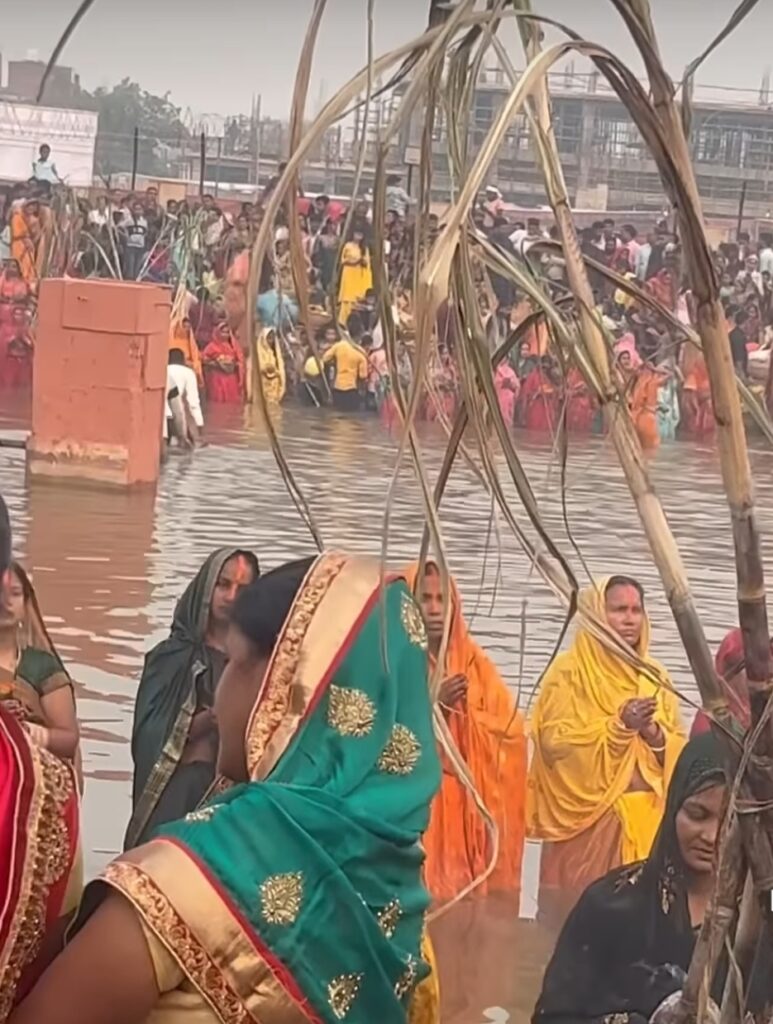
As dawn breaks over the Ganga’s misty banks, thousands of lamps flicker like stars fallen to earth. Women in ochre saris wade into the shimmering waters, their hands folded, faces serene, eyes lifted towards the horizon. It is the morning of Usha Arghya — the offering to the rising sun — the culmination of Chhath Puja, one of India’s most ancient and spiritually profound festivals, celebrated with unmatched devotion in Bihar, eastern Uttar Pradesh, and across the global diaspora.
“Pahile Pahil Ham Kahini, Chhathi Maiya Vrat Tohar”
— The First Vow of Faith

“Pahile pahil ham kahini, Chhathi Maiya vrat tohaar,
Kariha kshama Chhathi Maiya, bhool-chuk galti hamaar…”
The origins of Chhath Puja are rooted in antiquity, older than most temple-based rituals of Hinduism. It is a festival dedicated to Surya Dev, the Sun God, and his consort Usha or Chhathi Maiya — symbolising light, purity, and renewal. Unique among all observances, Chhath worships both the setting and rising sun, honouring the cycle of life and gratitude for every phase of existence.
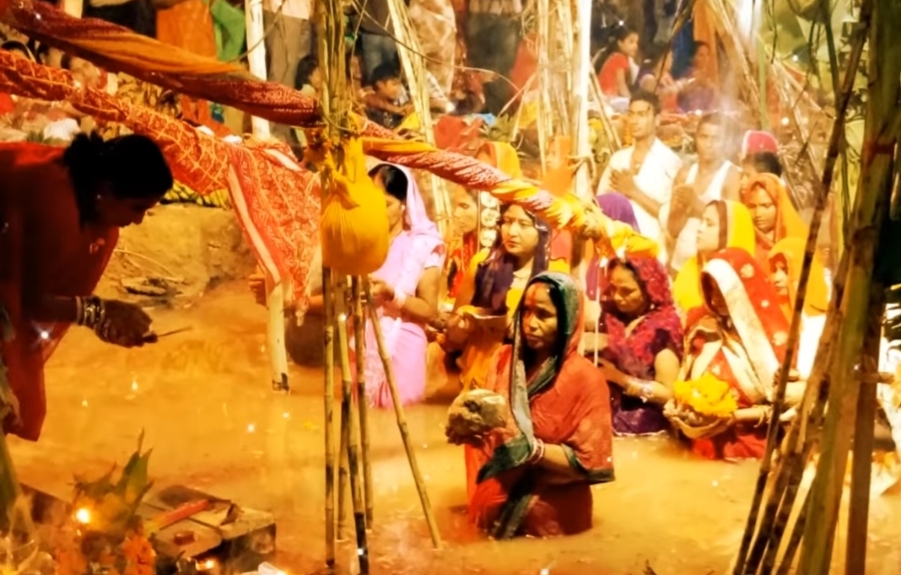
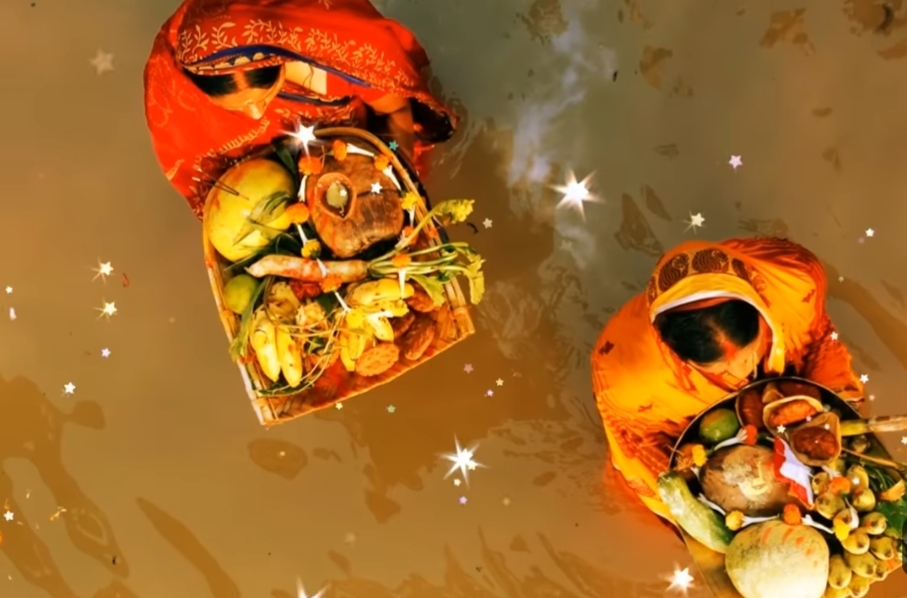
The festival unfolds over four disciplined days — Nahay Khay (holy bathing and purification), Kharna (a day-long fast broken after sunset with rice pudding and fruits), Sanjhiya Arghya (evening offering to the setting sun), and Bhor Arghya (morning offering to the rising sun).
Each step is an act of spiritual cleansing. Many devotees fast without even a sip of water, sustained only by prayer. The thekua — a fried sweet made of wheat flour, jaggery, and ghee — becomes sacred prasad, carrying the warmth of the hearth and the sanctity of devotion.

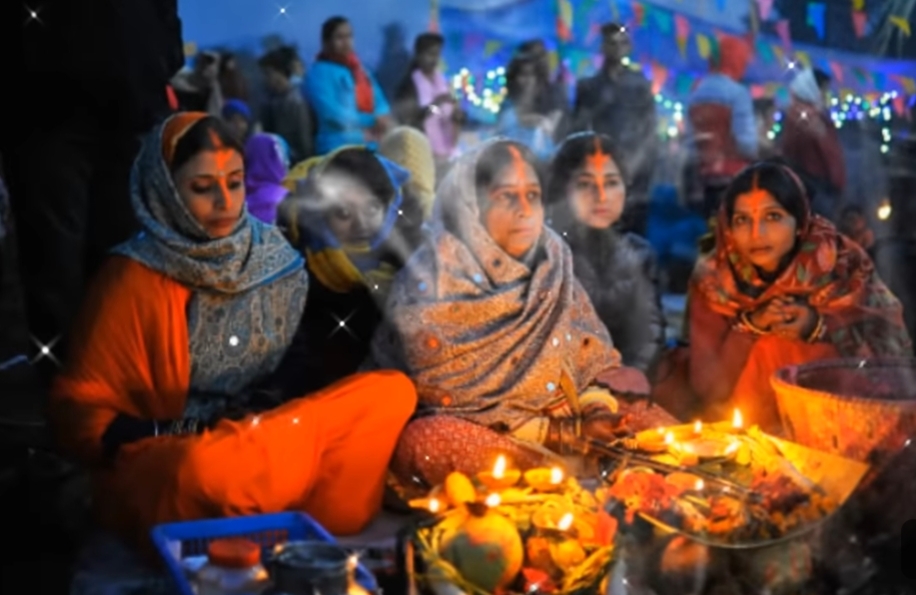
“Suruj Dev Ghatwa Pe Teevai Chadhawele Ho”
— Worshipping the Source of Life
“Suruj Dev ghatwa pe teevai chadhawele ho,
Jal bich khada hoi darsan la asra lagawale ho…”
Across civilizations, the worship of the sun has symbolised reverence for life itself. From Egypt’s Ra to Greece’s Helios, from the Aztec Tonatiuh to Japan’s Amaterasu, the radiant orb has long stood for sustenance and continuity.
In India, this veneration assumed a deeply human character. The Rigveda calls Surya the “eye of the world,” the witness of truth, invoked each dawn through the Gayatri Mantra. Chhath Puja is this Vedic reverence expressed through grassroots devotion — a festival without priests, temples, or intermediaries.
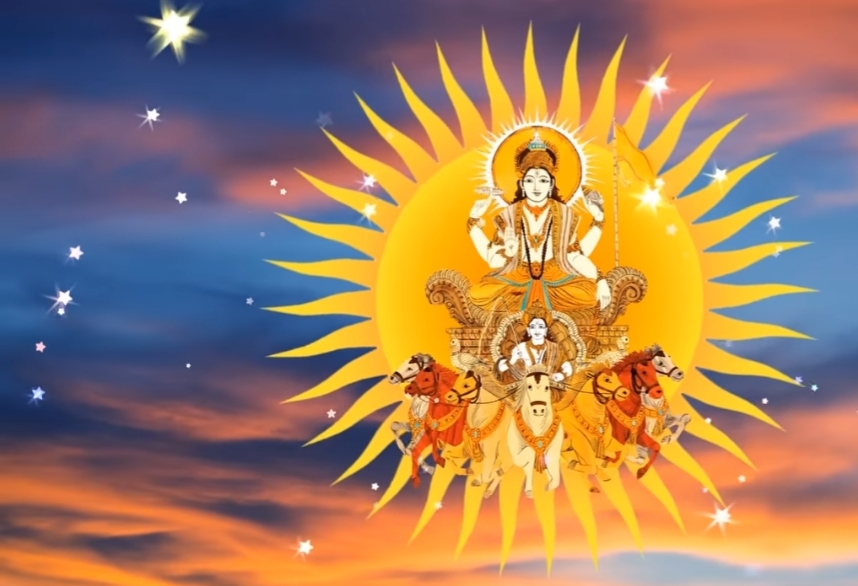
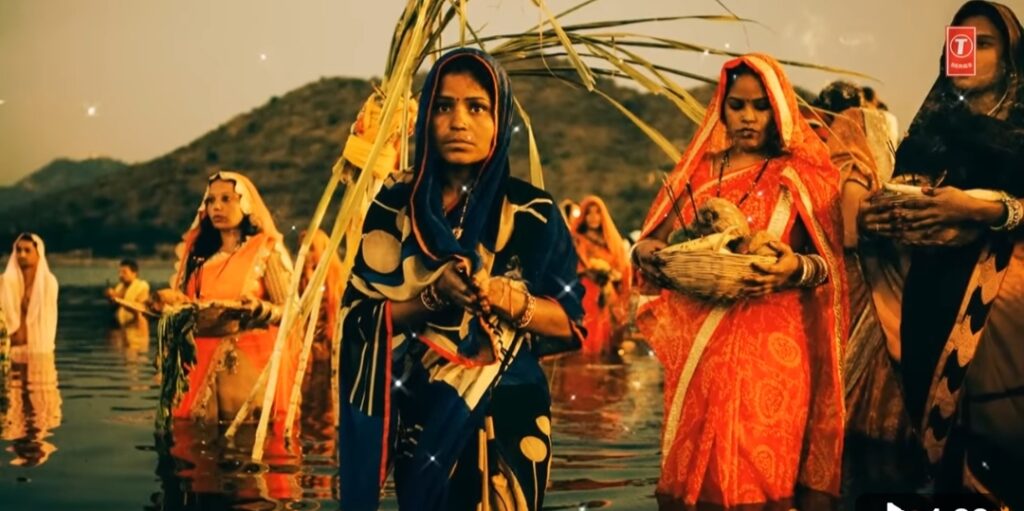
The riverbank becomes a temple, the sky its dome, and the sun the living deity before whom every heart bows. The offering of arghya — raw milk and water held in soop (bamboo winnows) — symbolises the surrender of self to the rhythm of the cosmos.
“Kelwa Ke Paat Par Ugelen Surujmal”
— When the Sun Rises from Every Leaf
“Kelwa ke paat par ugelen Surujmal,
Jhaanke unke, karelu Chhath baratiya se…”
In the songs of Chhath, nature herself joins the prayer. The rising sun glows upon banana leaves, the rustling sugarcane hums with life, and the fragrance of earth mingles with the light of earthen lamps. These hymns, sung mostly by women, have been passed down orally for centuries — prayers and poetry interwoven.
The lyrics echo domestic longings and quiet strength: a mother’s plea for her child’s health, a wife’s wish for her husband’s longevity, a devotee’s call for family prosperity. Beneath these tender invocations lies a profound philosophy — gratitude toward the forces that sustain creation.
Along the Ganga, Punpun, and Kosi, these voices rise at dusk: “Suniha araj Chhathi Maiya, badhe kul-parivaar…” (Listen to my plea, Chhathi Maiya, help our family grow). It is music of faith that transcends caste, wealth, and time.
“Jay Chhathi Maiya, U Je Kerwa Je Pharela Khabad Se”
— The Cultural Tapestry of Devotion
“Jay Chhathi Maiya, u je kerwa je pharela khabad se,
Oh par suga medraae, marbo re sugwa dhanukh se…”
Chhath’s distinctiveness lies in its organic connection with the agrarian landscape of eastern India. The festival celebrates not luxury but balance — between humans and nature. Bamboo baskets, sugarcane canopies, and earthen lamps all embody ecological harmony and traditional craftsmanship.
On the third evening, during the ritual of Kosi, families construct sugarcane shrines illuminated by flickering lamps and filled with fruits and prasad. The night vibrates with folk songs, transforming the village into a luminous chorus of devotion.
From the ghats of Patna to the Yamuna’s banks in Delhi and the shores of Mauritius or New York, Chhath unites geography with memory. Migrant Bihari families recreate the river wherever they dwell, carrying within them the rhythm of the sun.
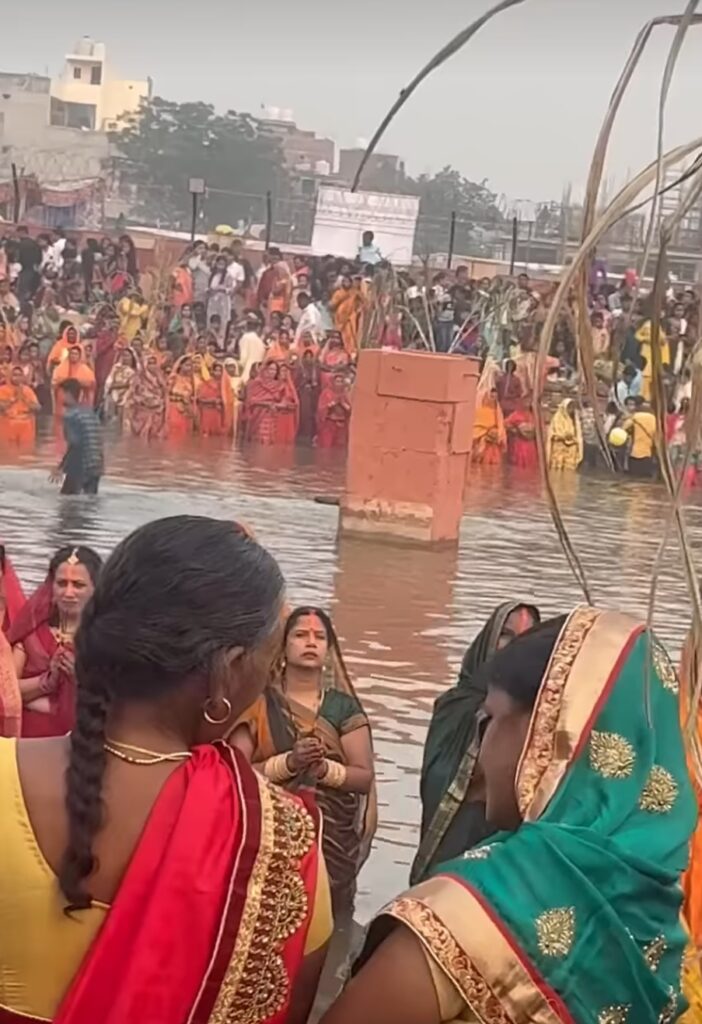
“Patna Ke Ghat Par Ham Hu Aragh Deebe He Chhathi Maiya” — The Living Heritage
“Patna ke ghat par ham hu aragh deebe he Chhathi Maiya,
Hum na jaib dusar ghat he chhab he Chhathi Maiya…”
The Patna ghats during Chhath are a sight of divine radiance — rows of lamps reflecting on calm waters, the air vibrating with song and incense. The voice of Sharda Sinha, echoing through loudspeakers, has become the festival’s soul, carrying nostalgia and reverence in equal measure.
Today, Chhath is celebrated in every major Indian city and across continents. From Mumbai’s beaches to London’s Thames, devotees stand in lakes and rivers, offering arghya to the rising sun. Despite urban modernity, the essence remains unaltered — purity, austerity, and gratitude.
“Lihiye Aragh He Maiya, Dihiye Aashish Hazar”
— A Prayer for Light and Balance
“Lihiye aragh he Maiya, dihiye aashish hazar,
Bhool-chuk galti hamaar…”
In a world marked by ecological distress and restless materialism, Chhath Puja radiates timeless relevance. It is a meditation on interdependence — between the sun and the soil, the river and the human heart. Standing waist-deep in water at dawn, devotees experience not penance but harmony, a profound union with nature.
The worship of the Sun and the Mother Goddess — found across cultures — converges here in India’s living tradition. It embodies humility before creation and a prayer for renewal. Each lamp lit upon the river is a vow: to honour the light that gives life and the earth that sustains it.
As the first rays of dawn touch the waters, women lift their soops high, eyes filled with hope. The hymns swell once more over the rippling river — “Sab ke balakawa ke diha, Chhathi Maiya mamata-dulaar…” — a collective plea for light, love, and peace.
The Light That Returns Every Dawn
When fasts are broken and prasad shared, what remains is serenity — a quiet echo of humanity’s oldest truth: that life, like the sun, is a rhythm of giving and receiving.
In that golden moment between darkness and dawn, Chhath Puja transcends ritual. It becomes what it has always been — a song of the earth sung to the sky, a luminous bridge between devotion and the divine.
“Kelwa ke paat par ugelen Surujmal jhaanke unke,
Karelu Chhath baratiya se jhaanke unke…”
And in those verses, glowing with faith, the sun rises again — not just in the sky, but in every heart that still believes in light.
Hasnain Naqvi is a former member of the history faculty at St. Xavier’s College, Mumbai


~Hasnain Naqvi is a former member of the history faculty at St. Xavier’s College, Mumbai….
The opinions expressed here are solely those of the author.

