
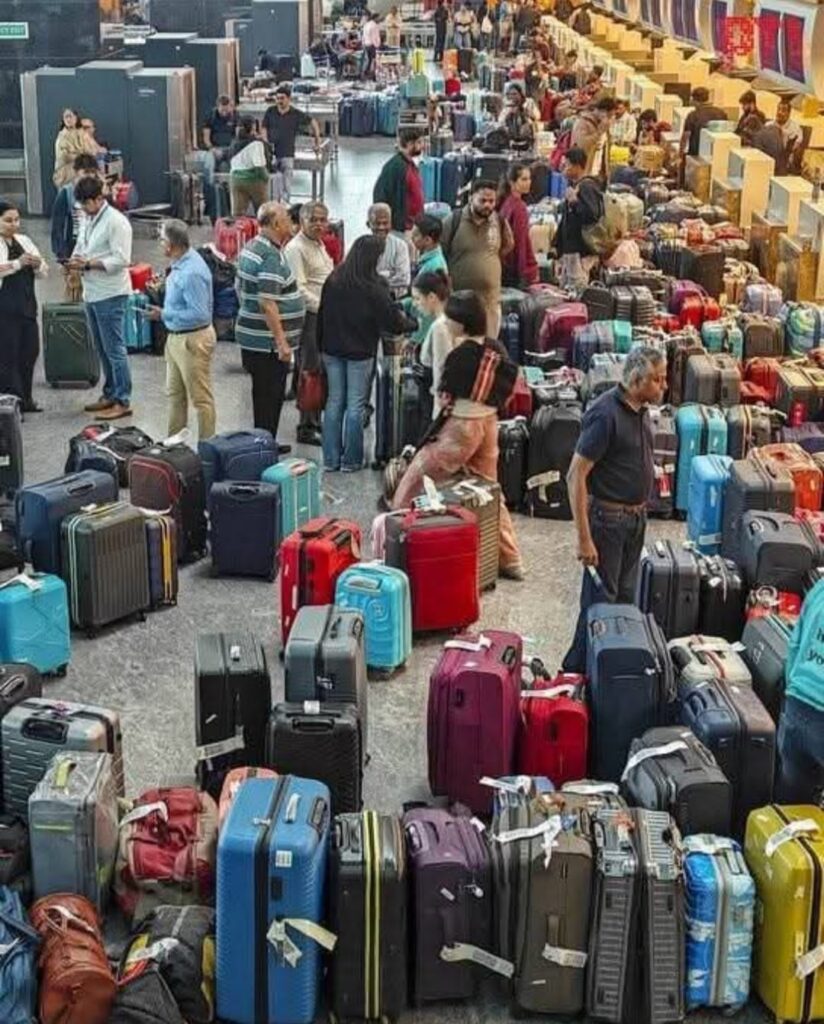
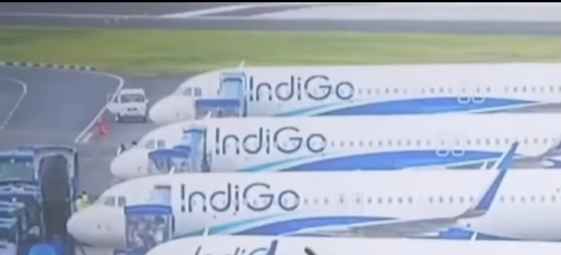
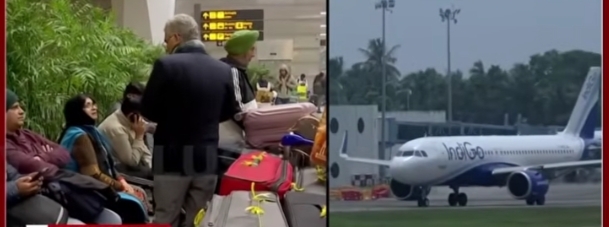
NEW DELHI: The cascading disruption triggered by IndiGo’s operational breakdown has raised an unprecedented question in India’s aviation sector: How did one private airline become so integral that its turbulence can shake the entire national mobility system?
Policy experts point to a deeper truth the crisis is not about IndiGo alone, but about the structural vulnerability created under a decade of permissive aviation policy during the Modi government. They argue that India has effectively replaced the old oil-majors problem of the 1960s with a modern equivalent: a dominant private player controlling a critical public utility without adequate safeguards.
Over the years, slot allocation, permissive market concentration and regulatory inaction allowed IndiGo to capture nearly 65% of the domestic market. Its reach into Tier-2 and Tier-3 cities made it indispensable for business travel, tourism, medical mobility and logistics. The result is a textbook single-point-of-failure, where even a temporary organisational shock translates into a national disruption.
Analysts say the crisis was worsened by the government’s decision to privatise Air India without creating a sovereign fallback mechanism. Earlier, the national carrier acted as a buffer, absorbing shocks when private airlines collapsed. It also served as a pricing benchmark and responded to national emergencies. Post-privatisation, none of these stabilising functions are guaranteed, leading to steep fare spikes and reduced negotiating power for smaller cities.
The Modi government’s broader infrastructure strategy — concentrating airports, cargo, and now aviation capacity in the hands of a few private actors — has led to what experts describe as “strategic over-privatisation”. This is visible in telecom, airports, power distribution, and now aviation: sectors where public dependence is high but competition remains artificially low.
The present crisis, therefore, is not an isolated airline problem but a systemic governance failure. Without a national aviation utility doctrine, a competition boundary on market share, transparent slot allocation and a sovereign fallback carrier, India remains exposed to future disruptions.
What IndiGo’s meltdown has revealed is unmistakable: when critical infrastructure is left to market forces alone, the common citizen becomes the shock absorber.
[Writer is Senior Journalist and Political Commentator]

All picture credit social media

Umakant Lakhera is a Senior Journalist and Political Commentator

