

The sudden “Babri Masjid” moment in Murshidabad exposes a deeper political script aimed at fragmenting Bengal’s electorate before 2026.
A New Storm in Bengal
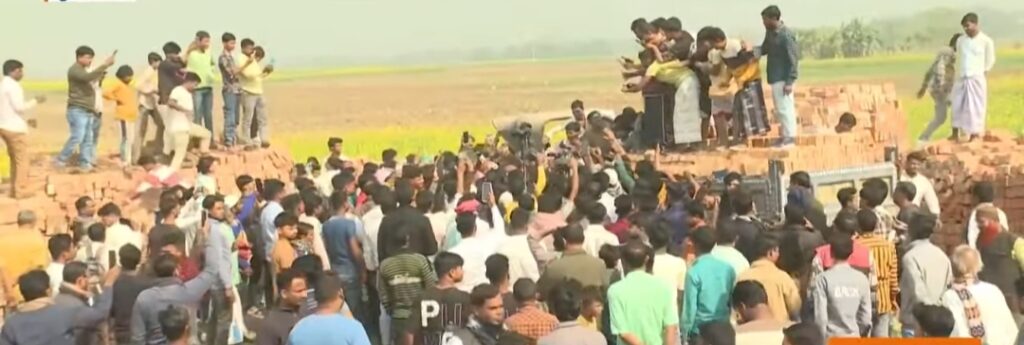
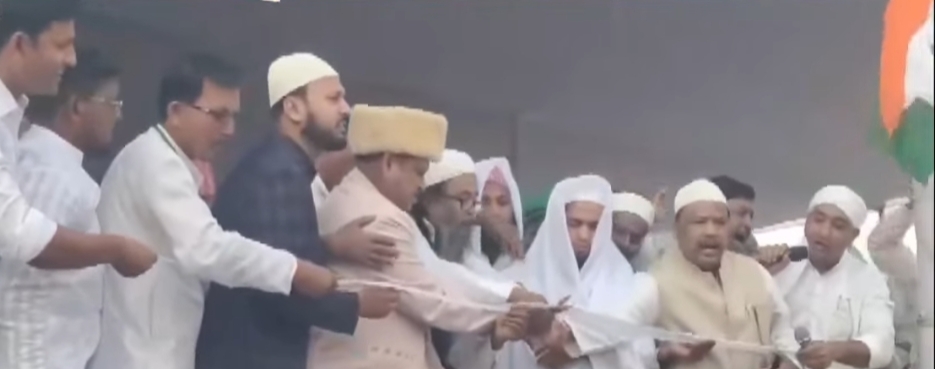
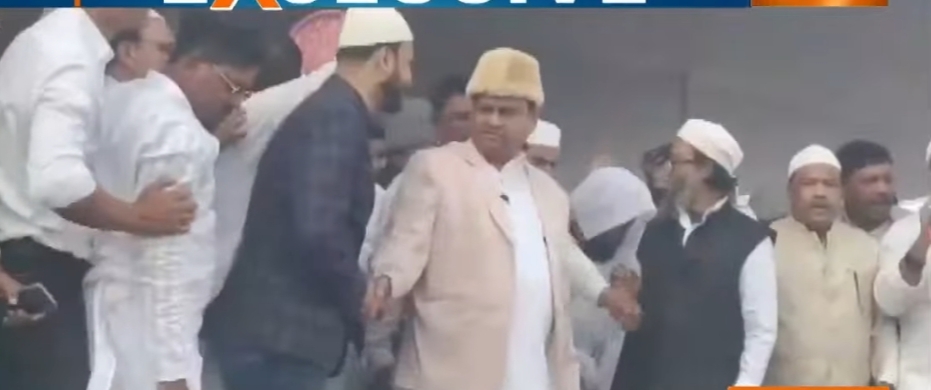
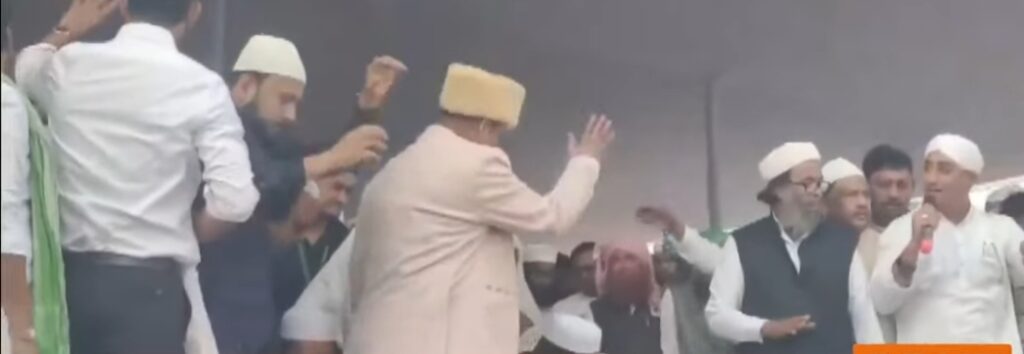
Elections are only months away in West Bengal, and the shadows of Ayodhya—once buried, once forgotten—have suddenly resurfaced in the unlikeliest of places: Murshidabad. The laying of a so-called “Babri Masjid” foundation stone by suspended TMC MLA Humayun Kabir has triggered a frenzy in the media, unease across Bengal’s towns, and anxiety among migrant Bengali Muslims in other states who already live under suspicion as “Bangladeshis.”
The irony is almost theatrical. There can be no “Babri Masjid” in Bengal. Babur is long gone, and Bengal has no historical link to the Ayodhya structure. Yet symbolism, not history, is the currency of today’s political marketplace—and symbolism is now being weaponised.
What unfolded on December 6 in Murshidabad was not an act of piety, remembrance, or historical justice. It was the opening move in a larger political game.
Humayun Kabir: Pawn or Player?
Kabir—once Congress, then BJP, then TMC—is a familiar figure in Bengal’s shifting political sands. His announcement of a new party to be launched on December 22 adds yet another layer to the already fragmented Muslim political landscape.
His strategic timing, his sudden “Babri” revelation, and his subsequent claim that he is in talks with Asaduddin Owaisi’s AIMIM to “stop both the BJP and the TMC” raise a more important question: stop them in order to help whom?
Kabir and Owaisi do not have the numbers to form a government in Bengal. They do not have the cadre, the network, or the statewide influence. But they do have the potential to split votes in key districts.
And that, in Bengal’s finely balanced electoral arithmetic, is enough to alter outcomes.
The Real Chessboard: Malda and Murshidabad
Muslims form 37% of Bengal’s population, a percentage that has always shaped political strategies in the state. Mamata Banerjee’s TMC depends heavily on a consolidated Hindu–Muslim support base. The BJP’s growth in Bengal has historically depended on fracturing this unity.
Now, with the “Babri Masjid” announcement, this fracture is being engineered with precision.
AIMIM, which fielded over 200 candidates in the last Bengal election but secured no victories, has narrowed its aim to two districts: Malda and Murshidabad—together comprising 19 seats, mostly Muslim-majority.
Kabir’s new party will also target these very pockets. Two new Muslim political outfits vying for the same space virtually guarantee an internal rupture.
The question is not whether votes will split—they will. The real question is: Who benefits?
The Double Precarity of Bengali Muslims
While political operatives experiment with communal theatrics, ordinary Bengali Muslims—especially migrants—bear the brunt.
Over the past year, multiple reports emerged from Delhi NCR of Bengali Muslim workers being profiled as “Bangladeshi infiltrators,” detained, and in some instances forcibly pushed across the border. Their only crime: speaking Bengali and being Muslim.
Kabir’s “Babri Masjid” stunt, amplified by sensationalist media, has only tightened the noose. Every polarising headline becomes a pretext for harassment. Every provocative statement becomes justification for suspicion.
This is not politics—it is collateral damage inflicted on the weakest segment of the population.
The Silent Factor: SIR and the Shifting Voter List
While the “Babri Masjid in Bengal” story grabs the headlines, a quieter process with far greater implications is underway: the Special Identity Review (SIR).
Lakhs of names have reportedly been struck off voter lists across Bengal, mirroring the Bihar model. How many of these deletions affect minority communities? How many will reshape constituency outcomes? The answers will emerge only after the final rolls are published.
But the timing of SIR, combined with orchestrated religious mobilisation, suggests a deliberate recalibration of the electoral landscape.
Political Theatre with National Echoes
The “Babri” imitation has not stopped with Murshidabad. In Hyderabad, Tehreek Muslim Shabban’s Mushtaq Malik has announced a “Babri memorial” and welfare institutions, citing Bengal as inspiration. This domino effect underscores how symbolic gestures—no matter how politically motivated—can quickly metastasise into national distractions.
Even the judiciary treads cautiously. The Calcutta High Court refused to halt the Murshidabad construction but asked the state to prevent any law-and-order breakdown. The message is clear: the courts recognise the potential volatility.
The Larger Script: Fragment, Polarise, Capture
The sudden revival of “Babri politics” in Bengal is not a spontaneous outpouring of Muslim sentiment. For decades, the Babri issue had faded from the community’s political consciousness. Only a handful of organisations marked its “Shahadat Diwas,” often attended by a few dozen people.
Today’s high-decibel mobilisation is artificial. It is engineered. It is strategic.
By fielding opportunistic Muslim leaders as mascots, by provoking emotional triggers, and by ensuring maximum media visibility, a simple formula is being executed:
•Split Muslim votes in critical districts.
•Polarise Hindu voters by amplifying Muslim mobilisation.
•Weaken the TMC’s coalition base.
•Convert fragmentation into electoral gain for the BJP—or any other beneficiary waiting in the wings.
The game is sophisticated, but the objective is simple: divide to conquer.
The Forgotten Truth: The Real Issues Remain Unaddressed
While political parties enact communal chess on the public stage, Bengali Muslims face pressing issues:
•unemployment,
•voter disenfranchisement,
•continuous stereotyping as “outsiders,”
•lack of representation in state structures,
•and shrinking economic opportunities.
None of these concerns will be addressed by a symbolic “Babri Masjid” in Murshidabad. None of them will be resolved by the formation of yet another Muslim party.
But these issues rarely feature in the speeches of Kabir, Owaisi, or Malik—because they do not serve the current script.
The Stakes for Bengal
The 2026 election will not be decided by development metrics or governance debates alone. It will be shaped by who controls the narrative, who fractures which vote bank, and who benefits from mobilising religious identity at the right moment.
Bengal’s politics has always been complex, but this time the stakes are higher.
A divided minority electorate not only weakens Mamata Banerjee’s political fortifications—it also alters the secular fabric that has historically defined Bengal.
If the present trajectory continues, the state may witness escalating tensions, deeper communal fault lines, and a political landscape redefined by cynicism.
Bengal’s Muslims Stand at a Crossroads
The “Babri Masjid” moment in Murshidabad is not a religious revival. It is a political trap. The pawns—Kabir, Owaisi, Malik—are expendable. The real targets are the votes they represent and the anxieties they can inflame.
Bengal’s Muslims must recognise the design behind the drama.
They must ask who gains when they are divided.
They must question why their identities are being turned into flashpoints.
Because once again, the community finds itself placed on the political chessboard—not as players, not as strategists, but as pieces to be sacrificed.
The real question remains: When will we wake up?
~Hasnain Naqvi is a former member of the history faculty at St. Xavier’s College, Mumbai.

~Hasnain Naqvi is a former member of the history faculty at St. Xavier’s College, Mumbai….
The opinions expressed here are solely those of the author.

