

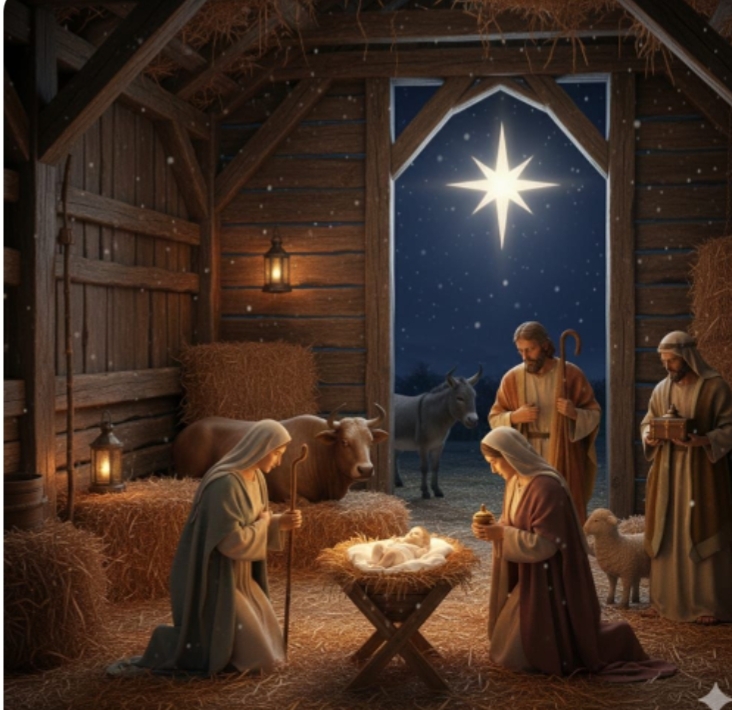
As the world marks the birth of Jesus this December, the festive lights and carols often mask a profound theological reality: the story of Christ is not exclusive to Christendom. For nearly two billion Muslims globally, Jesus (Isa) and his mother Mary (Maryam) are not peripheral figures; they are central to the Islamic faith, serving as bridges of spirituality that connect the Abrahamic traditions in a way few other figures can.
The Purest of Names
In the Islamic tradition, Jesus is known as Isa ibn Maryam—Jesus, son of Mary. This designation is more than a patronymic; it is a testament to the miraculous nature of his birth. While the Quran identifies many noble women, Mary holds a distinction shared by no other: she is the only woman mentioned by name in the entire Quran. In fact, the nineteenth chapter of the Quran, Surah Maryam, is named in her honour—an accolade not even granted to the wives or daughters of the Prophet Muhammad.
Islamic scripture describes Mary as the pinnacle of womanhood, a figure of such piety and purity that she was chosen by God above all women of the nations. According to Prophetic tradition, she and her son were the only individuals untouched by the influence of evil at birth, a status that earned Jesus the Quranic title of “a pure boy.”
A Prophet of Unmatched Miracles
To a Muslim, Jesus is one of the Ulul ‘Azm—the five “Arch-Prophets” or Messengers of high resolve. His importance is underscored by the frequency with which he appears in the Quran; he is mentioned by name twenty-five times and referred to as the Messiah (Al-Masih) six times. By comparison, the Prophet Muhammad is mentioned by name four times.
The Quranic narrative of Jesus is a tapestry of miracles. He is depicted as a messenger sent to the Children of Israel, armed with the Injeel (the Gospel) and the power to heal. Muslims believe that by God’s leave, Jesus gave sight to the blind, cured lepers, and even breathed life into birds fashioned from clay. His life was a testament to the divine will, culminating in his ascension to heaven from the Mount of Olives in Jerusalem—a site held sacred by Muslims as the location from which he will one day return.
The Messiah and the Future
The reverence for Jesus extends beyond historical accounts and into the Islamic vision of the future. Muslims believe that before the Day of Judgment, Jesus will return to Earth to restore justice, defeat the “False Messiah” (the Antichrist), and usher in an era of peace.
This shared expectation creates a unique spiritual kinship. When a Muslim mentions the name of Jesus, it is always followed by the honorific Alayhis-salam—”Peace be upon him.” This is the same respect afforded to all prophets, emphasizing a continuity of divine guidance from Adam through Moses, Jesus, and finally Muhammad.
A Message for Today
In a world often fractured by religious misunderstanding, the Islamic view of Jesus and Mary offers a powerful counter-narrative of unity. It reminds us that the “Prince of Peace” is a figure who commands the love and devotion of half the world’s population across two distinct faiths.
As we navigate the complexities of the modern era, perhaps we can find inspiration in the Mughal-era Persian couplets that often accompanied depictions of Mary and Jesus: “Without your favour, my being cannot have strength / O Helper of the helpers, shower me with your blessings.”
This Christmas, acknowledging the high station of Mary and the prophetic legacy of Jesus in Islam is not just a gesture of interfaith tolerance—it is an acknowledgment of a shared sacred history. It is a reminder that the light of Christ, as seen through the prism of the Quran, continues to shine as a beacon of hope for a more compassionate world.
~Hasnain Naqvi is a former member of the history faculty at St. Xavier’s College, Mumbai

~Hasnain Naqvi is a former member of the history faculty at St. Xavier’s College, Mumbai….
The opinions expressed here are solely those of the author.

