
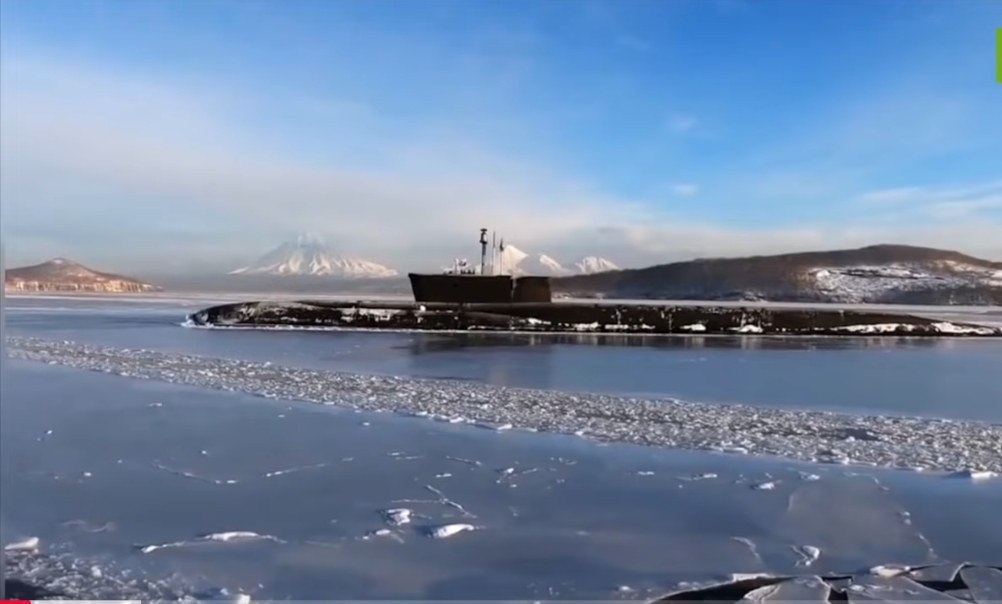



New Delhi, December 25, 2025,In a major demonstration of its strategic deterrence capability, India has successfully test-fired an intermediate-range ballistic missile from a nuclear-powered submarine, significantly strengthening its sea-based nuclear forces. The K-4 submarine-launched ballistic missile (SLBM) was launched from INS Arighaat during a test conducted in the Bay of Bengal, off the coast of Visakhapatnam, on Tuesday.
With a strike range of around 3,500 km, the K-4 missile represents a crucial element of India’s nuclear triad—its ability to deliver nuclear weapons from land, air and sea. Defence sources said the test met all mission objectives, validating the missile’s range, accuracy and reliability under operational conditions.
The K-4 SLBM is designed to be launched from beneath the ocean surface, using a sophisticated cold-launch mechanism. After being ejected from the submarine’s vertical launch tube, the missile breaches the water surface before its rocket motor ignites, propelling it towards its target. This capability allows nuclear-powered ballistic missile submarines (SSBNs) to remain concealed while maintaining a credible second-strike option.
INS Arighaat, from which the missile was fired, is part of India’s growing fleet of indigenously developed nuclear-powered submarines under the Advanced Technology Vessel (ATV) programme. The successful test further enhances the operational readiness of the Navy’s strategic forces, which form the backbone of India’s assured retaliation doctrine.
The K-4 missile, derived from the Agni-III land-based ballistic missile, is the longest-range sea-launched strategic weapon developed by India to date. While the Agni series has long provided land-based deterrence, the adaptation of this technology for submarine launch marks a significant technological leap, involving complex engineering challenges related to underwater deployment and navigation.
Commissioned into the Indian Navy on August 29, 2024, the K-4 system places India among a select group of countries possessing credible and operational undersea nuclear strike capability. Defence analysts see the test as a strong signal of India’s advancing indigenous missile and submarine technologies, reinforcing its strategic posture in the Indo-Pacific region amid evolving regional security dynamics.
Picture credit social media

We are a multimedia news network. Website : www.7xnews.com
Based in New Delhi (India) Youtube : umakantlakheraspeaks@gmail.com