
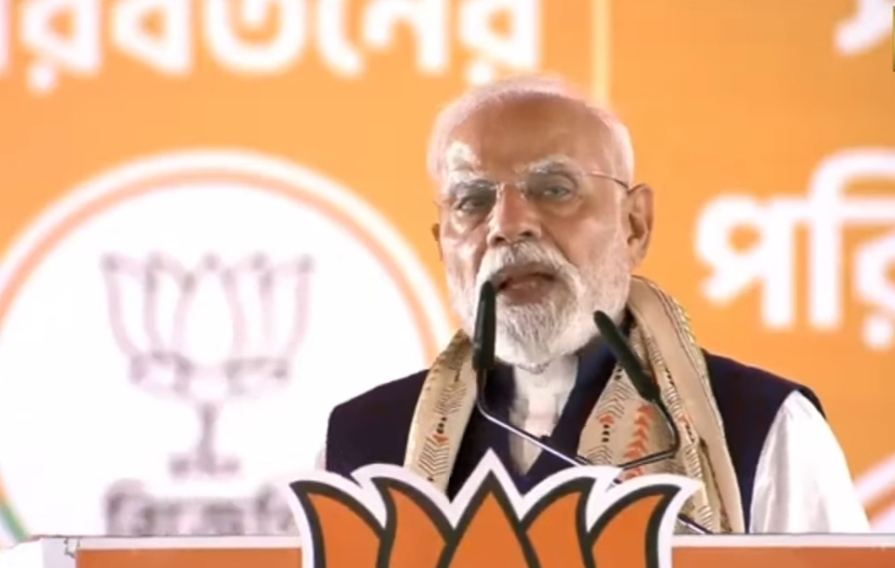
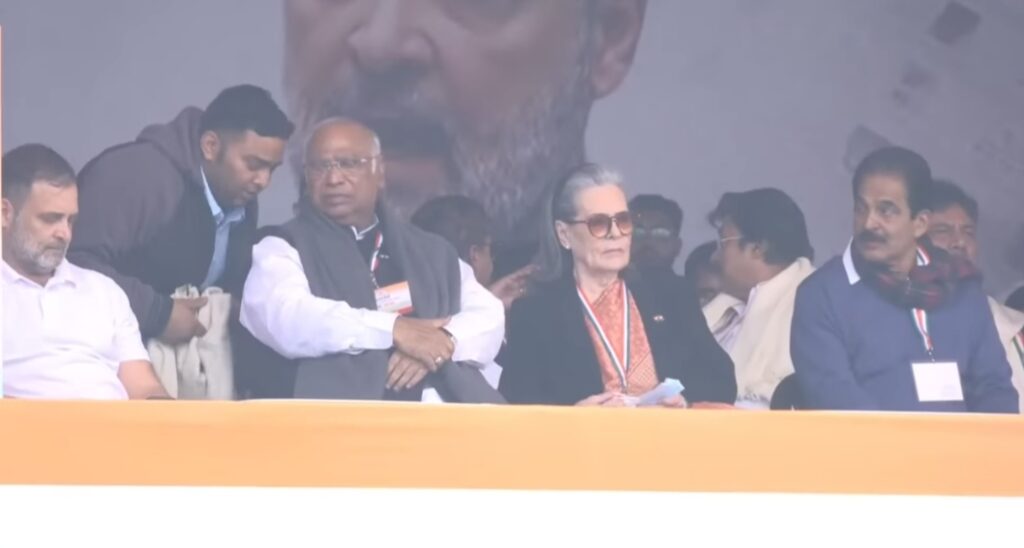
New Delhi, As India steps into 2026, the Congress party has sharpened its political attack on Prime Minister Narendra Modi, listing what it calls seven “great challenges”—or unanswered promises—that continue to define his leadership more than a decade after the BJP first came to power at the Centre in 2014. Framed as a report card of unmet assurances, the Congress’s critique seeks to revive old campaign pledges and place them squarely at the centre of the national political debate.
Addressing the media in New Delhi, senior Congress leaders said the Prime Minister must answer why landmark promises that helped the BJP secure sweeping mandates in 2014 and 2019 remain unfulfilled. “These are not opposition demands. These are Prime Minister Modi’s own commitments to the people of India,” a party spokesperson said, calling the list a “mirror to power.”
At the top of the Congress’s charge sheet is the promise of creating two crore jobs every year. The BJP’s 2014 campaign projected massive employment generation as the dividend of economic reforms and rapid growth. The Congress argues that instead of a jobs boom, India has witnessed persistent unemployment, particularly among youth, with informalisation of work and stagnant wages aggravating distress. The party contends that repeated references to start-ups and self-employment cannot substitute for large-scale, secure job creation.
The second challenge revisits perhaps the most controversial election promise of the 2014 campaign: Rs 15 lakh in every Indian’s bank account. Congress leaders said the slogan symbolised a broader narrative around black money recovery that never translated into reality. “The Prime Minister has never clarified whether this was a slogan, a jumla, or a genuine assurance,” the party said, adding that ordinary citizens were left confused and disappointed.
Closely linked to this is the third challenge—bringing back black money from foreign banks. According to the Congress, despite dramatic claims and high-profile steps such as demonetisation, there has been no transparent accounting of black money recovered or repatriated. The party argues that demonetisation caused widespread economic pain without delivering its stated objectives.
The fourth point strikes at the heart of the opposition’s crony capitalism charge: the alleged transfer of public assets to the Adani Group. The Congress accused the Modi government of favouring select corporate houses through privatisation, infrastructure contracts and policy decisions. “Public assets built with taxpayers’ money are being handed over as gifts,” the party claimed, reiterating its demand for greater transparency and accountability.
The fifth challenge takes aim at the Prime Minister’s extensive foreign travel. While acknowledging the importance of diplomacy, Congress leaders criticised foreign tours during Parliament sessions, arguing that it undermines parliamentary accountability. “The Prime Minister must prioritise answering Parliament over addressing foreign audiences,” the party said.
On social cohesion, the Congress accused the BJP of dividing society on religious lines, alleging that polarisation has become a deliberate political strategy. The party said communal rhetoric has weakened India’s social fabric and distracted attention from core governance issues such as inflation, unemployment and rural distress.
Finally, the Congress raised a symbolic yet pointed demand: that Prime Minister Modi address a full-fledged press conference in Delhi. Noting that the Prime Minister has largely avoided unscripted media interactions, the party said democratic leadership requires direct questioning and accountability. “Facing the press is not a favour; it is a constitutional responsibility,” a Congress leader remarked.
Political analysts see the move as an attempt by the Congress to reclaim narrative space by reviving familiar promises that still resonate with sections of the electorate. With several state elections on the horizon and the 2029 Lok Sabha contest already looming in the distance, the party’s strategy appears focused on framing 2026 as a moment of accountability rather than celebration.
The BJP has dismissed similar critiques in the past, citing welfare schemes, infrastructure expansion and India’s global standing as evidence of effective governance. Whether the Congress’s seven-point challenge gains traction beyond opposition circles remains to be seen. But as the new year begins, it has unmistakably set the tone for a renewed political confrontation around promises made—and promises kept.
Pictures credit social media

We are a multimedia news network. Website : www.7xnews.com
Based in New Delhi (India) Youtube : umakantlakheraspeaks@gmail.com

