
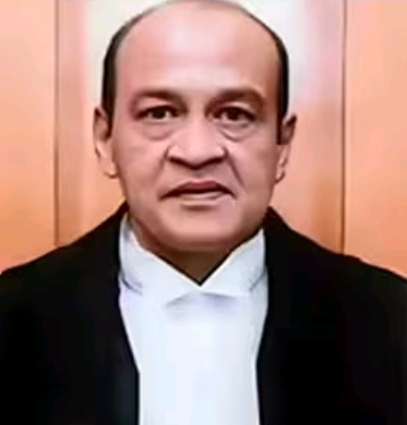
Impeachment of Justice Yashwant Varma: Can’t Lok Sabha proceed with Justice Yashwant Varma’s impeachment if Rajya Sabha rejects the motion? SC seeks clarity.
New Delhi, Jan7: The Supreme Court on Wednesday expressed reservations over the contention that impeachment proceedings initiated in the Lok Sabha against Allahabad High Court judge Justice Yashwant Varma must automatically fail if a similar motion moved in the Rajya Sabha on the same day is rejected.
A Bench of Justice Dipankar Datta and Justice S.C. Sharma expressed their doubts over the submission that proceedings before the Lok Sabha would fall, if impeachment motion is not admitted by the Rajya Sabha while hearing Justice Varma’s petition challenging the decision of Lok Sabha Speaker Om Birla to constitute a three-member inquiry committee under the Judges (Inquiry) Act, 1968, to examine allegations against him.
Justice Varma has assailed the Speaker’s action on procedural grounds, arguing that since impeachment notices were submitted in both Houses of Parliament on the same day, the Speaker could not have unilaterally constituted the committee without awaiting the Rajya Sabha Chairman’s decision and without joint consultation, as envisaged under the proviso to Section 3 of the Act.
Appearing for Justice Varma, senior advocate Mukul Rohatgi contended that the inquiry proceedings were vitiated by procedural irregularities.
Referring to the proviso, he submitted:
“Proviso says when notices are given on the same day (in both Houses of Parliament), no committee shall be constituted unless a motion is admitted in both the Houses and the Speaker, in consultation with the Chairman, Rajya Sabha, forms a joint committee.”
Rohatgi pointed out that while the impeachment notice was moved on July 21, 2025, the Rajya Sabha Chairman resigned later that day and the motion was subsequently rejected by the Deputy Chairman on August 11.
“In this case, (Lok Sabha Secretary General’s affidavit says) that the Deputy Chairman of Rajya Sabha has rejected the motion on August 11, 2025,” he said.
However, the Bench questioned whether rejection of the motion by the Rajya Sabha would legally bar the Lok Sabha from proceeding independently. Justice Datta observed that the proviso only mandates a joint committee if both Houses admit the motion.
“If one motion fails and one succeeds, then what happens? You said it will fail. But now let us read the proviso. If both Houses admit (the motion), then there is a joint committee. But if one rejects it, then where is the bar for Lok Sabha to appoint (a probe committee)? If one motion is not accepted, why should the motion of the other House fail?” the Court asked.
Justice Datta further indicated that the statute requires a purposive interpretation.
“Rules of construction require the proviso to be read as a part of the section. It says no joint committee can be formed unless the motion is admitted in both Houses. If (the motions are) not admitted (in both Houses), it is silent. So, we have to read it purposively to give meaning to the intention of the legislature,” he said.
At the same time, the Bench made it clear that it was not prima facie persuaded by the argument that rejection in one House necessarily nullifies proceedings in the other.
The hearing then turned on whether the impeachment motion in the Rajya Sabha was, in fact, admitted. Rohatgi argued that the Chairman’s acknowledgment of the notice and reference to proceedings under Section 3 amounted to an implied admission.
“When he sees the motion by 50 members and says okay, (find out) if a similar motion has been moved in Lok Sabha — this shows implied admission,” he contended, adding that the Deputy Chairman could not override the Chairman’s decision.
Solicitor General Tushar Mehta, appearing for the central government, disputed this interpretation.
“The Chairman was conscious that he was neither admitting nor refusing. He knew, when motion is presented on the same day… He wanted to verify whether there is another motion or not,” Mehta submitted.
The Bench said it would examine the issue further on Thursday, including whether Justice Varma’s rights were infringed due to the absence of consultation between the Speaker and the Rajya Sabha Chairman.
“We have to only see if we should intervene under Article 32 to see if the person should have got benefit of joint committee,” the Court observed, while also noting prima facie concerns over certain communications relied upon by the Lok Sabha Secretariat.
The impeachment proceedings arise from an incident on March 14, when a fire broke out at Justice Varma’s official residence in New Delhi. Firefighters reportedly recovered large amounts of unaccounted cash from the premises, visuals of which later surfaced showing currency bundles burning.
Justice Varma and his wife were not present in Delhi at the time and were travelling in Madhya Pradesh. His daughter and elderly mother were at home during the incident. Justice Varma has denied all allegations, alleging that he is being targeted.
Following the incident, then Chief Justice of India Sanjiv Khanna (since retired) constituted an in-house committee of three High Court judges, which submitted its report on May 4 indicting Justice Varma and recommending his removal. After Justice Varma declined to resign, the report was forwarded to the President and the Prime Minister, leading to impeachment motions in Parliament.
A Lok Sabha motion backed by 146 MPs was admitted, after which the Speaker constituted an inquiry panel comprising Supreme Court Justice Aravind Kumar, Madras High Court Chief Justice Manindra Mohan Shrivastava, and senior advocate B. Vasudeva Acharya. Justice Varma has since approached the Supreme Court, stating that he has not received authenticated copies of the parliamentary motions or consequential orders.
The committee has extended the deadline for his response from Justice Varma till January 12 and fixed January 24 for his appearance.

Pramod kumar is a Senior Journalist, Covering Supreem Court of India

