

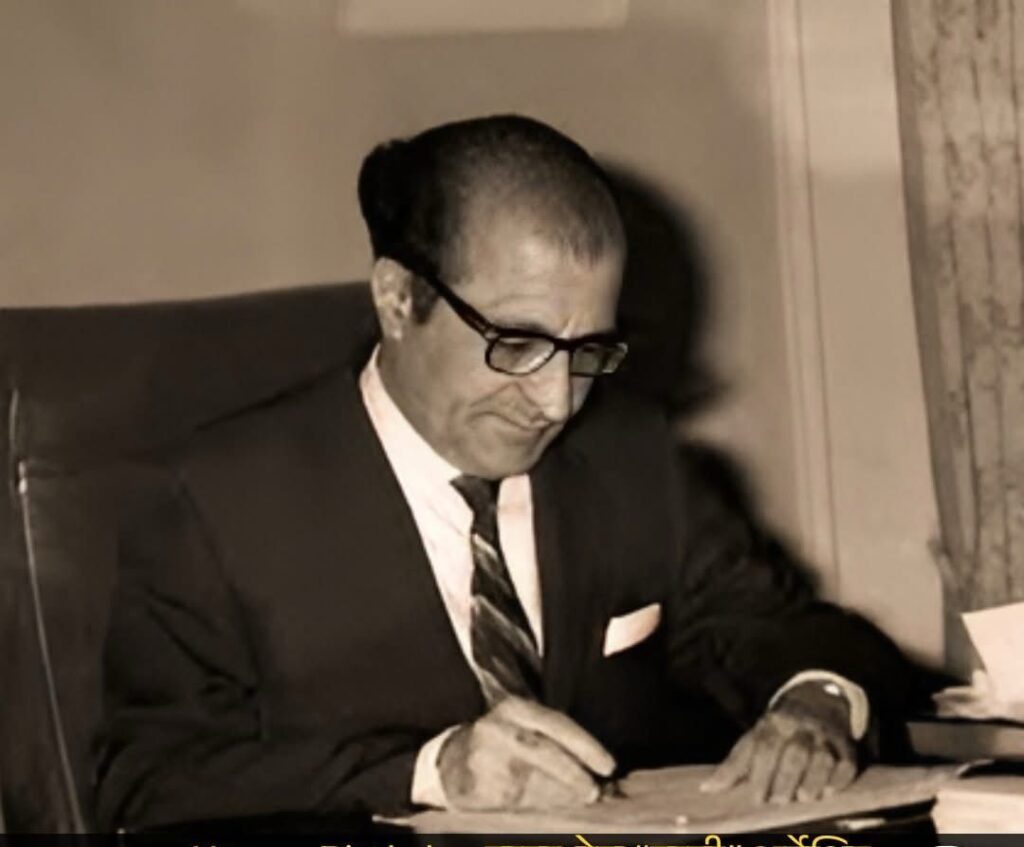
In the hallowed corridors of the Indian judiciary, certain names do not merely represent legal expertise; they evoke the very spirit of liberty and the sanctity of the Constitution. Nanabhoy “Nani” Ardeshir Palkhivala was one such rare luminary. As we mark his 106th birth anniversary this January 16, we remember a man who was far more than a preeminent jurist. He was a moral guardian of our founding document, a warrior of ideas, and a vigilant protector of the democratic soul.
Through landmark cases such as Kesavananda Bharati v. State of Kerala, I.C. Golaknath v. State of Punjab, and Minerva Mills v. Union of India, Palkhivala shaped the future of Indian democracy. His arguments, celebrated both at home and abroad, transcended mere legal precedent to defend the fundamental framework of our nation.
From Humble Roots to the Hall of Fame
Born in Bombay in 1920 into a Parsi family, Palkhivala’s surname—derived from his ancestors’ profession of making palanquins—gave little hint of the intellectual heights he would scale. His journey was marked by a quiet resilience; few realize that the man who would become India’s most eloquent orator struggled with a stammer in his youth.
After earning a postgraduate degree in English literature, Palkhivala initially sought a career in academia. Fate, however, had other plans. When his attempts to become a lecturer at Bombay University and other institutions were unsuccessful, he enrolled in Government Law College, Bombay. This pivot changed the trajectory of Indian legal history. Joining the chambers of the legendary Sir Jamshedji Behramji Kanga in 1946, Palkhivala’s brilliance was immediate. His presence in court became an event in itself, drawing students and young lawyers eager to witness his intellectual and moral depth.
The Architect of Economic and Individual Liberty
Palkhivala was a staunch proponent of liberal ideology, advocating for limited government and economic liberalism. He believed that a smaller state footprint was the key to empowered citizenship. This philosophy guided his opposition to policies that curtailed individual freedoms and defined his tenure as India’s Ambassador to the United States (1977–1979), where he projected the image of a confident Indian intellectual committed to democratic values.
His early mastery of commercial and tax law resulted in the seminal text Law and Practice of Income Tax. Co-authored with Sir Jamshedji Kanga, the book remains the “gold standard” in the field—a work for which Kanga himself generously credited Palkhivala’s genius.
A Sentinel for the Constitution and Free Speech
For Nani Palkhivala, the Constitution was a living legacy, not a static scroll. Drawing inspiration from Thomas Jefferson and Joseph Story, he argued that the Constitution must evolve alongside the human mind. His defense of “constitutional morality” in the Privy Purses case remains a cornerstone of our democracy, reminding us that laws are hollow if morality disappears from public life.
His commitment to freedom was absolute. In the 1972 Bennett Coleman & Co. case, he famously challenged government restrictions on newsprint, asserting that “a newspaper is not like steel.” Similarly, in the Ahmedabad St. Xavier’s College case, he secured the autonomy of minority institutions, arguing successfully that administrative control should never be a license for maladministration.
The People’s Economist: A Stadium of Listeners
Perhaps the most unique chapter of his legacy was his annual “post-budget” speeches. Beginning in 1958, these lectures became a national phenomenon. By the time they reached Bombay’s Brabourne Stadium, the crowds were so vast that it was often said India heard two budget speeches: one by the Finance Minister and the more influential one by Nani Palkhivala.
Beyond the podium, his literary contributions—including We, the People, We, the Nation, India’s Priceless Heritage, and Our Constitution Defaced and Defiled—continue to serve as a compass for those navigating the complexities of law and governance.
Principles Above Power
Palkhivala’s life was defined by the honours he declined as much as the ones he accepted. In 1963, he turned down a seat on the Supreme Court bench; in 1968, he declined the position of Attorney General. For Palkhivala, his conscience compelled him to stand with the Constitution rather than align himself with the corridors of power.
In his later years, he became a poignant critic of the “excess of government and dearth of administration” in India. He famously remarked that the Constitution had not failed us; rather, it was the elected representatives who had failed the Constitution.
An Enduring Legacy
The final years of this titan were shadowed by Alzheimer’s disease, a cruel irony for a man whose mind had been a lighthouse for the nation. He passed away on December 11, 2002. While his physical voice was silenced, the echoes of his arguments in the Supreme Court and his unwavering belief in the “priceless heritage” of India continue to resonate.
On his 106th birth anniversary, we do not just celebrate a lawyer; we celebrate the conscience of a nation.
~Hasnain Naqvi is a former member of the history faculty at St. Xavier’s College, Mumbai

~Hasnain Naqvi is a former member of the history faculty at St. Xavier’s College, Mumbai….
The opinions expressed here are solely those of the author.