
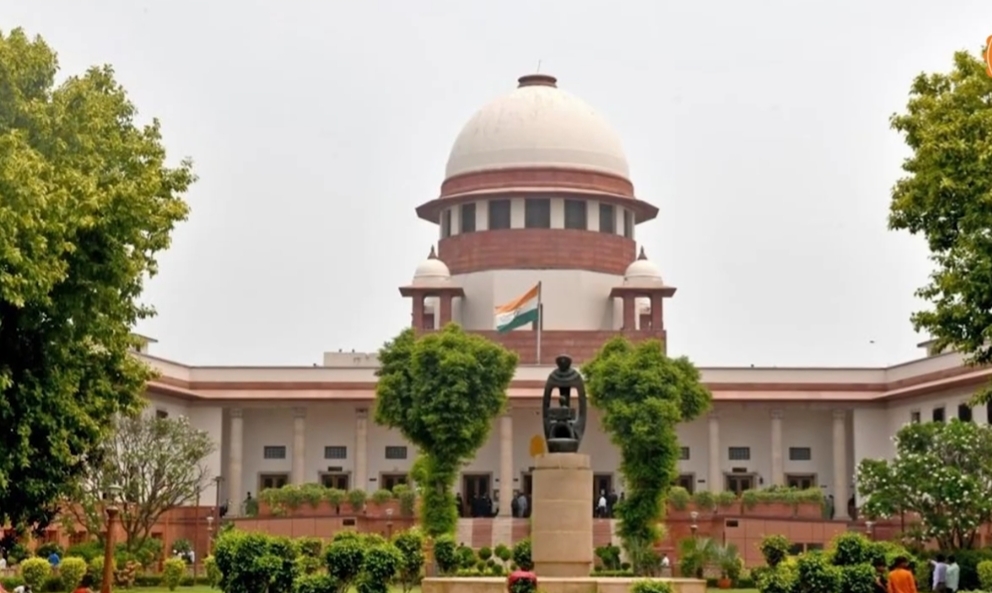
New Delhi, Jan. 22: The Supreme Court on Thursday sought the response of the Delhi government on a curative petition filed by Lashkar-e-Taiba (LeT) terrorist Mohd. Arif @ Ashfaq, who has been awarded the death sentence for the December 22, 2000 terror attack at the Red Fort, in which three Army jawans and a civilian were killed.
A Bench comprising Chief Justice Surya Kant, Justice Vikram Nath and Justice J.K. Maheshwari heard the curative petition in open court and issued notice to the Delhi government. Arif has challenged the dismissal of his review petition on November 3, 2022.
Arif, a Pakistani national and LeT operative, was convicted for carrying out the attack on a unit of the 7 Rajputana Rifles of the Indian Army stationed inside the Red Fort complex in New Delhi. According to the prosecution, six armed intruders, including Arif, entered the secured area on the night of December 22, 2000 and opened indiscriminate fire, killing three persons — two soldiers and a civilian. The assailants later escaped by scaling the rear boundary wall of the Red Fort.
The deceased included Abdullah Thakur, a civilian sentry, Rifleman Uma Shankar, and Naik Ashok Kumar.
Arif was subsequently arrested and tried for offences under the Indian Penal Code, the Arms Act, the Foreigners Act and the Explosive Substances Act. A Delhi sessions court convicted him and awarded the death sentence on October 31, 2005. The sentence was upheld by the Delhi High Court on September 13, 2007, and later affirmed by the Supreme Court on August 10, 2011.
After the confirmation of his death sentence, Arif filed a review petition contending that his appeal had been decided by a two-judge Bench, whereas death sentence confirmation matters ought to be heard by a three-judge Bench. His initial review and curative petitions were dismissed.
However, in September 2014, a Constitution Bench of the Supreme Court ruled that all death sentence confirmation cases must be heard by a three-judge Bench. Relying on this ruling, Arif sought a fresh review of the earlier judgments confirming his death sentence.
That review petition came up before a three-judge Bench headed by then Chief Justice U.U. Lalit, also comprising Justice S. Ravindra Bhat and Justice Bela M. Trivedi (both since retired), which dismissed the plea on November 3, 2022. The Court held that the aggravating circumstances of the case far outweighed any mitigating factors.
Before the Bench, Arif had argued that the two-judge Bench which earlier upheld his conviction had erred in relying upon call data records (CDRs) without strict compliance with Section 65B of the Evidence Act. The Court, however, rejected the contention, holding that the remaining evidence on record conclusively established his involvement in the attack.
The Court also noted that Arif, being a Pakistani national convicted of waging war against India and killing Army personnel, did not merit any leniency on the question of sentence.
The present curative petition seeks reconsideration of the November 2022 judgment dismissing his review plea. The Supreme Court has now sought the Delhi government’s response.
picture credit social media

Pramod kumar is a Senior Journalist, Covering Supreem Court of India

