

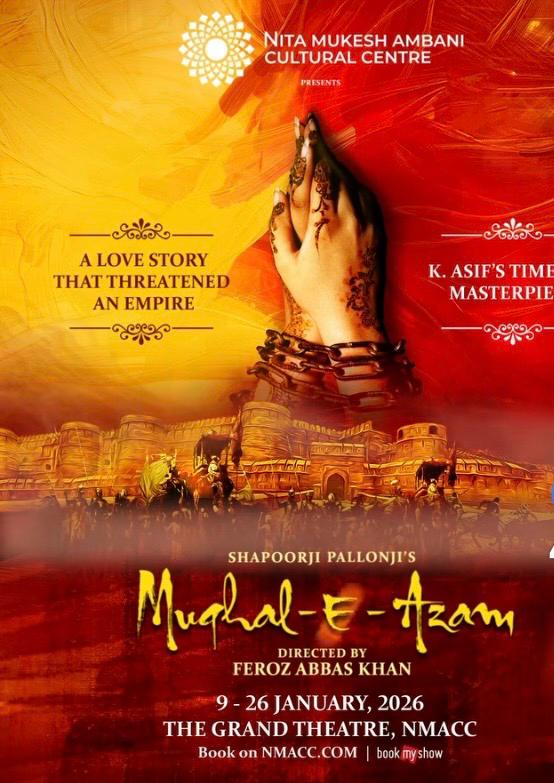
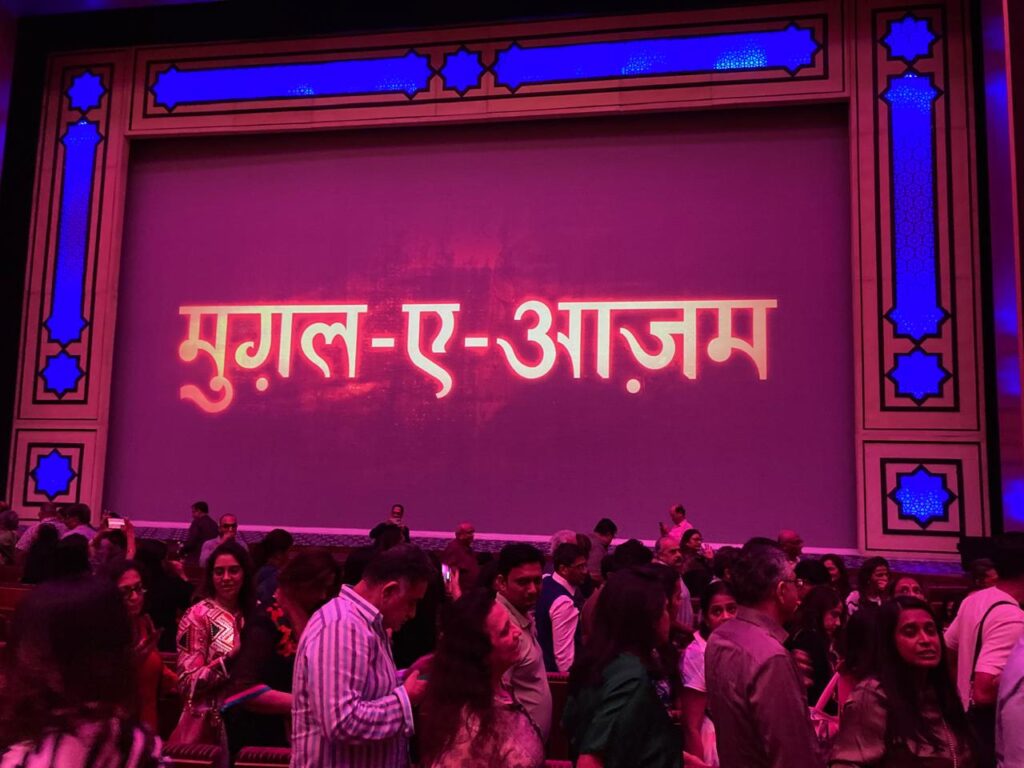
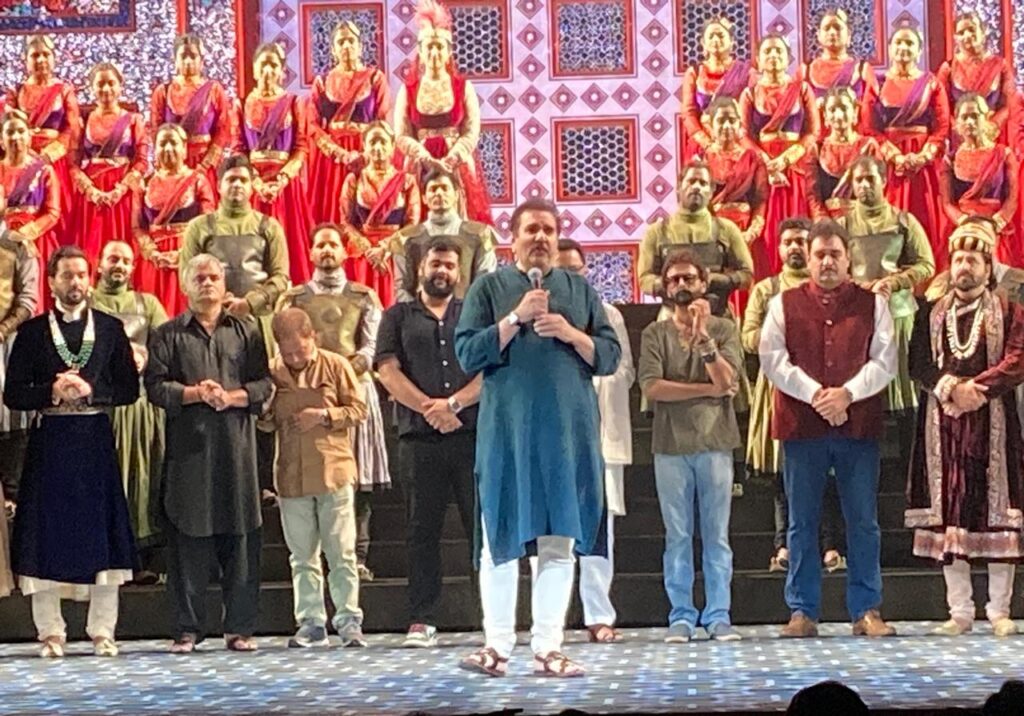
There is a certain audacity required to adapt a cinematic monument like K. Asif’s 1960 magnum opus, Mughal-E-Azam, for the stage. To tamper with a legacy defined by Dilip Kumar’s brooding intensity and Madhubala’s ethereal defiance is a Herculean task. Yet, as the curtains rose at the Grand Theatre, Nita Ambani Cultural Centre (NMACC) in Mumbai, it became clear that director Feroz Abbas Khan and the Shapoorji Pallonji Group have not merely adapted a film—they have breathed new, symphonic life into a timeless legend.
A Visual and Auditory Extravaganza
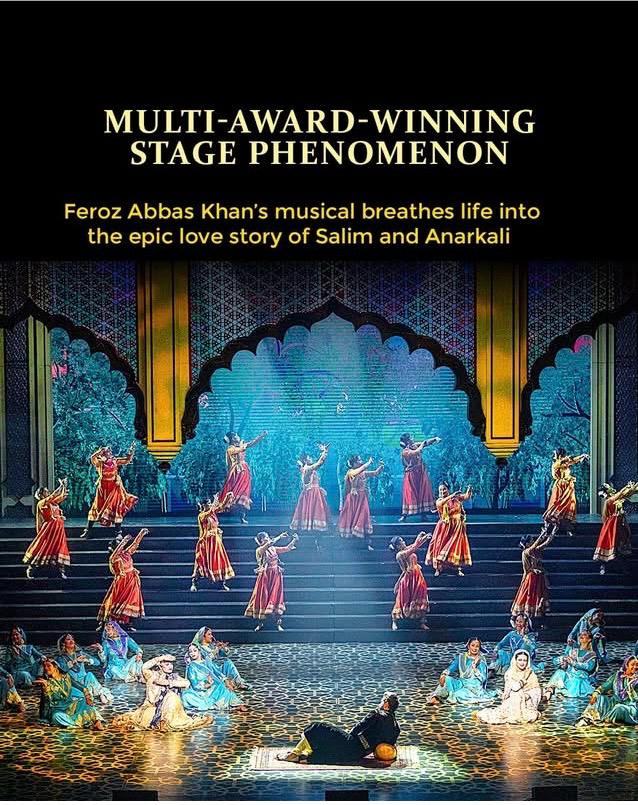
Mughal-E-Azam: The Musical is a Broadway-style spectacle that honors its predecessor while carving out its own distinct identity. The production is a staggering display of technical and artistic prowess, featuring a cast and crew of over 150. From the moment the digital backgrounds illuminate the stage, the audience is transported to the 16th-century Mughal court, a world defined by both opulent beauty and rigid discipline.
The narrative remains faithful to the original: the high-stakes conflict between Emperor Akbar’s imperial duty and Prince Salim’s rebellious love for the courtesan Anarkali. It is a tale of star-crossed lovers that remains as poignant today as it was six decades ago, serving as the emotional anchor for a production that is otherwise defined by its “larger-than-life” scale.
The Power of the Live Performance
What sets this musical apart is its commitment to authenticity. In an era of lip-syncing and pre-recorded tracks, the cast delivers original Naushad Ali compositions live. Priyanka Barve’s Anarkali is a revelation; her renditions of “Pyar Kiya To Darna Kya” and “Bekas Pe Karam Kijiye” are soulful tributes to the legendary Lata Mangeshkar, performed with a vocal clarity that resonates throughout the 2,000-seater auditorium.
Nissar Khan’s Akbar commands the stage with the requisite gravity, while Shahab Ali’s Salim balances vulnerability with princely defiance. The supporting cast, including Sonal Jha as Maharani Jodha and Aashima Mahajan as the envious Bahar, provide a layered domestic backdrop to the brewing political storm. The addition of a new Qawwali, “Salim Chistiya,” composed by Ahsan Ahmed and Piyush Kanojia, seamlessly integrates into the classic score, enhancing the spiritual ambiance of the era.
The Architecture of Grandeur
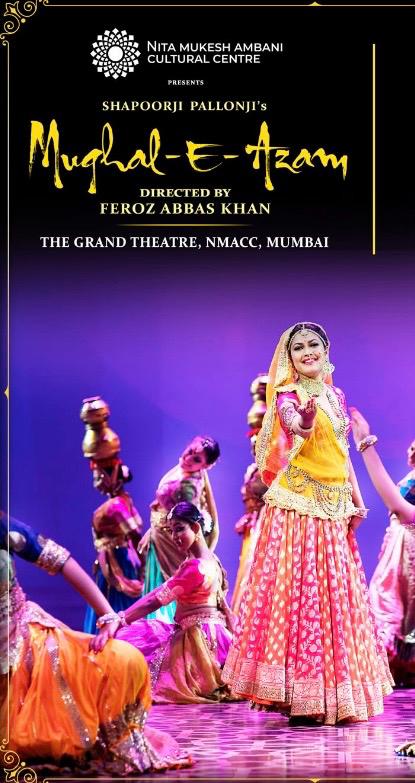
The production’s aesthetic brilliance is undisputed. Manish Malhotra’s 550 exquisite costumes are a visual feast of intricate embroidery and rich fabrics, reflecting the sheer decadence of the Mughal era. The choreography by Mayuri Upadhya is equally mesmerizing; the Kathak sequences are executed with a precision that mirrors the disciplined beauty of the court itself.
Nuances and Refinements
However, even a production of this magnitude is not without its minor shadows. While the script retains the poetic dialogues of the original, the talaffuz (pronunciation) of certain Urdu words—the very soul of the Mughal narrative—occasionally lacked the requisite sharpness. Words like Mughal and Tareekh deserve the guttural richness that the language demands.
Furthermore, for the purists, the absence of the iconic “feather scene”—perhaps the most sensual moment in Indian cinema—felt like a missed opportunity for intimacy amidst the grandeur. Similarly, the Janmashtami celebrations would have gained further authenticity with the inclusion of Baby Krishna’s cradle during the performance of “Mohe Panghat Pe.” Lastly, while the spectacle is breathtaking, a tighter edit of the pacing in the second act could further sharpen the dramatic tension.
A Landmark in Indian Theatre
These minor critiques do little to diminish the fact that Mughal-E-Azam: The Musical is a landmark achievement for Indian theatre. It is a “thing of beauty” that bridges the gap between the golden age of cinema and the limitless possibilities of the modern stage.
As the production continues its 24th season at the NMACC through January 26, 2026, it stands as a testament to the enduring power of love and the brilliance of Indian storytelling. For those seeking to witness the magic of live performance at its most ambitious, this musical is not just a play—it is a privilege.
~Hasnain Naqvi is a former member of the history faculty at St. Xavier’s College, Mumbai

~Hasnain Naqvi is a former member of the history faculty at St. Xavier’s College, Mumbai….
The opinions expressed here are solely those of the author.