
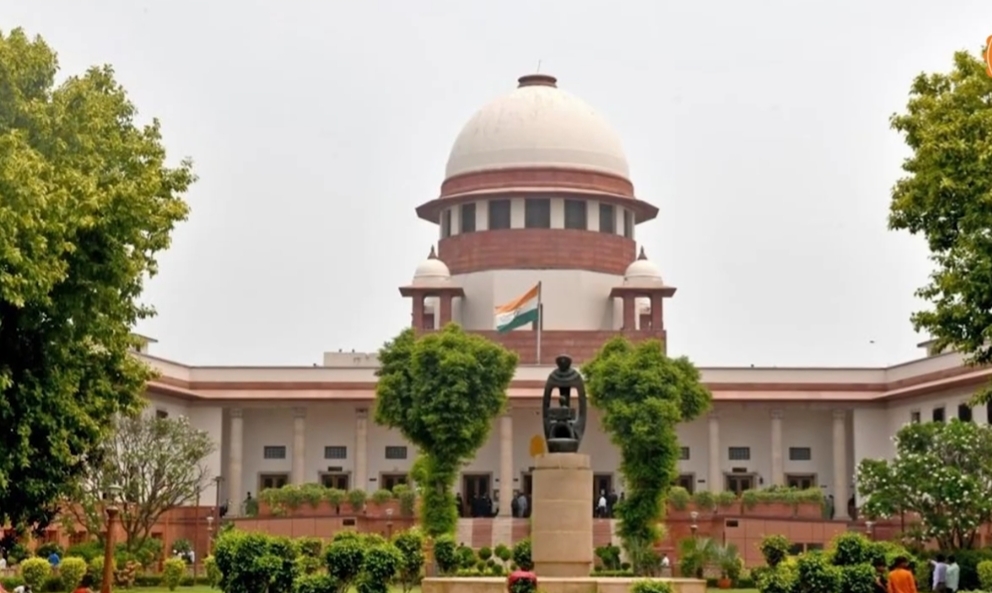
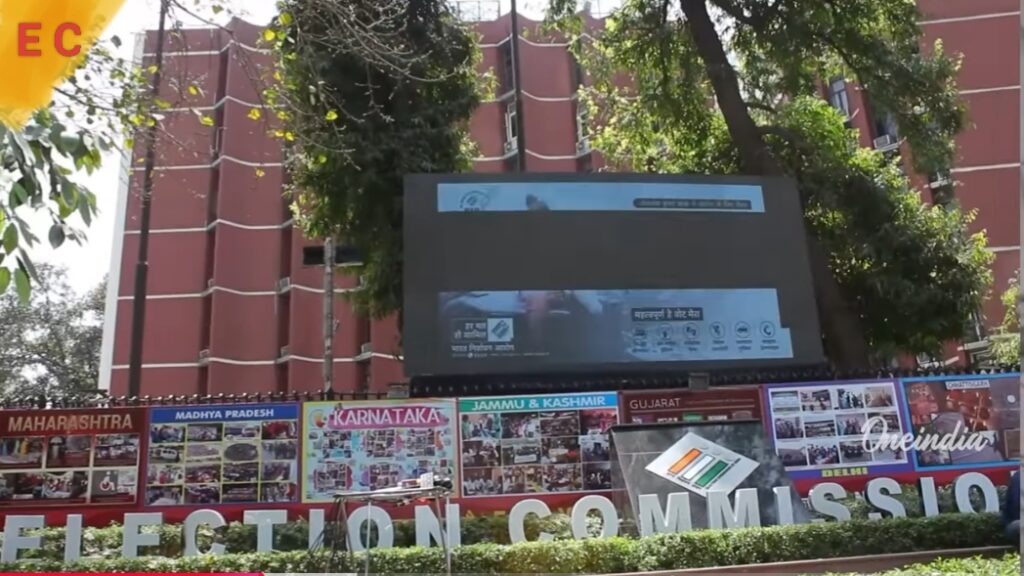
NEW DELHI,30 Jan 2026 : The Supreme Court has reserved its judgment on a batch of petitions challenging the Election Commission of India’s (ECI) decision to conduct a Special Intensive Revision (SIR) of electoral rolls—an exercise that began in Bihar in June 2025 and was subsequently expanded to 12 States and Union Territories on October 27.
The hearings, spread over nearly 20 sittings across three months between November 2025 and January 2026, saw extensive arguments from a wide spectrum of senior advocates and activists. The petitions assail the legality, scope, procedure and manner of the SIR exercise, which the Court had earlier declined to stay.
A Bench comprising Chief Justice Surya Kant and Justice Joymalya Bagchi concluded the hearing on Thursday. “Thank you everyone. Judgment reserved,” CJI Kant said.
The SIR was first directed by the ECI in Bihar ahead of the Assembly elections last year. Despite multiple petitions filed by bodies such as the Association for Democratic Reforms (ADR) and the National Federation for Indian Women (NFIW), the revision continued. On October 27, 2025, the ECI extended the exercise to other States and Union Territories, triggering further legal challenges.
Over the course of hearings, Senior Advocates Kapil Sibal, Abhishek Manu Singhvi, Gopal Sankaranarayanan, Raju Ramachandran and P.C. Sen, along with Yogendra Yadav, Prashant Bhushan, Vrinda Grover, K.S. Chauhan, Shoeb Alam and Shahad Farasat, appeared for the petitioners challenging the SIR on the ground that it is in the teeth of constitutional provisions, including those of the Representation of the People Acts, 1950 and 1951, the rules and the manual of the Election Commission governing the revision of electoral rolls.
It was argued that the exercise was exclusionary and would result in disenfranchisement of a large section of voters belonging to weaker and marginalised sections, including women.
The ECI was represented by Senior Advocates Rakesh Dwivedi and Maninder Singh. Other respondents defending the SIR were represented, among others, by Vijay Hansaria and Sukumar Pattjoshi.
Opening the submissions on Thursday, advocate Prashant Bhushan argued that the present SIR departs fundamentally from past revisions, including the 2003 exercise, by shifting the entire burden of verification onto voters.
“They (Voters) are being told that failure to fill forms or furnish documents will result in exclusion—even from the draft roll,” he said.
Vrinda Grover questioned the statutory basis of the exercise, contending that Section 21(3) of the Representation of the People Act does not dispense with procedural safeguards under the Conduct of Election Rules.
“If it is an exercise conducted afresh, then Rules 4 to 23 necessarily apply,” she submitted.
Shahad Farasat raised concerns over citizenship determination through the SIR, arguing that in the absence of a national register of citizens, the ECI cannot assume such authority.
“That power lies entirely with the executive,” he said.
P.C. Sen questioned the urgency behind the exercise, pointing out that a summary revision had already been completed.
“What necessitated this sudden and hurried process?” he asked.
Raju Ramachandran, concluding the arguments, stressed that every power vested in the ECI carries a corresponding constitutional duty.
“By placing roadblocks and shifting the burden entirely on individuals, the Commission has abdicated its duty to ensure that every eligible citizen is included in the electoral roll,” he said.
The Court had earlier issued interim directions relating to the SIR in West Bengal and Tamil Nadu. With the conclusion of arguments, the constitutional validity and procedural legality of the nationwide SIR now await final adjudication.
Picture credit social media

We are a multimedia news network. Website : www.7xnews.com Based in New Delhi (India)
Youtube : umakantlakheraspeaks@gmail.com

