
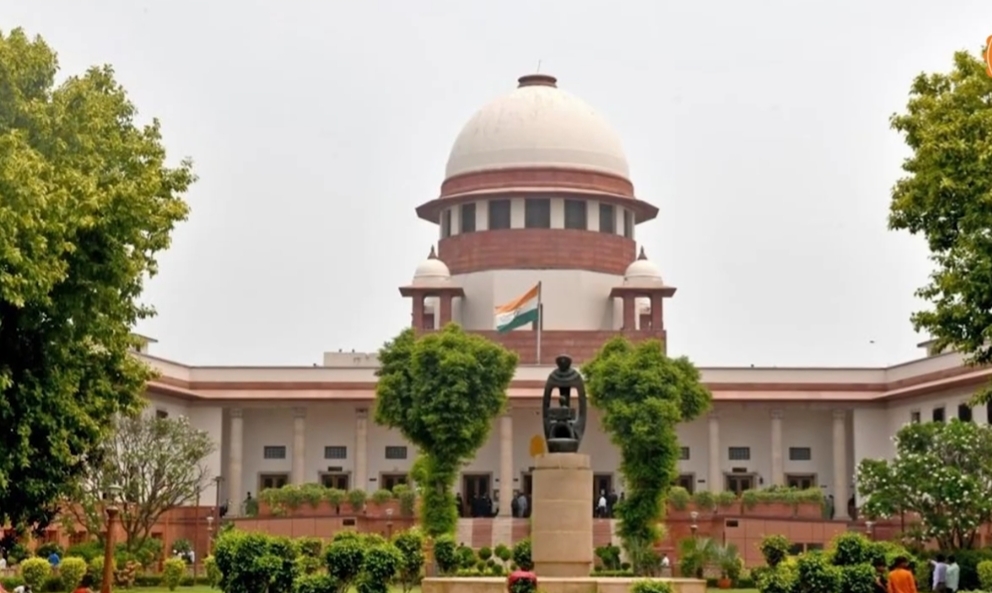

New Delhi, Jan. 30: In a landmark judgment, the Supreme Court on Friday held that the right to life under Article 21 of the Constitution includes the right to menstrual health, recognising it as an essential facet of human dignity, privacy and bodily autonomy of girl children, encompassing access to safe, effective and affordable menstrual hygiene management (MHM).
Holding that “The right to life under Article 21 of the Constitution includes the right to menstrual health”, a Bench of Justice J.B. Pardiwala and Justice R. Mahadevan observed that “Access to safe, effective, and affordable menstrual hygiene management measures helps a girl child attain the highest standard of sexual and reproductive health. The right to healthy reproductive life embraces the right to access education and information about sexual health.”
Emphasising the dignity dimension, the Court said that “Inaccessibility of menstrual hygiene management measures undermines the dignity of a girl child, as dignity finds expression in conditions that enable individuals to live without humiliation, exclusion, or avoidable suffering.”
Noting that “privacy is inextricably linked with dignity”, the judgment added that, as a corollary, “the right to privacy entails a duty on the State to not only refrain from violating privacy but also an accompanying obligation to take necessary measures to protect the privacy of an individual.” The Court held that the inaccessibility of menstrual hygiene management (MHM) measures compromises dignity, undermines privacy, and adversely affects sexual and reproductive health.
For adjudication, the Court framed four interconnected issues, including whether the absence of gender-segregated toilets and lack of access to menstrual absorbents violate the equality guarantee under Article 14; whether the right to dignified menstrual health is integral to Article 21; whether these deficiencies impair the right to participation and equality of opportunity under Article 14; and whether they breach the right to education under Article 21A and the statutory mandate of free and compulsory education under the Right of Children to Free and Compulsory Education Act, 2009.
Affirming the scope of Article 21A, the Court held that the fundamental right to education and the RTE Act guarantee free, compulsory and quality education, where “free” includes all expenses, whose absence would impede a child from completing elementary education. Thus, all schools—whether government-run or privately managed—must comply with the norms and standards prescribed under Section 19 of the RTE Act.
The Court clarified that non-compliant private schools face the risk of de-recognition, while violations by government schools would attract State accountability.
Ensuring access to menstrual hygiene management within schools, the Court said, is therefore not optional but a constitutional and statutory imperative flowing from Articles 14, 21 and 21A, and is essential to dignity, equality and meaningful education.
Issuing a slew of directions, the Court ordered that all States and Union Territories shall ensure that every school, whether government-run or privately managed, in both urban and rural areas, provides oxo-biodegradable sanitary napkins manufactured in compliance with ASTM D-6954 standards free of cost.
Such sanitary napkins must be made readily accessible to girl students, preferably within toilet premises through sanitary napkin vending machines, or, where immediate installation is not feasible, at a designated place or with a designated authority within the school.
On infrastructure, the Court directed that all States and Union Territories shall ensure that every school is equipped with functional, gender-segregated toilets with usable water connectivity. It further ordered that all existing and newly constructed school toilets must be designed, constructed and maintained to ensure privacy and accessibility, including by catering to the needs of children with disabilities.
Picture credit social media

Pramod kumar is a Senior Journalist, Covering Supreem Court of India