

Ayodhya Unlocked: The 1986 Blunder That Ignited India’s Polarized Inferno
On February 1, 1986, Faizabad District Judge Krishna Mohan Pandey brazenly ordered the gates of the Ram Janmabhoomi-Babri Masjid site flung open, greenlighting Hindu worship after 37 years of lockdown. This unchallenged judicial overreach didn’t just spark a fire—it unleashed a conflagration that scorched India’s social cohesion and hijacked its political destiny.
Judicial Overreach Fuels Fanaticism
Judge Pandey’s ruling bulldozed a 1950 suit that had sealed the inner courtyard after idols mysteriously appeared in 1949, rubber-stamping lawyer Umesh Chandra Pandey’s plea with hollow promises from local officials about preserving peace. It turbocharged Hindu outfits like the Vishwa Hindu Parishad (VHP), morphing a backwater squabble into a rabid nationwide crusade for a temple.
This so-called legal stamp of approval supercharged Hindu assertions, empowering the 1984-born Ram Janmabhoomi Mukti Yagna Samiti and paving the way for orchestrated mass rallies that reeked of division.
Communal Carnage Unleashed
The aftermath?
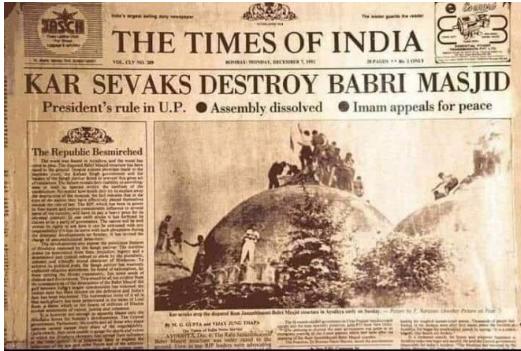
A vicious spike in riots ripping through Uttar Pradesh hotspots like Aligarh and Bijnor, inflamed by kar sevak roundups and morbid marches hauling ashes from Ayodhya skirmishes. As Allahabad High Court Justice S.U. Khan aptly put it, the unlocking “catapulted the dispute to the national and international level,” setting off a domino effect that peaked with the 1992 Babri Masjid razing.
The bloodshed spilled nationwide, with Mumbai’s 1992-93 pogroms slaughtering nearly 900 souls, a grim testament to how this verdict carved deeper chasms between Hindus and Muslims.
Hindutva’s Ruthless Rise to Power
Under Rajiv Gandhi’s Congress regime, the unlocking reeked of a cynical “soft Hindutva” ploy, especially amid the Shah Bano fiasco’s backlash. Yet revelations expose a deeper rot: Rajiv himself was blindsided, clueless about the gates being pried open by a rogue local administration in Faizabad. He suspected his cousin Arun Nehru and Makhan Lal Fotedar of masterminding the stunt without his nod, a betrayal that later cost Nehru his cabinet seat.
Far from a calculated counter to Shah Bano, this was a reckless local impulse that right-wing opportunists exploited ruthlessly. Rajiv’s stunned reaction underscored a glaring governmental disconnect, handing the BJP a golden ticket from obscurity—snagging just two seats in 1984—to dominance. The party’s 1989 Palampur embrace of the temple demand, fuelled by L.K. Advani’s 1990 Rath Yatra, weaponized it against Congress’s alleged minority pandering.
By 2014 and 2019, this frenzy catapulted the BJP to supremacy, twisting Indian politics into an identity-fuelled circus over substantive progress.
Secularism’s Slow Death
The 1986 fiasco gutted India’s secular core, spawning copycat grabs at Gyanvapi and Mathura, where courts now bow to Hindutva scripts. It spotlighted the judiciary’s perilous meddling in faith wars, shredding constitutional pluralism and side lining minorities.
Culminating in the 2019 Supreme Court nod and 2024 Ram Temple pomp, its toxic legacy screams of entrenched polarization. In a faith-trumps-facts era, this could warp democracy irreparably.
As India stumbles through 2026, it’s high time to fiercely defend Nehruvian secularism against this marauding majoritarianism—or watch the republic crumble.
~Hasnain Naqvi is a former member of the history faculty at St. Xavier’s College, Mumbai

~Hasnain Naqvi is a former member of the history faculty at St. Xavier’s College, Mumbai….
The opinions expressed here are solely those of the author.