

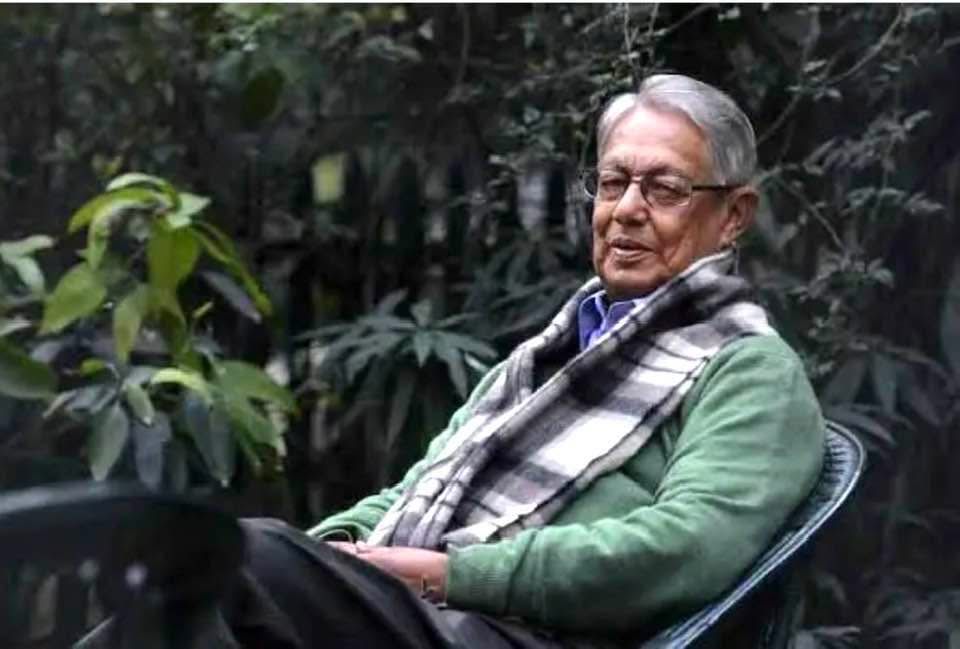
The Sage of Sripuram: A Tribute to Andre Béteille, the Architect of Modern Indian Sociology
With the passing of Professor Andre Béteille (1934–2026), India has lost more than a scholar; it has lost its most refined analytical lens. A founding father of sociology in independent India, Béteille was the bridge between European Enlightenment and Indian reality. Alongside his mentor M.N. Srinivas, he transformed the study of Indian society from mere ethnographic observation into a sophisticated exploration of institutions, law, and the precarious balance of democracy.
A Confluence of Cultures: The French-Bengali Intellectual
Born in the French colony of Chandannagar to a French father and a Bengali mother, Béteille’s intellectual DNA was a unique tapestry. As he poignantly recounted in his memoir, Sunlight on the Garden: A Civilised Story, his upbringing was a blend of the classical and the local. He moved through the world with a quintessentially Bengali heart, yet articulated his thoughts with a Gallic precision and a command over English, French, and Bengali that made him a formidable presence in global academia.
This multicultural upbringing gave him the “outsider-insider” perspective necessary to dissect the complexities of Indian social hierarchies without the baggage of bias. He remained, throughout his life, a champion of secular rationalism.
The Master of the Classroom and the Written Word
While many remember him for his books, Béteille was, first and foremost, a teacher. For decades, the Delhi School of Economics (DSE) was his sanctuary. He didn’t just lecture; he mentored generations of thinkers, instilling in them a rigorous commitment to value-neutrality.
His literary legacy is anchored by his seminal work, *Caste, Class, and Power: Changing Patterns of Stratification in a Tanjore Village (1965)*. Based on his fieldwork in Sripuram, this book fundamentally shifted the discourse of Indian sociology. He argued that power was no longer the exclusive domain of the Brahmin caste but was being redistributed through political parties and administrative offices—a groundbreaking insight at the time.
The Scholar of Institutions and Inequality
Béteille’s research was distinctive because it refused to look at India through a single lens. His interest in the “contradiction between norms and practices” led him to study how modern institutions function within a traditional society. In works such as *The Idea of Natural Inequality and Other Essays* and *Inequality and Social Change*, he challenged the simplistic notions of egalitarianism, arguing that while the law may mandate equality, social structures often resist it.
Unlike many of his contemporaries who focused on social policy, Béteille was fascinated by social analysis. He became a staunch defender of the autonomy of institutions—the courts, universities, and civil services—which he viewed as the essential “bulwarks of democracy.” In his later collection, *Antinomies of Society: Essays on Ideologies and Institutions*, he explored the tension between individual rights and collective identities, a theme that remains painfully relevant today.
A Global Intellectual Icon
His brilliance was recognized far beyond the borders of the subcontinent. Professor Béteille’s resume reads like a map of the world’s finest institutions:
* The Commonwealth Visiting Professor at Cambridge.
* Visiting Professor at the London School of Economics and UC Berkeley.
* Fellow of the British Academy and the Royal Anthropological Institute.
In 2005, the Government of India recognized his monumental contributions with the Padma Bhushan. He also served as the Chancellor of North-Eastern Hill University and was a member of the National Knowledge Commission, though he famously resigned from the latter to protect the sanctity of academic merit over political expediency.
The Legacy of a Rationalist
In his later years, Béteille became a “public intellectual” in the truest sense. His essays in *Society and Politics in India* warned against the dilution of merit and the dangers of identity politics. He believed that the university was a sacred space for the cultivation of the mind, independent of political fervor.
Andre Béteille’s life was a testament to the power of the intellect. As the sunlight fades on the garden of his life, the seeds he planted in the minds of his students and the enduring wisdom of his prose will continue to bloom, guiding future generations toward a more rational understanding of the Indian social fabric.
~Hasnain Naqvi is a former member of the history faculty at St. Xavier’s College, Mumbai
Picture credit social media

~Hasnain Naqvi is a former member of the history faculty at St. Xavier’s College, Mumbai….
The opinions expressed here are solely those of the author.

