
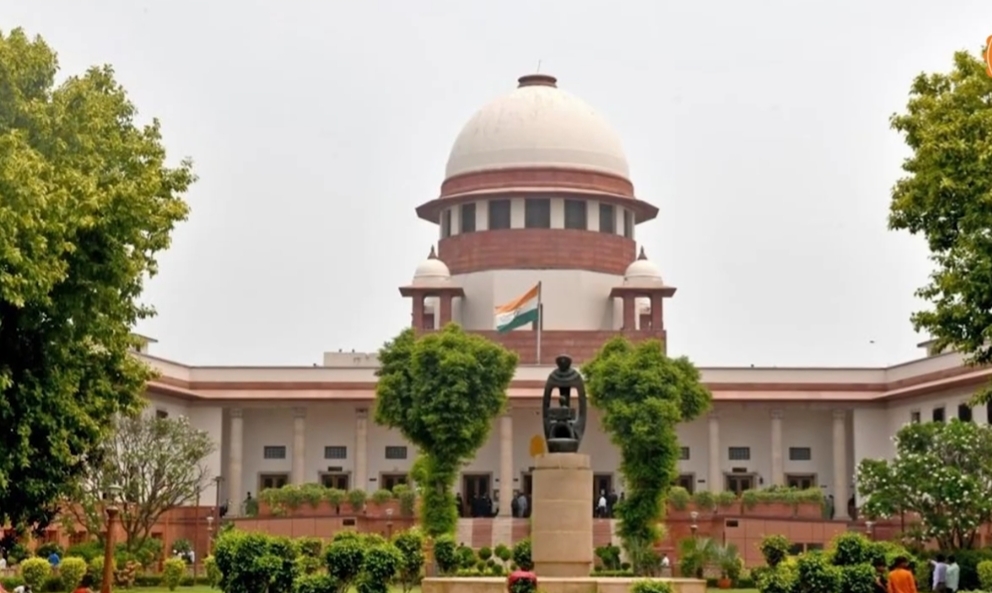

New Delhi : The Supreme Court on Tuesday sought the response of the Union Ministry of Health and Family Welfare and the Ministry of Consumer Affairs, Food and Public Distribution to a public interest plea by the Association of Healthcare Providers (India) seeking the exclusion of medical professionals from the ambit of the Consumer Protection Act, 2019.
Seeking to be excluded from the Consumer Protection law that empowers patients to approach consumer courts to claim damages for alleged medical negligence, the PIL says, “The inclusion of medical professionals under the Consumer Protection Act, 2019, undermines the trust-based, fiduciary nature of the doctor-patient relationship and erodes the moral foundation of medical practice.”
A bench of Chief Justice Surya Kant and Justice Joymalya Bagchi and Justice NV Anjaria issued notice on a PIL by the Association of Healthcare Providers (India) (AHPI) and its former President, a Bengaluru-based doctor that states that applying consumer law to medical services encourages defensive medical practice and that there are other, better-suited mechanisms to check on medical negligence.
The Consumer Protection Act provides consumers with a mechanism to seek redressal for unfair trade practices or deficiencies in goods and services. The Supreme Court by its November 13, 1995, judgment had ruled that the medical services too fall within the ambit of “service” under the Section 2(1)(o) of the Consumer Protection Act, 1986.
The Supreme Court by its November 13, 1995, judgment had held “(1) Service rendered to a patient by a medical practitioner (except where the doctor renders service free of charge to every patient or under a contract of personal service), by way of consultation, diagnosis and treatment, both medicinal and surgical, would fall within the ambit of ‘service’ as defined in Section 2(1) (o) of the Act. (2) The fact that medical practitioners belong to the medical profession and are subject to the disciplinary control of the Medical Council of India and/or State Medical Councils constituted under the provisions of the Indian Medical Council Act would not exclude the services rendered by them from the ambit of the (Consumer Protection) Act.”
Section 2(1)(o) of the Act, “service” includes services such as banking, finance, insurance, transport, electricity supply, housing construction, accommodation, entertainment, and the sharing of news or information. However, it does not cover services that are provided free of cost or services given under a personal employment contract.
The petition contends that equating medical care with ordinary consumer services overlooks the distinct nature of the medical profession. Relying on a 2024 Supreme Court ruling that excluded lawyers from the Consumer Protection Act, it argues that professional services differ fundamentally from commercial transactions, and notes that the apex Court itself had indicated that its earlier decision bringing doctors under consumer law may require reconsideration by a larger Bench.
The petition argues that healthcare is inherently different from other services because it involves professional judgment exercised in situations marked by uncertainty, where outcomes cannot be guaranteed. It emphasises that, unlike fields with more predictable solutions, doctors often work in ambiguous conditions, making it difficult to exercise complete control over results, as outcomes are “elusive” due to the nature of medical practice.
Pointing to the growing trend of “defensive medicine,”, the petition says that doctors prescribe additional tests or procedures mainly to shield themselves from potential lawsuits, rather than for medical necessity.
The petition says that consumer forums are ill-suited to handle medical disputes due to delays, limited medical expertise among the adjudicators, and inconsistent compensation. It emphasises that patients usually seek explanation and reassurance rather than litigation, and that prolonged adversarial proceedings often undermine trust and professional morale instead of resolving concerns.
Picture credit social media

Pramod kumar is a Senior Journalist, Covering Supreem Court of India