

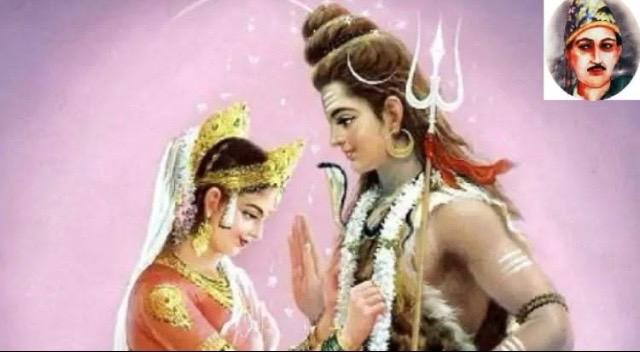
In the hush of midnight vigils on Mahashivratri, as devotees fast and chant through the lengthening shadows of February, Nazeer Akbarabadi’s verses transport us to a time when faith flowed unbound by rigid divides. This 18th-century Muslim poet, revered as the “People’s Poet,” opens his nazm *Mahadev-ji ka Byaah* with an invocation to Ganesha, seeking auspicious beginnings for all endeavors. Composed amid the cultural tapestry of Awadh, the poem recasts Lord Shiva’s divine wedding not as distant mythology, but as a joyous communal rite—echoing the festival’s essence of union, renewal, and transcendence.
Bol bachan aanand ke, prem, piit aur chaah
Mahashivratri marks the cosmic marriage of Shiva and Parvati, a night when the destroyer and nurturer unite against chaos, birthing harmony. Nazeer captures this bliss with unbridled fervor: “Utter the words of joy, love, affection and attachment / My friends, attentively listen to the story of the wedding of Mahadev.” His lines pulse with the festival’s rhythm—drums echoing in temple courtyards, bel leaves offered at lingams, and throngs swaying in ecstatic kirtan. From Kashmir’s Amarnath ice lingam to Kerala’s fierce Theyyam rituals, the night dissolves ascetic rigor into celebratory abandon, much like Nazeer’s call to revel in prem and aanand.
This devotion wasn’t anomaly; it mirrored India’s pre-colonial syncretism. Poets like Ali Mardan Khan in the 17th century penned stutis to Shiva, while Nazeer, predating the 1857 Revolt and British-engineered fissures, wove Hindu lore into Urdu’s fabric. His oeuvre spans Holi’s colors, Janmashtami’s fervour, and now Shivratri’s grandeur, proving festivals as shared cultural pulses rather than sectarian claims.
Sun lo yaaro, dhyaan dhar, mahaadev ka byaah
Nazeer’s narrative unfolds the barat’s splendor: jogis and janams narrating tales certified by hermits, listeners immersed in perpetual hansi and khushi. “Those who listen remain cheerful day and night / Those who read and memorize are also happy,” he promises, invoking Shiva’s blessings on all who glorify the union. In an era before “Hindu” and “Muslim” hardened into watertight compartments, such poetry bridged worlds—Shiva as universal force, his wedding a metaphor for enduring love amid flux.
Yet, as colonial divides deepened, this passion waned. Iqbal likened “New India” to Shiva’s temple; Meeraji celebrated the divine couple’s romance. But none matched Nazeer’s immersive piety, where a Muslim voice chants Ganesh’s name and extols Shivaji’s mahima.
Aur jis ne is byaah kii, mahima kahii banaae
Today, amid polarized clamors, Nazeer’s poem gleams as rebuke and reminder. “Whoever narrates the glory of this wedding / Lord Shiva remains happy with him,” he asserts, extending suhaapan to the storyteller—eternal contentment unbroken by dil-gir. On this Mahashivratri, as India grapples with fractured narratives, revisiting *Mahadev-ji ka Byaah* urges us toward Nazir’s vision: “This exercise brings the happiness that one doesn’t feel sad / Glory to the narrator whose name is ‘Nazir’.”
In bowing to Shiva’s boundless grace, we reclaim a heritage where devotion defied dogma—a call to listen, memorize, and unite once more.
~Hasnain Naqvi is a former member of the history faculty at St. Xavier’s College , Mumbai

~Hasnain Naqvi is a former member of the history faculty at St. Xavier’s College, Mumbai….
The opinions expressed here are solely those of the author.

