
NEW DELHI ,8April 2026 : In March of 2025, just a couple of months after Donald Trump took office for the second time, the U.S. deported more than 200 Venezuelans — not to Venezuela, but to El Salvador. They were kept in a notorious maximum-security prison for four months.
In exchange for taking them, El Salvador’s president, Nayib Bukele — who already had a reputation for stepping on human rights — received millions of dollars. The U.S. State Department upgraded its travel advisory for El Salvador, deeming it among the safest countries in the world to visit. Other countries watched closely, looking for ways, as one legal expert put it, to “emulate the Bukele arrangement.”
As my colleagues report in a new investigation, many more — about a dozen, as far as we know — have since gotten their chance.
The El Salvador deal was one of the first major examples of the “third-country deportations” pursued by the Trump administration — deportations that send migrants to countries that are not their own. These deals throw people into places to which they have no ties, and, often, into legal systems where human rights and civil liberties carry little weight.
What exactly the countries get in exchange is murky. But my colleagues found that cutting these deals has become such a priority for the White House that American diplomats have put nearly everything on the negotiating table: The U.S. will pay foreign security forces, ease visa restrictions or tariffs, finance public health services and even reconsider a country’s placement on U.S. watch lists.
A cable sent in February from Secretary of State Marco Rubio’s office. What it showed was a government coaching its diplomats on how to persuade their foreign counterparts to sign up for one of these deportation deals.
“If you are willing to take more individuals, then we can potentially provide more support,” was one suggested line.
“Without making any promises, what do you have in mind?” was another.
The cable placed no constraints on whom the U.S. should be negotiating with. Regarding a list of unspecified “countries of concern,” diplomats were told that accepting migrants “can help a country improve its relationship with the United States.”
The Trump administration is in talks to send migrants to the Central African Republic and recently finalized a deal with the Democratic Republic of Congo, two countries where the judicial systems are often dysfunctional and governments have been linked to torture and forced disappearances.
It has also cut deals with Cameroon and Rwanda, both run by strongman leaders. It has an arrangement with Equatorial Guinea, where torture is systemic, and Eswatini, which has a history of human rights abuses. South Sudan, which is teetering on the brink of civil war, has received migrants, too.
The payoff has been generous. Weeks before Equatorial Guinea announced its agreement, for example, the Trump administration temporarily lifted sanctions on its vice president so he could travel to the U.S. for the United Nations General Assembly meeting. It also wired the country $7.5 million.
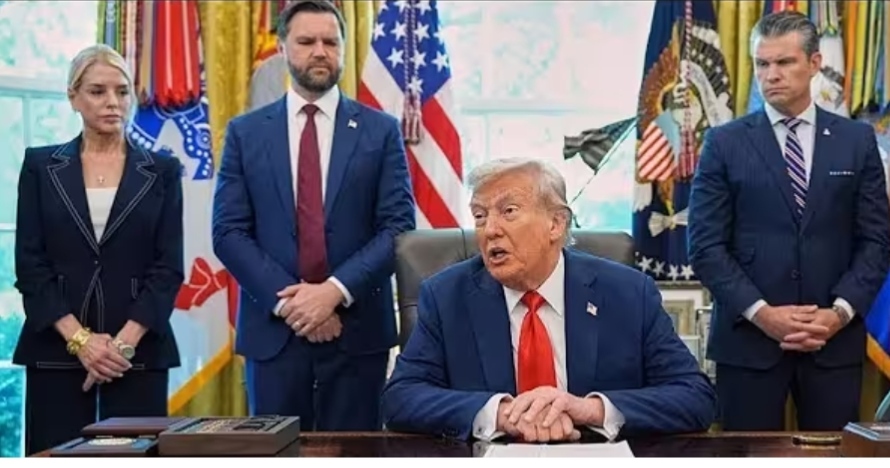
Picture credit social media

We are a multimedia news network. Website : www.7xnews.com Based in New Delhi (India)
Youtube : umakantlakheraspeaks@gmail.com