

New Delhi ,10 April 2026,The guns were supposed to fall silent, but the echoes of “Operation Eternal Darkness” suggest that the peace brokered on April 7, 2026, may have been dead on arrival. While the world briefly exhaled when the United States and Iran agreed to a two-week ceasefire, the subsequent 48 hours have revealed a catastrophic disconnect in the terms of the truce. As delegations arrive in Islamabad today, April 10, for the scheduled peace talks, they do so not in an atmosphere of reconciliation, but amidst a renewed blockade of the Strait of Hormuz and a mounting body count in Lebanon.
The Lebanon Schism
The primary catalyst for the ceasefire’s unraveling is the status of Lebanon—a point of contention that has exposed a glaring rift in international diplomacy. On the day the truce was struck, Pakistani Prime Minister Shehbaz Sharif was unequivocal, stating that the agreement included an “immediate ceasefire everywhere, including Lebanon.” This sentiment was mirrored by Tehran, with Iranian President Masoud Pezeshkian declaring a halt to hostilities in Lebanon as an “essential condition” for the deal.
However, the reality on the ground told a different story. Within hours of the announcement, Israel launched its most devastating bombardment of the 38-day conflict. Dubbed *Operation Eternal Darkness*, the strikes hit over 100 targets in Lebanon within a ten-minute window, killing *303 people* and wounding over *1,100*. Israeli Prime Minister Benjamin Netanyahu flatly denied that Lebanon was part of the deal, a stance later corroborated by U.S. Vice President *JD Vance*.
Speaking from Budapest on April 8, Vance dismissed the confusion as a “legitimate misunderstanding,” stating bluntly:
“I think the Iranians thought it included Lebanon, and it just didn’t. We never made that promise.”
The Chokehold Returns
Tehran’s response to the strikes in Lebanon was swift and strategic. Alleging a flagrant breach of the ceasefire by the “Zionist regime” with American complicity, the Islamic Revolutionary Guard Corps (IRGC) moved to re-blockade the *Strait of Hormuz* on April 9.
The consequences for global stability are immediate. The Strait, which facilitates the passage of approximately *20 million barrels of oil per day* (20% of the world’s seaborne trade), is once again a maritime graveyard for commerce. By halting tankers in retaliation for the Beirut bombings, Iran has effectively weaponized the world’s energy supply to force the U.S. back to its 10-point proposal—specifically the cessation of hostilities on “all fronts.”
The Islamabad Paradox
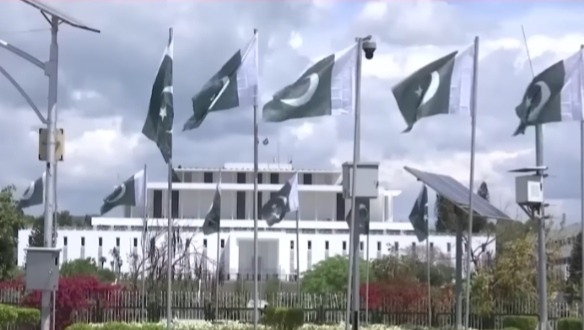
Despite the smoke rising from Beirut and the gridlock in the Persian Gulf, delegations are still descending upon Islamabad. Pakistan’s role as the “broker in the middle” has never been more precarious. While the Sharif administration has earned international accolades for bringing the two adversaries to the table, the “workable basis” for the talks is crumbling.
The statistics of this “ceasefire” period are as grim as the war itself:
*Casualties:*
Over *300 Lebanese civilians and personnel* killed in a single day of “truce.”
*Economic Impact:*
Crude oil prices have surged back toward record highs as the Hormuz blockade resumed.
*Diplomatic Trust:*
Iranian Parliament Speaker Mohammad Bagher Ghalibaf has decried the U.S. and Israel for violating the “provisional ceasefire,” signaling a total collapse of faith in the process.
A Failed Respite?
The 14-day window was intended to be a diplomatic ramp toward a permanent resolution. Instead, it has become a theatre of the absurd. President Trump’s earlier claims of victory on *Truth Social* now look premature as he characterizes the Lebanon conflict as a “separate skirmish,” while the Iranian leadership views it as the heart of the war.
As the Islamabad talks begin, the fundamental question is no longer about the durability of the ceasefire, but whether it ever truly existed. If the U.S. continues to treat Lebanon as an excluded theatre and Iran continues to treat the Strait of Hormuz as a retaliatory switch, the “lull” will not last the weekend. The world is not watching the start of a peace process; it is watching the final, frantic efforts to prevent a regional “Pause” from turning into a global “Storm.”

~Hasnain Naqvi is a former member of the history faculty at St. Xavier’s College, Mumbai….
The opinions expressed here are solely those of the author.