

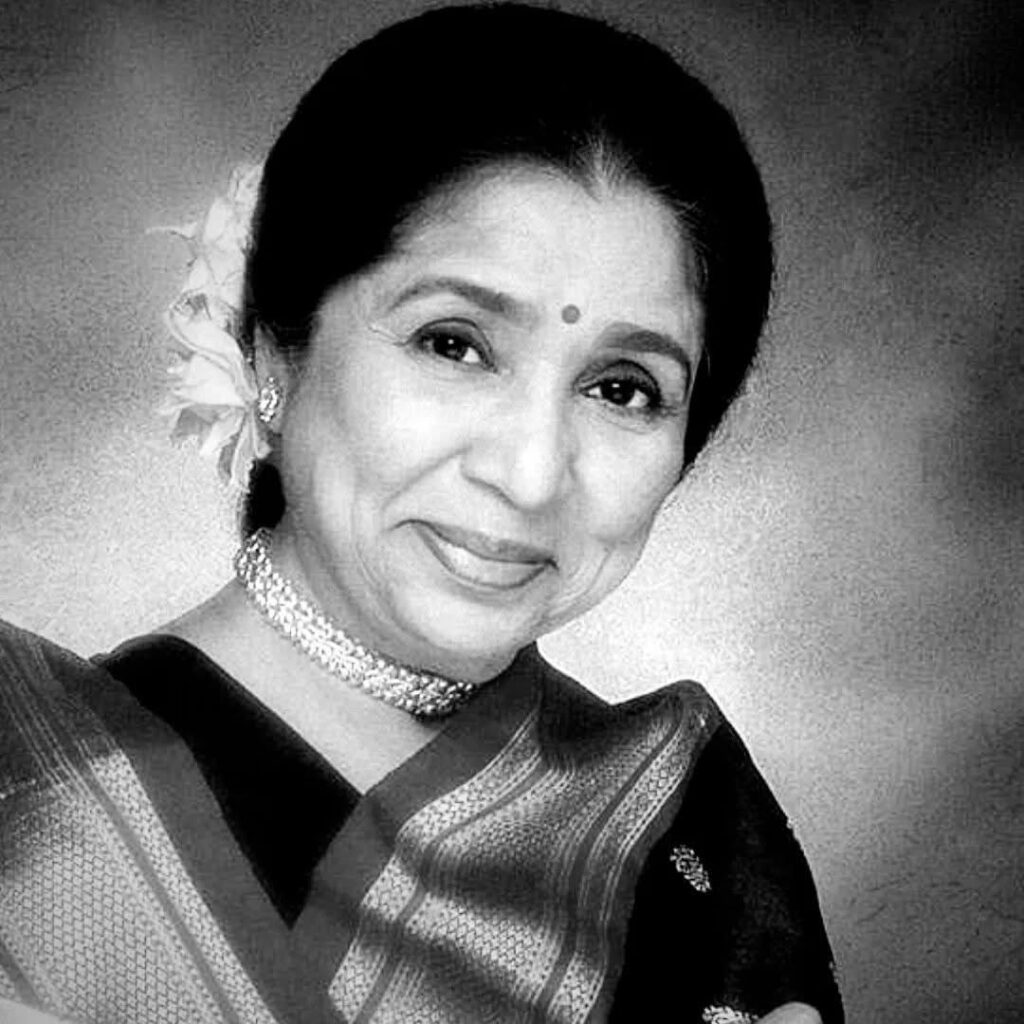
Mumbai ,12 April 2026 ,The passing of Asha Bhosle on April 12, 2026, in Mumbai marks not just the loss of a legendary playback singer, but the closing of a luminous chapter in the history of Indian music. She was 92.
For more than eight decades, Asha Bhosle’s voice mirrored the shifting moods of a nation—playful and daring, melancholic and meditative, classical and experimental. Few artistes have inhabited so many musical worlds with such effortless command. Recording thousands of songs in over twenty languages, she earned a place in the Guinness World Records as the most recorded artist in history. Yet her true distinction lay not in numbers, but in the astonishing range of emotions she could summon with every note.
Born on September 8, 1933, into the iconic Mangeshkar family, her early years in cinema were marked by struggle. Working in the long shadow of her elder sister, Lata Mangeshkar, and negotiating personal hardships, she accepted assignments others overlooked, singing for modest productions and secondary roles. Those years of perseverance, however, shaped the resilience that would define her career.
Her turning point arrived in the late 1950s through her collaboration with composer O. P. Nayyar. In films like Naya Daur and Howrah Bridge, her voice acquired a new identity—sensuous, spirited, and strikingly modern. Songs such as “Aaiye Meherban” became emblematic of a changing cinematic idiom, one that Asha Bhosle would come to personify.
The 1970s saw another remarkable reinvention through her partnership with Rahul Dev Burman. Their collaboration redefined the soundscape of Hindi cinema, blending Indian melodies with Western rhythms and experimental arrangements. From the youthful exuberance of Yaadon Ki Baaraat to the vibrant energy of Hum Kisise Kum Naheen, she became the unmistakable voice of a generation embracing modernity.
Yet her artistry was far deeper than her popular image as the queen of cabaret and pop. In Umrao Jaan, under the refined compositions of Khayyam, she revealed a profound classical sensibility. The haunting ghazals of the film showcased a voice capable of extraordinary restraint and emotional depth, earning her a National Film Award and reaffirming her status as a complete artiste.
What set Asha Bhosle apart was her refusal to be confined. She moved seamlessly across genres—ghazals, bhajans, folk, pop, and film music—imbuing each with authenticity and flair. Whether it was the teasing romance of “O Mere Sona Re,” the intoxicating rhythm of “Piya Tu Ab To Aaja,” or the poignant grace of “Dil Cheez Kya Hai,” she transformed songs into enduring cultural memories.
Her contributions were honoured with the Dadasaheb Phalke Award and the Padma Vibhushan, among numerous other accolades. Yet she remained refreshingly grounded, often attributing her longevity to her love for performing and her connection with audiences.
Even in her later years, she retained an infectious vitality. Concerts were not mere performances but celebrations—spaces where she engaged, joked, and connected with listeners across generations. She often insisted that age was a matter of perception, famously remarking that she never felt older than forty.
With her passing, Indian cinema loses not only a voice but a sensibility—an era when melody, poetry, and performance converged to create something timeless. Alongside her sister Lata, Asha Bhosle stood at the heart of what is often remembered as the golden age of Hindi film music.
In describing herself as “the last Mughal of the film industry,” she evoked a legacy of grandeur, discipline, and artistic excellence. Today, that metaphor resonates with poignant finality.
And yet, Asha Bhosle does not recede into silence. Her songs continue to live—on airwaves, in archives, and in the collective memory of millions—ensuring that her voice, vibrant and eternal, will never truly fade.

~Hasnain Naqvi is a former member of the history faculty at St. Xavier’s College, Mumbai….
The opinions expressed here are solely those of the author.

