

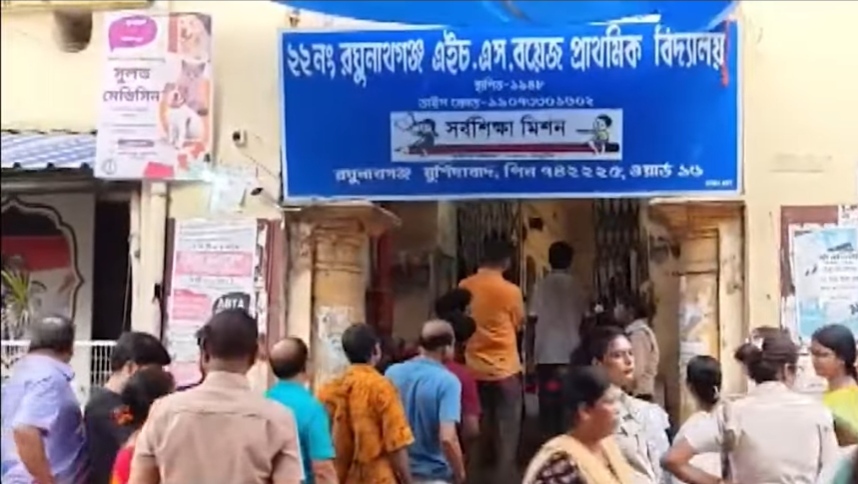
On the First phase of polling in April 23, the bedrock of Indian democracy witnessed a seismic shift as voters in West Bengal and Tamil Nadu flooded polling booths in numbers that defied historical precedent. In West Bengal, Phase 1 saw a staggering *92.9%* turnout across 152 assembly seats—a sharp climb from the already high 84.72% in 2011. Simultaneously, Tamil Nadu shattered its own records with an *85.1%* turnout, a massive leap from the 72.73% recorded in 2021.
For psephologists, these figures represent a “perfect storm” of data. Traditionally, a surge in voting is read as a wave of anti-incumbency—a desperate public rushing to the booths to oust a sitting government. However, in the modern era of high-intensity welfare politics, these numbers could just as easily signal a “silent” pro-incumbency wave, where beneficiaries turn out in droves to protect the status quo.
*The Bengal Cauldron: Survival vs. Saffron Surge*
In West Bengal, the *Trinamool Congress (TMC)* finds itself in a high-stakes defensive maneuver against a relentless *BJP*. The 92.9% turnout in the first phase, covering critical belts in North Bengal and the minority-heavy districts of Murshidabad and Nadia, suggests a level of polarization that has reached a boiling point.
*The “Third Factor”:* The entry of *Humayun Kabir’s Aam Janata Unnayan Party (AJUP)*, in alliance with the *AIMIM*, has introduced a volatile variable. By targeting the TMC’s traditional minority stronghold, Kabir threatens to fracture the very vote bank that has kept Mamata Banerjee in power since 2011.
*The Left-Congress Resilience:* While often dismissed as “marginal,” the Left-Congress combine is fighting a localized, gritty battle to reclaim its lost ground, potentially acting as a “vote-cutter” that could inadvertently tilt the scales toward the BJP in close contests.
*Tamil Nadu: The Dravidian Fortress and the New Vanguard*
South of the Deccan, the *DMK*’s “Dravidian Model” is facing a twin challenge. While the *BJP-led alliance with the AIADMK* and smaller regional players aims to consolidate the anti-DMK vote, the real disruptor is the cultural phenomenon of *Thalapathy Vijay’s Tamilaga Vettri Kazhagam (TVK)*.
*The Vijay Factor:* Actor Vijay’s decision to contest all seats has electrified the youth demographic. Unlike traditional third-front experiments, the TVK isn’t just seeking a seat at the table; it is looking to upend the table entirely.
*A “Whistle Revolution”:* The record 85.1% turnout likely reflects a surge of first-time voters drawn by the “Whistle” symbol, making the outcome a nightmare for traditional analysts who rely on two-party swing metrics.
*Psephologist’s Nightmare: Change or Consolidation?*
The sheer volume of voters makes the “noise” in the data difficult to filter. Authentic analysis suggests that the high turnout is partly bolstered by the Election Commission’s *Special Intensive Revision (SIR)*, which purged millions of “ghost” entries from the rolls, meaning the percentage reflects a much higher degree of *active* participation than in previous decades.
The surge in voter participation across both states is clearly reflected in the comparative data, which highlights the intensity of these electoral battles.
In West Bengal, the Phase 1 turnout reached an unprecedented 92.9%, significantly eclipsing the previous benchmark of 84.72% set during the landmark 2011 elections; here, the ruling Trinamool Congress faces its primary challenge from a surging BJP and the wildcard AJUP-AIMIM alliance. Meanwhile, Tamil Nadu witnessed a similar democratic explosion with an 85.1% turnout, a sharp rise from the 72.73% recorded in 2021, as the BJP-AIADMK coalition and Vijay’s TVK look to dismantle the DMK’s dominance.
“When the turnout crosses the 85% threshold, it indicates that the election has transcended mere politics and become a social movement. Whether that movement is for or against the incumbent is the question that will keep party strategists awake until counting day.”
*The Verdict of the Masses*
The battle lines are drawn between established welfare machineries and the promise of radical change. In Bengal, is the high turnout a “shield” for the TMC or a “sword” for the BJP? In Tamil Nadu, is it a vote for the continuity of the DMK or the dawn of a post-Dravidian era led by a cinematic icon?
As the dust settles on the EVMs, one thing is certain: the Indian voter has never been more engaged, more polarized, and more unpredictable. The results will not just decide who sits in the Writer’s Building or Fort St. George; they will redefine the narrative of Indian federalism for the decade to come.

~Hasnain Naqvi is a former member of the history faculty at St. Xavier’s College, Mumbai….
The opinions expressed here are solely those of the author.

