

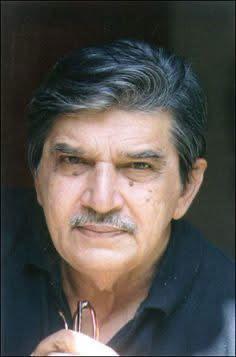
As India marks the birth centenary of Mário João Carlos do Rosário de Brito Miranda on May 2, we celebrate not merely a cartoonist but a masterful chronicler of everyday life whose ink lines etched the joys, quirks, and absurdities of a young nation with unmatched warmth and wit.
Born in 1926 in Daman, then Portuguese India, to Goan Catholic parents, Mario Miranda grew up sketching the world around him—from village vignettes in Goa to the bustling streets of Bombay. His early talent manifested in caricatures on home walls and personalised postcards, and he maintained illustrated diaries from the age of 10. Though he briefly toyed with architecture and even spent a single uninspiring day at the Sir J.J. School of Art, it was at St. Xavier’s College, Bombay (Mumbai), where he earned his B.A. in History, that his artistic voice truly took shape. He freelanced as a cartoonist and illustrator while still an undergraduate there, and maintained a lifelong association with his alma mater, embodying the institution’s spirit of creative inquiry and cultural engagement.
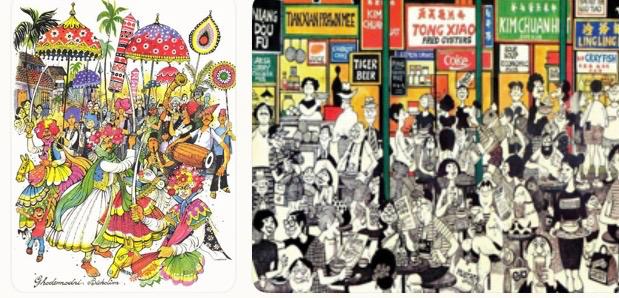
Miranda’s career began in advertising before he transitioned to full-time cartooning. His big break came with The Illustrated Weekly of India, followed by regular contributions to The Times of India, The Economic Times, and Femina. Iconic characters like the curvaceous Miss Nimbupani, the efficient yet beleaguered Miss Fonseca, the bumbling Boss and his sidekick Godbole, and the scheming politician Bundaldass populated his strips, offering gentle satire laced with affection rather than malice. He deliberately steered clear of hard-edged political cartoons, preferring instead to observe life in eateries, taverns, buses, and markets—rendering the human comedy in flat, criss-crossing compositions alive with interaction and subtle emotion.
His style—geometric yet fluid, minimalist in background yet rich in narrative—brought cubist echoes and impressionist zest to cartooning. Art critics noted the “squared-off, serene quality” of his drawings, which captured collective moods through mischievous intention and economical lines. Beyond newspapers, Miranda illustrated books by Dom Moraes, Manohar Malgonkar, and others, created murals (including celebrated ones at Mumbai’s Café Mondegar and Panjim’s municipal market), and produced his own volumes such as Goa with Love and Germany in Wintertime. Late in life, he turned more to painting, with his works finding resonance worldwide.
Miranda’s horizons expanded through international sojourns. A grant from the Calouste Gulbenkian Foundation took him to Portugal; he lived in London, contributed to Punch, Mad, and Lilliput, and traveled extensively. A 1974 invitation from the United States Information Service allowed him to engage with legends like Charles M. Schulz and Herblock. He held solo exhibitions across more than 22 countries, from Japan and Brazil to Australia and France, while his murals and illustrations promoted Goan and Indian culture globally.
Honours followed: Padma Shri (1988), Padma Bhushan (2002), and posthumously the Padma Vibhushan (2012). Portugal and Spain bestowed high civilian honours, and Google honoured him with a Doodle on his 90th birth anniversary. Yet Miranda remained rooted, returning to his ancestral home in Loutolim, Goa, where he lived with his wife Habiba and continued creating until his passing in 2011.
In an era of fleeting digital imagery, Miranda’s legacy endures in the quiet power of observation. His work celebrated human frailty without cynicism—long-eared bosses, nagging relatives, delayed buses, and all—reminding us that life, with its chaos and charm, must go on. As Goa and Mumbai mark his centenary with exhibitions and tributes, including at Kala Academy and renewed appreciation for his murals, we are reminded that great art does not merely reflect society; it gently elevates our gaze toward its shared humanity.
Mario Miranda’s pen did not just draw India—it embraced her with affection, humour, and an enduring eye for the telling detail. A century on, his lines still speak, still smile, and still connect us.

~Hasnain Naqvi is a former member of the history faculty at St. Xavier’s College, Mumbai….
The opinions expressed here are solely those of the author.