

“It is said to the trees that the axe handle is made of wood, therefore it is one of you.”
The Strike Hidden in the Illusion of ‘Our Own’ — Using Women Against Women in the Name of Empowerment
(An alleged political strategy in the context of Uttarakhand)
This saying—“It is said to the trees that the axe handle is made of wood, therefore it is one of you”—is not merely a metaphor; it is a profound social warning. It reminds us that destruction often comes not from outside, but from within—and the most dangerous threat is the one that appears to be ‘one of us.’
In contemporary India, particularly within the socio-political landscape of Uttarakhand, this idea is manifesting in a new and troubling form: positioning women against other women in the name of women’s empowerment.
Women’s Empowerment: Purpose and Distortion
The fundamental aim of women’s empowerment in India is to ensure education, rights, safety, and dignity for women. In a state like Uttarakhand—where women have historically played a leading role in protecting society and the environment, as seen in movements like the Chipko Movement—the expectation is even greater that women’s strength will guide society.
Moreover, the very formation of Uttarakhand as a separate state, carved out from the western and hill regions of Uttar Pradesh, was largely made possible by the powerful mass movements led by women. The women of the hills stood at the forefront of these struggles, carrying the movement to every household through their courage, patience, and collective strength. Their sacrifice, perseverance, and moral conviction played a decisive role in bringing about this historic transformation.
However, today, a distorted version of this noble idea appears to be emerging.
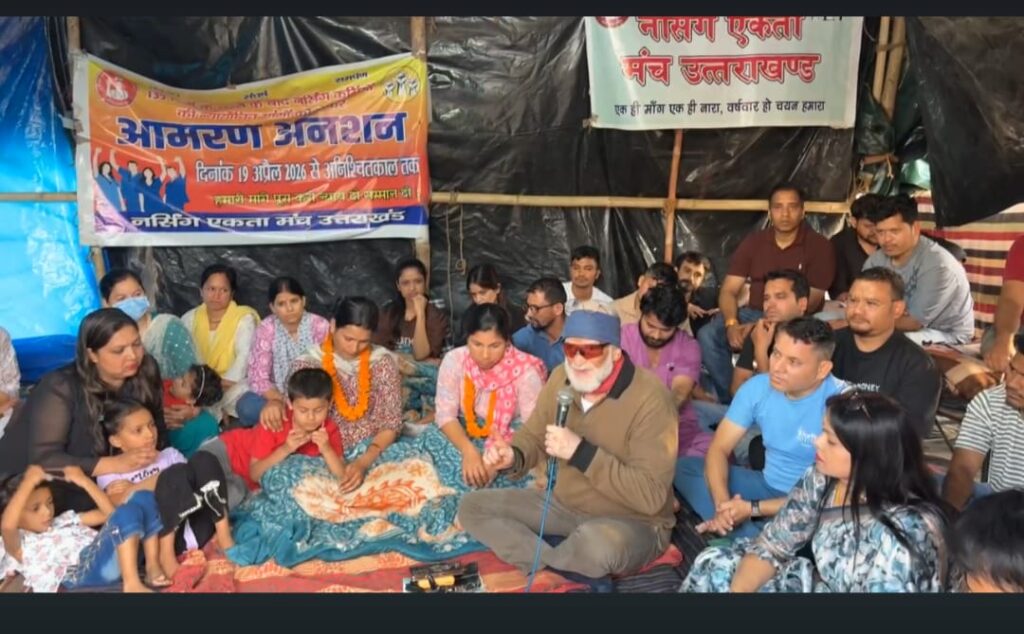
In the name of women’s empowerment, women are allegedly being positioned against other women—whether they are victims seeking justice or voices raising concerns against social injustice.
The Illusion of ‘Belonging’ and Its Misuse
When women are placed at the forefront of protests or counter-movements to make them appear more legitimate, sensitive, and morally persuasive, it mirrors the deception of the wooden handle of the axe.
Women are made to stand against women, so opposition appears ‘internal’
Attention is diverted from the real issues
A narrative is constructed: “Look, even women are against women”
This becomes a strategic psychological maneuver that weakens the true spirit of empowerment.
The Specific Context of Uttarakhand
The women of Uttarakhand have always symbolized resistance and preservation—whether in protecting forests, safeguarding water sources, or raising their voices for dignity, safety, and justice.
Yet, in certain situations today, it appears that:
Local power structures may be using women as instruments or “fronts”
Administrative and political pressures may be influencing women’s groups
A “women vs. women” narrative may be created to suppress genuine demands for justice
This not only undermines women’s dignity but also weakens the moral foundation of society.
What Is True Empowerment?
True women’s empowerment does not mean merely placing women as symbols or numbers. It means enabling them to:
Think independently
Stand firmly for truth and justice
Make decisions free from pressure, manipulation, or inducement
If women’s strength is used to conceal or suppress injustice, it is not empowerment—it is the misuse of empowerment.
Conclusion
“The axe handle is made of wood”—this phrase cautions us that not everything that appears to be ‘our own’ truly is.
Society must recognize that real empowerment lies in unity, justice, and awareness—not in division and illusion.
On the soil of Uttarakhand, where women have shaped history, it is expected that their strength will not become a tool of deception, but a force that leads truth and justice.
Ultimately, the question is not who is ‘one of us’—
the real question is: who stands with the truth?
Jai Hind.
Brigadier Sarvesh Dutt Dangwal

BRIG. Sarvesh Dutt Dangwal, The author is a social activist….
The opinions expressed here are solely those of the author.

