

Vande Mataram: Echoes of History in Parliament’s Heated Debate
Bankim Chandra Chattopadhyay penned *Vande Mataram* in 1875 as a hymn evoking the motherland’s natural splendour, later expanded in his 1882 novel *Anandamath*, set amid the devastating Great Bengal Famine of the 1770s that claimed millions due to drought and East India Company exploitation. This war cry against colonial oppression, born from the Sanyasi Rebellion’s desperation, carried communal undertones in the novel, reimagining Hindu sanyasis battling Muslim nawabs and British rule—unlike the historical uprising joined by Muslim fakirs. Parliament’s recent Winter Session debate on its 150th anniversary revived these tensions, with Prime Minister Narendra Modi accusing Congress of “fragmenting” the song in 1937 to appease Jinnah, sowing Partition’s seeds.
The 1937 Resolution Revisited
The Congress Working Committee, under Jawaharlal Nehru, adopted only the first two stanzas—praising rivers, orchards, and secular bounty—after Rabindranath Tagore’s pivotal October 26, 1937, letter warned that fuller verses risked wounding Muslim sensitivities, yet endorsed the abridged form as unifying. Tagore, who composed its tune and sang it at the 1896 Congress session, distinguished its patriotic essence from religious imagery, influencing the resolution amid post-election communal friction. Leaders like Gandhi, Azad, Patel, and Bose championed this inclusive compromise, with Gandhi later affirming retention of unobjectionable stanzas; even League separatists rejected it, underscoring its unity intent.
Parliament’s Polarized Revival
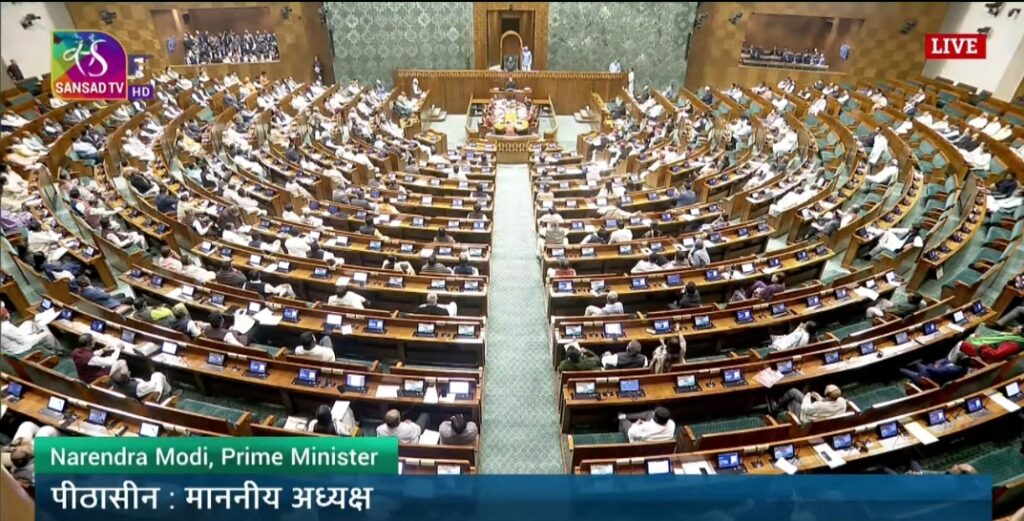
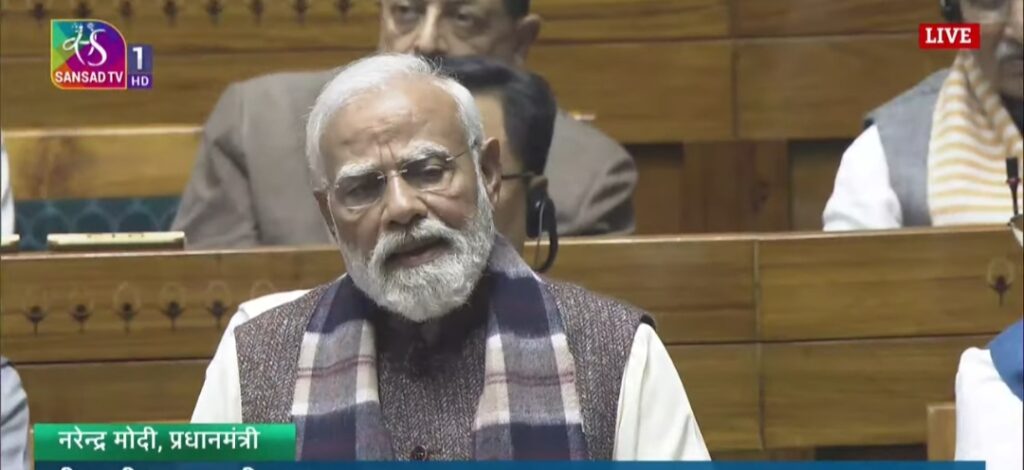
In Lok Sabha on December 8, 2025, Modi lambasted Nehru’s alleged deference to Jinnah, contrasting *Vande Mataram* with British-imposed “God Save the Queen,” while ministers like Rajnath Singh and Giriraj Singh vowed its full reverence and decried past dilutions. Opposition countered fiercely: Priyanka Gandhi Vadra called the timing a Bengal polls distraction from real issues, Gaurav Gogoi accused politicization, and CPI’s P. Sandosh Kumar framed it as an attack on Nehru’s freedom legacy. Rajya Sabha’s December 9 session, led by Amit Shah and featuring Mallikarjun Kharge, promises further clashes over patriotism’s selective invocation.
To recast a unity-first decision as divisive betrayal mocks Tagore’s wisdom and the song’s secular core, turning a democratic temple into an electoral arena where history bends to narrative convenience.
*Hasnain Naqvi* is a former member of the history faculty at St. Xavier’s College, Mumbai.
Picture credit sansad tv

~Hasnain Naqvi is a former member of the history faculty at St. Xavier’s College, Mumbai